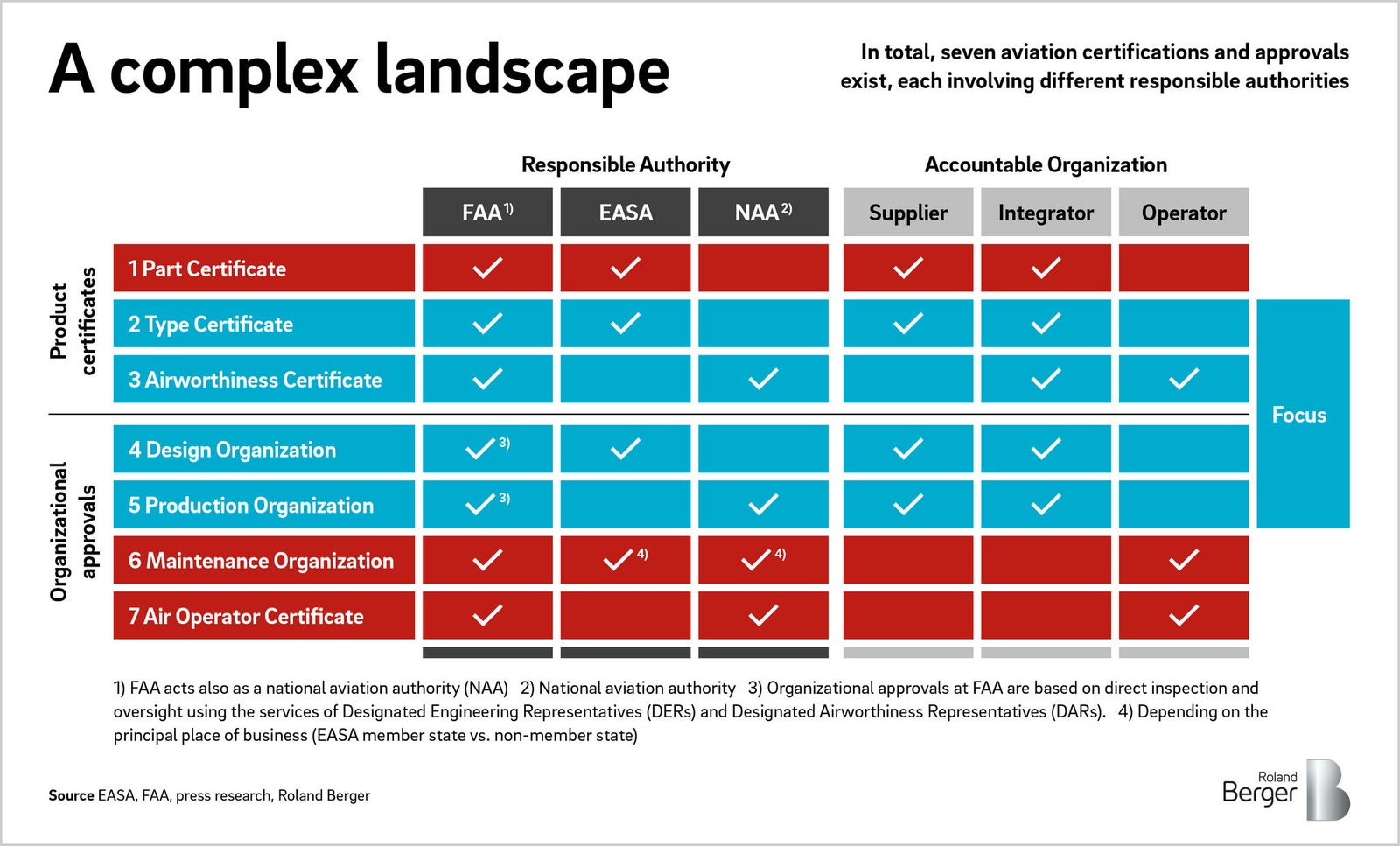
The Type Certificate (TC) is currently the most-discussed certification among AAM players as it relates to aircraft systems as a whole and, therefore, the interaction between all novel technologies. It covers an aircraft’s design, including components and subsystems like electric motors, batteries, propellers, avionics, flight controls and navigation. The aviation authority grants a TC after a series of tests that prove the aircraft meets safety standards.
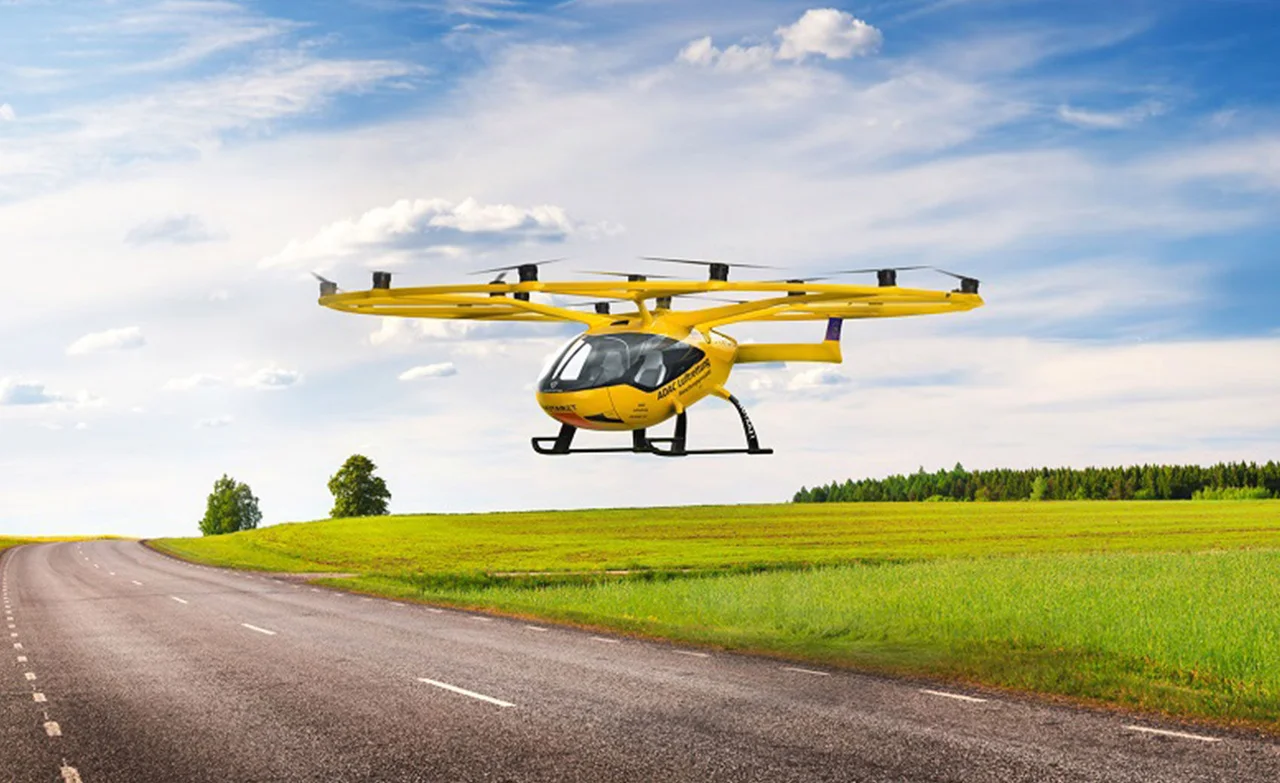
Existing regulations for conventional aircraft cover only two major types of aircraft: Fixed wing and rotorcraft. However, the new breed of AAM aircraft are usually a hybrid of both. To deal with these special aircraft categories, EASA developed a Special Condition for VTOL (SC-VTOL) category, while the FAA uses existing regulations for either small fixed wing or rotorcraft. The development of dedicated regulations for electric propulsion systems are also underway.
With Type Certification therefore dependent on both aircraft design and propulsion technology, AAM manufacturers need to choose the right approach to certification in terms of associated risk for their specific development program.
An Airworthiness Certificate must be secured for every commercial aircraft produced. It attests to the airworthiness of individual aircraft and its conformity to the type design as specified in the TC. Lastly, organizational approvals, which at EASA include Design Organization Approval (DOA) and Production Organization Approval (POA), allow companies to issue certain certification. This places more responsibility on producers, but also improves time- and cost-efficiencies by reducing the day-to-day involvement of aviation authorities, and allowing more autonomy.