Most of the current vertical take-off and landing (VTOL) designs are solely based on electrical propulsion. Why did you choose a hybrid-electric approach for your ATEA aircraft?
Jean-Christophe Lambert: There are basically two cases to be made for hybrid propulsion. First, the technological maturity of electrical propulsion systems is not yet sufficient for long-distance air mobility due to the limits of battery density. We want to promote regional mobility with up to 400 km range, which is not feasible with only battery-electric VTOL aircrafts. Second, a hybrid system is much more scalable, not only for urban air mobility, but also for commercial aviation. In that sense, we're not focusing on building a full battery-electric propulsion, we're much more interested in developing the technology that enables hybrid propulsion systems for aviation in a more agnostic way. Although at least a decade away, we will then for example be able to integrate hydrogen propulsion onto our platform.
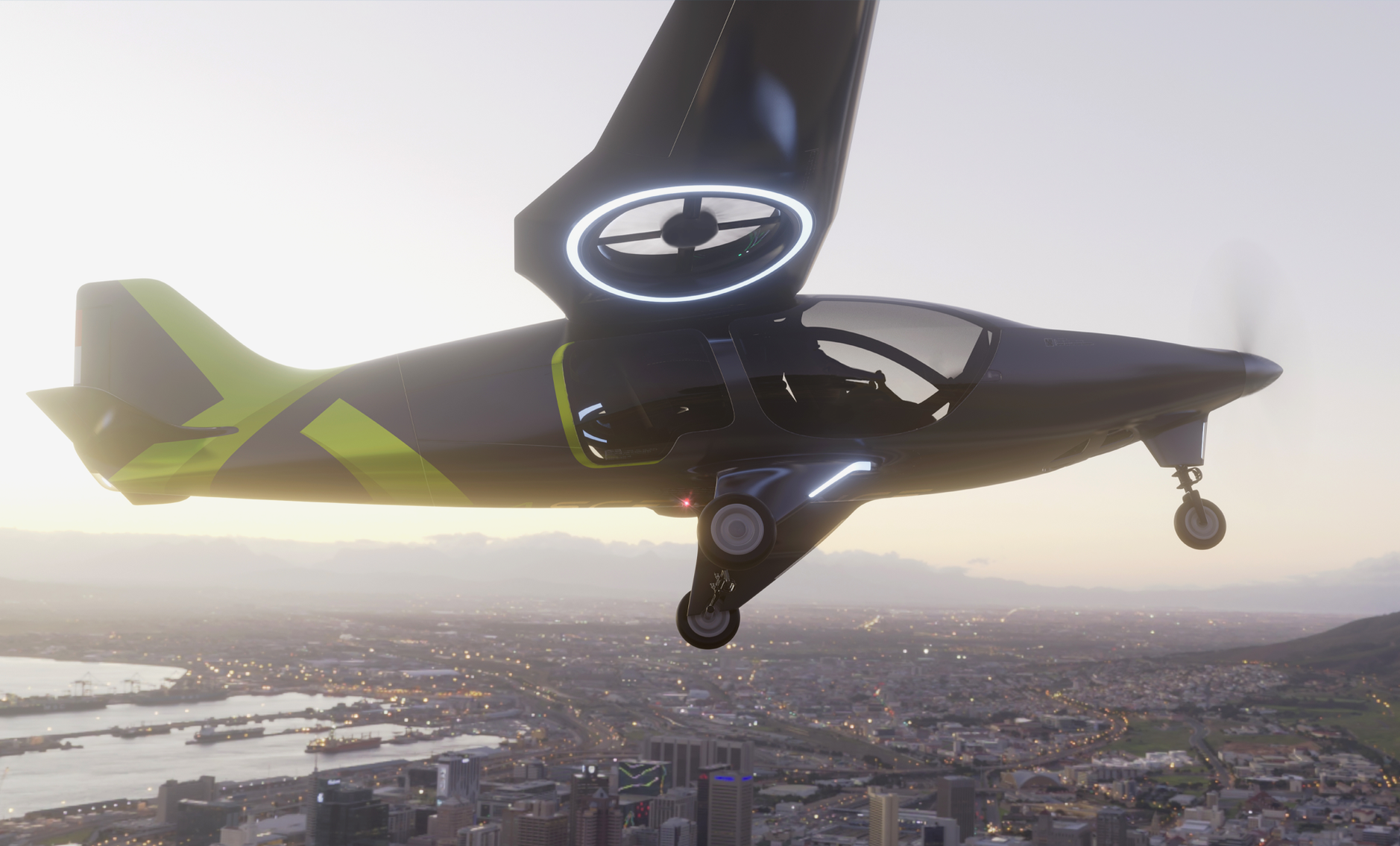
Is this also one of the reasons why your design of the ATEA aircraft looks much more like an aircraft than a helicopter?
Jean-Christophe Lambert: That is less attributed to the propulsion system than to the practical aspects of a lift & cruise configuration that we have chosen. This enables us to optimize cruise flight while still being able to have vertical as well as conventional short take-off and landing capabilities. Also, there are safety advantages, since you can cruise and land safely even if the propulsion system fails.