What is the major challenge in order to implement UAM services at a large scale?
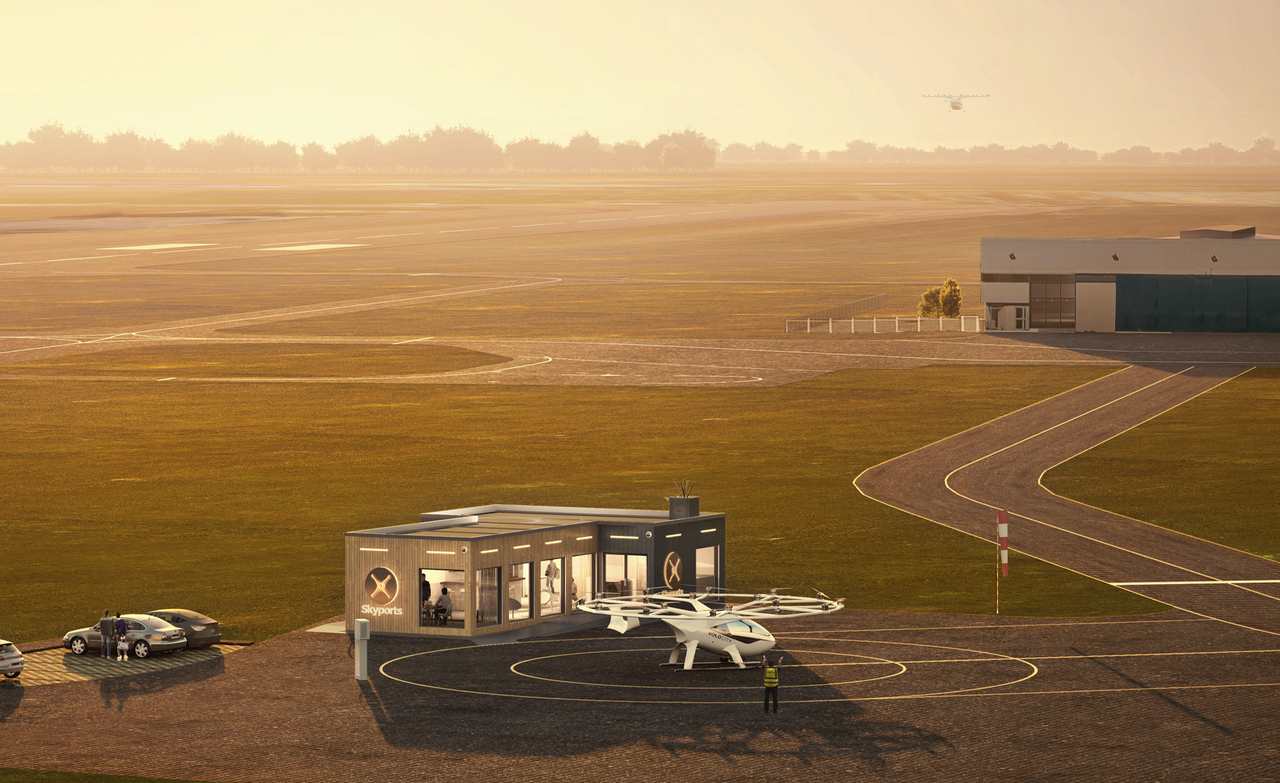
One major challenge in my point of view is the availability of landing sites or so-called vertiports. There is a limited number of potential locations where new landing sites can be built within a city; these landing sites need to be vehicle agnostic in order to allow them to be used by different types of eVTOL vehicles. If someone built up a monopoly for landing sites this would in my point of view hamper UAM services becoming available at a reasonable price to a large part of the population. Also, public acceptance of the overall UAM operation is highly critical as it determines the willingness of municipal governments to approve denser air traffic, flight corridors and new landing sites.
In addition, technology still needs to substantially progress: There are many different eVTOL architectures out there, and the optimum one is not yet clear. Current batteries only allow flights at distances such as from city centers to the airport. To have more operational freedom for example to perform return flights without intermediate charging, or enabling further use cases, such as inter-city flights, significant advances in energy storage are needed.
Lastly, I would mention the safe and efficient integration on to the public airspace, be it from a regulatory or a technical side. Today we already have a challenge with drones in the low airspace, but in the mid-term the airspace will be managed in a more digital and integrated way than today.
How do you see the roadmap for the implementation of UAM?
Currently all players within the UAM ecosystem, from startups to well established aerospace companies, are exploring this space with demonstrators and simulating the different building blocks of the UAM ecosystem. I expect to see the first proof of concepts of real UAM services with eVTOL vehicles in the first half of the decade. However, for UAM to become a relevant new industry and fit for a larger market, the different players will need to align on certain standards and shared assets which are used by all of them, such as landing sites/vertiports as well as energy supply. As the whole UAM ecosystem matures, I also expect that the number of eVTOL manufacturers will decrease or consolidate. We will also see for each use case a dominant design emerging for the eVTOL vehicle as well as for the other building blocks within the UAM ecosystem, similar to what we have seen in other industries, such as
automotive
or large commercial aircraft. We are clearly living in exciting times, as we shape the advent of a whole new sector for aerospace and mobility industries.