Bots to the rescue – but are they after our jobs?
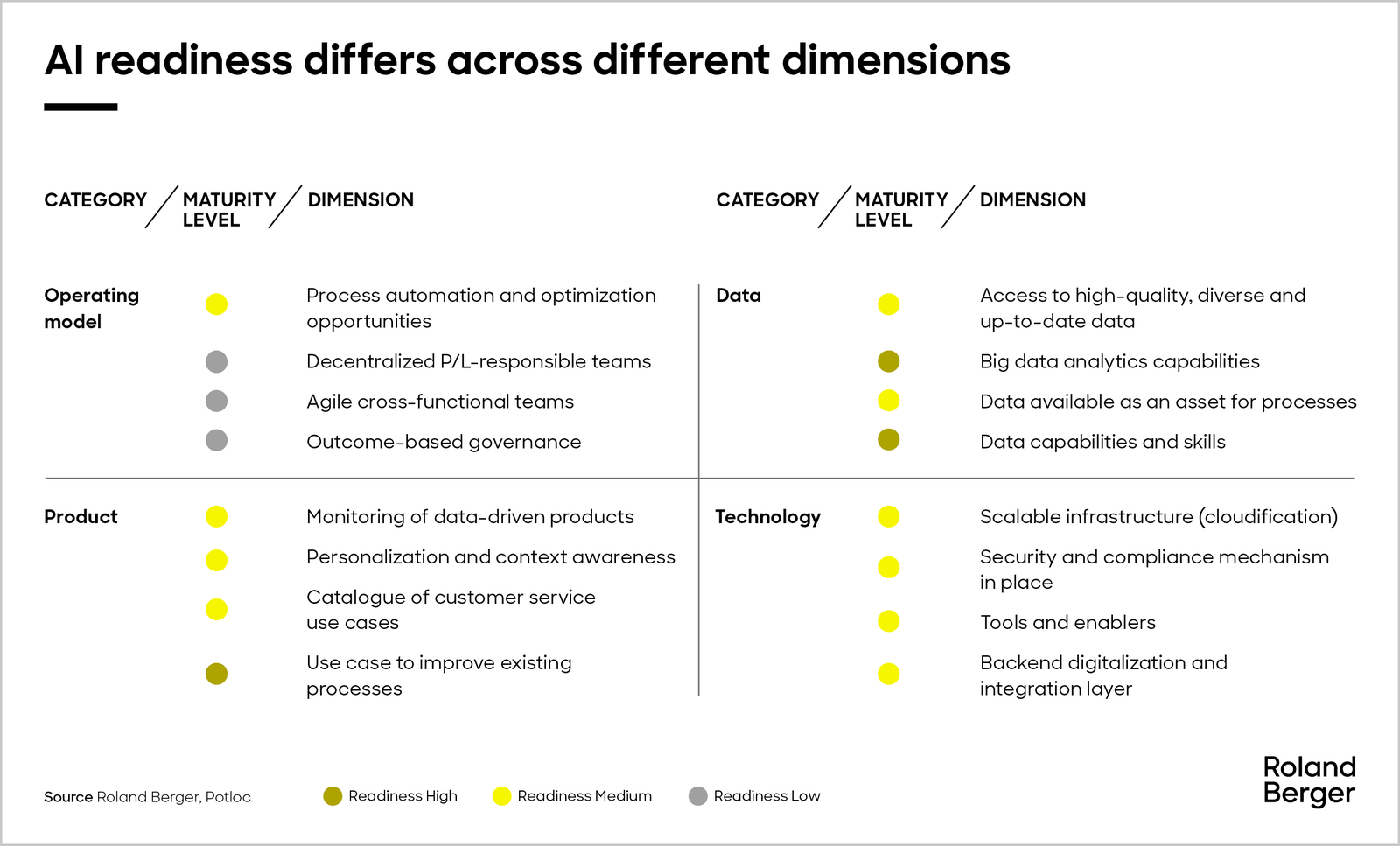
The good news is that these are all areas that companies can address effectively with AI-based technology. Indeed, our respondents considered technology,
automation and AI
the most promising area for customer service solutions – replacing the previous trend towards offshoring and near-shoring. What is more, we appear to have reached a turning point in the implementation of AI: 83% of respondents said that AI would be highly important for customer services in the next three years, almost double the number who said it was highly important today. The adoption of AI in many companies is still in its infancy; as it develops further in the coming years, its implementation across industries is also likely to take off.
Of course, the issue on many customer service employees' minds is whether AI will put them out of a job. Over one-third of our respondents were of the opinion that AI will lead to job losses – but this is a much lower figure than that recorded by other studies. That said, AI will clearly change the type of work that human agents do. Standard day-to-day tasks will be automated, including dealing with customer inquiries, sharing information, taking orders and even directly communicating with customers. We estimate that just under one-third of tasks in customer services can already be automated today.
As the technology develops further, human agents will have to up their game, developing their technological skills and ability to work with AI. It is likely that around 30% of traditional jobs in customer service will disappear – most customer service leaders said they expected agents to be upskilled or move to new customer service roles rather than being laid off. Those traditional roles that do remain will be strongly supported by AI, making them easier for untrained people to handle effectively.