ESG ratings and initiatives are growing in importance
ESG ratings demonstrate a
company’s long-term sustainability goals
and strategies. They help differentiate between companies that are taking real, tangible steps toward reaching the world’s net zero carbon emissions goal and businesses that are “greenwashing” (i.e. cultivating a public appearance of sustainability without actually being sustainable).
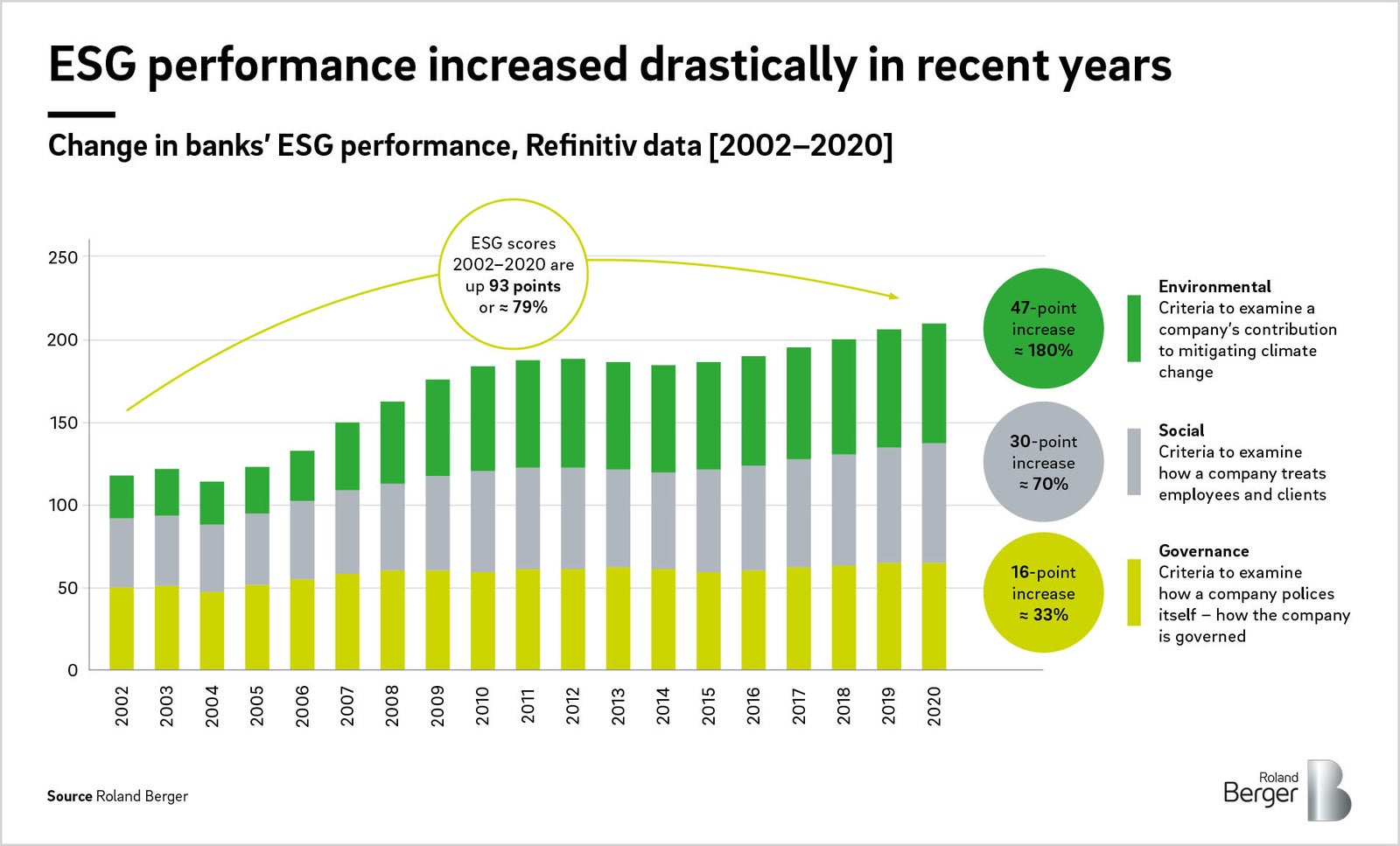
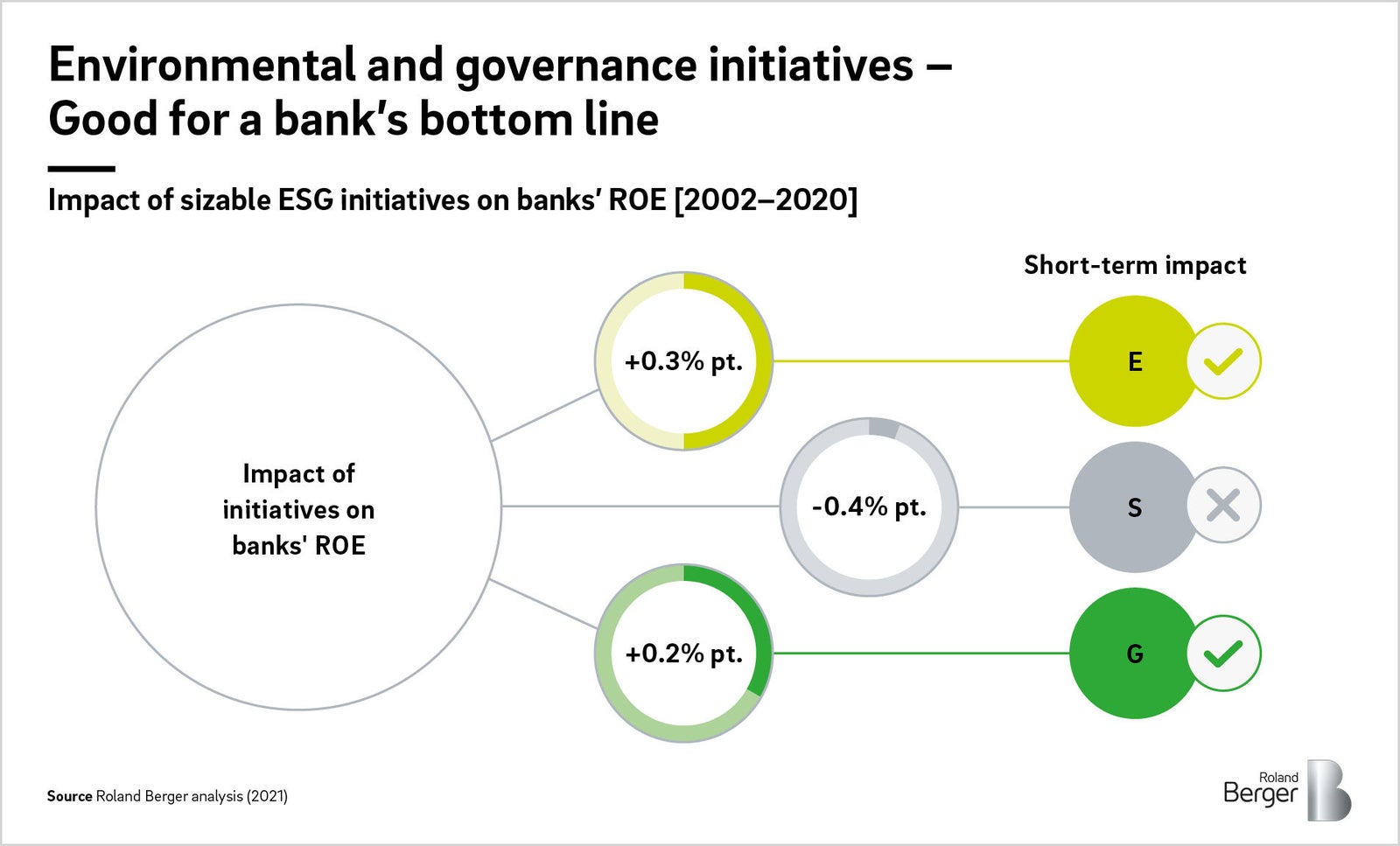
According to an ESG data analysis by Roland Berger that evaluated the practices and performance of European banks from 2002-2020, the overall importance of ESG initiatives rose by 93 points (+79%) over the past two decades. The social criteria score (how a company treats its employees and clients) rose by 30 points (+70%) and governance (how a company polices itself) rose by 16 points (+30%). The environmental score (a company’s contribution to mitigating climate change) saw the largest increase: 47 points (+180%). A separate study that analyzed the return on equity (ROE) of over 200 banks in an eleven-year period found that E and G policies actually led to higher profitability, while S policies negatively impacted short-term profits.