The current challenges are reflected in the declining sentiment of business leaders in many regions. In Germany, for instance, the IFO Business Climate Index has been steadily falling since its post-Covid high in 2021, sinking from 101.7 to 86.6 points.
Labor shortages are now a serious issue. Unfilled positions in Germany are set to cost the nation’s economy around EUR 50 billion in 2024. According to the German Economic Institute, this could rise to EUR 74 billion in 2027 – between 1% and 2% of Germany’s GDP. This does not include the lost opportunities due to lost opportunities, delayed product launches and overworked staff.
Other factors are also at play, including the rise of new competitors, rapid changes in
AI technologies,
and shifts in global trade networks.
To remain competitive in the
global manufacturing
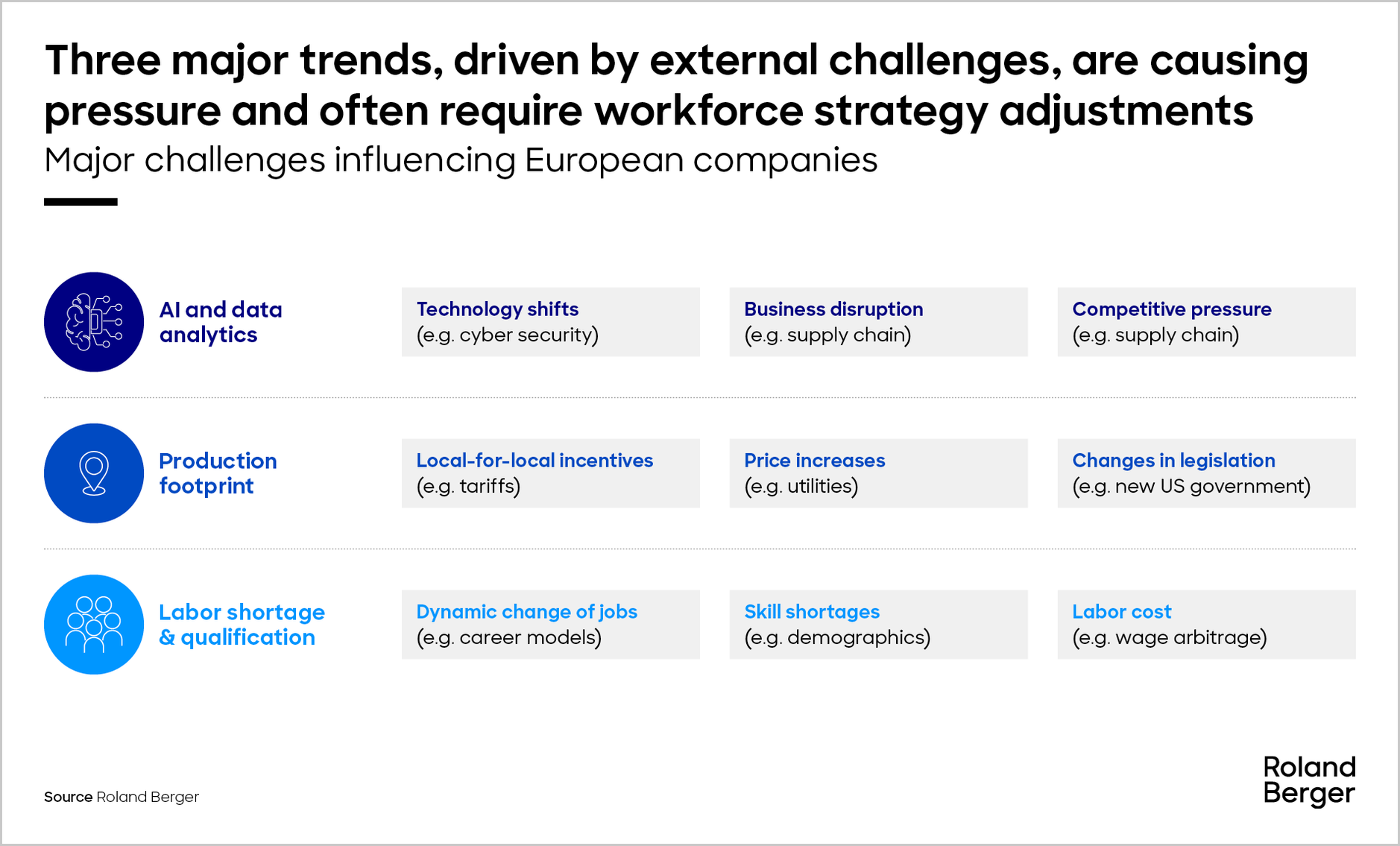
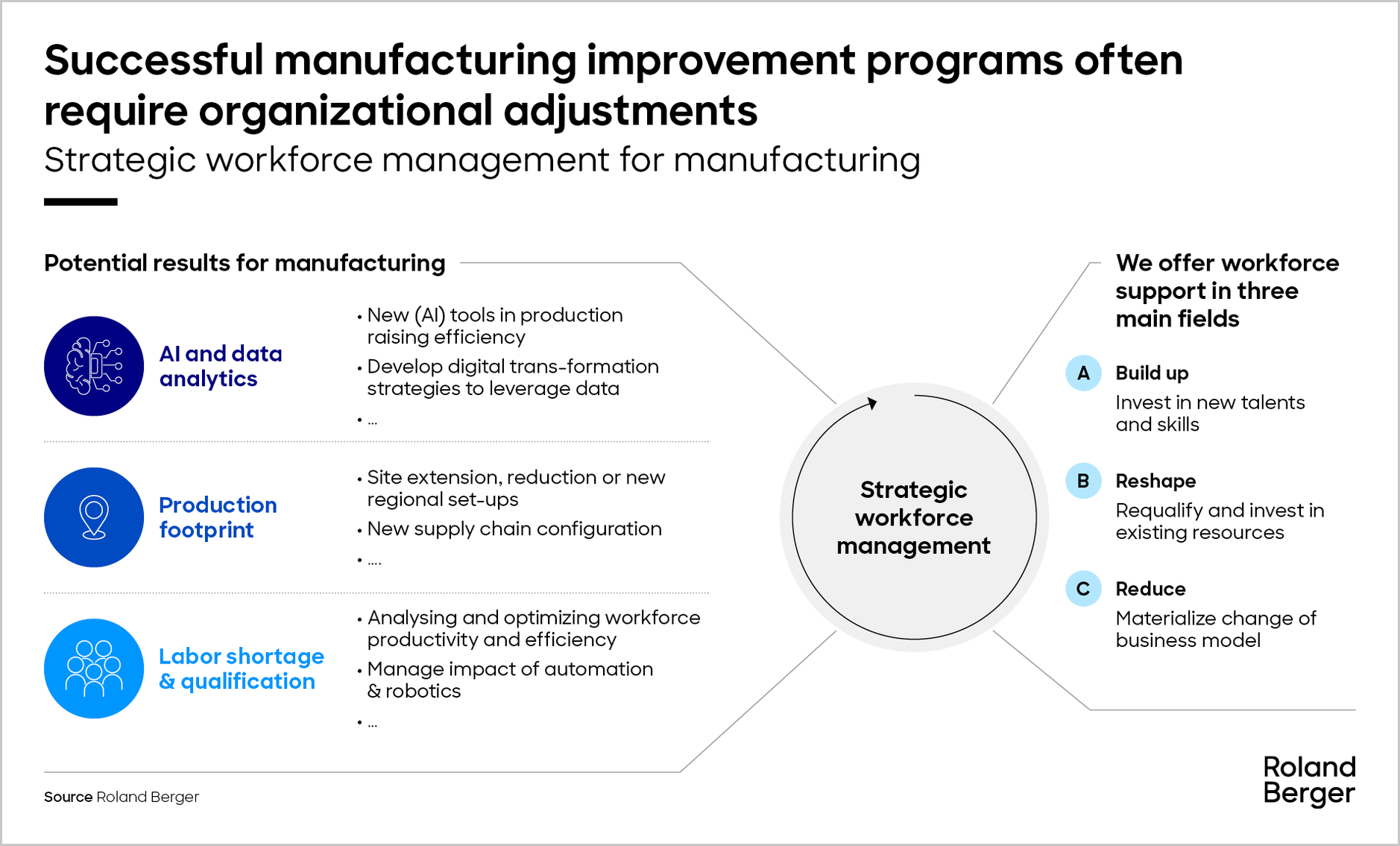
landscape, companies need to change. We currently see that manufacturing companies are currently reconsidering their strategy addressing three trends:
- A greater need to adapt
production footprints
to react to changes such as new tax regulations or raw material availability
- A growing need to prepare for the upcoming shortage of qualified workers
- Increased use of AI and data analytics to rapidly harvest low-hanging fruit and prepare a
future-proof infrastructure
Initiatives to create resilience and address these key trends often require both robust action and significant organizational changes. The latter can be especially daunting for many organizations.
Roland Berger can help. We have
extensive experience
of guiding businesses along an end-to-end process, from defining measures for change to a full restructuring. Our unique value proposition offers a one-stop shop for all your manufacturing and organizational needs.