The environmental imperative: Know your footprint
You can’t change what you can’t measure. This means companies must gain a firm understanding of their environmental impact.
Top of the list, of course, are carbon emissions – but they aren’t the only ones harming the planet. Carbon dioxide equivalents (CO2e) can also be used to measure emissions from other GHG gases such as methane and nitrous oxide. CO2e acts as a common environmental “currency” by converting
non-carbon GHGs
to the equivalent amount of CO2 with the same global warming potential. This can give an organization a better idea of its “true” environmental footprint.
Nevertheless, obtaining a clear picture is still a serious challenge. More and more businesses are now able to track direct emissions from their company facilities and vehicles. But that only tells part of the story – for many organizations, the majority of emissions occur outside their own operations. To properly address such a major issue, it’s important to look at indirect emissions, which can range from purchased energy and shipping to how products are used and then disposed of.
Breaking down these insights to a product level can be hugely beneficial. A product carbon footprint that considers CO2 equivalents shows the quantity of GHG emissions that are produced or consumed during its life cycle. This allows a company to see a breakdown of emissions for a product’s raw materials, manufacturing, transportation, storage, use and disposal.
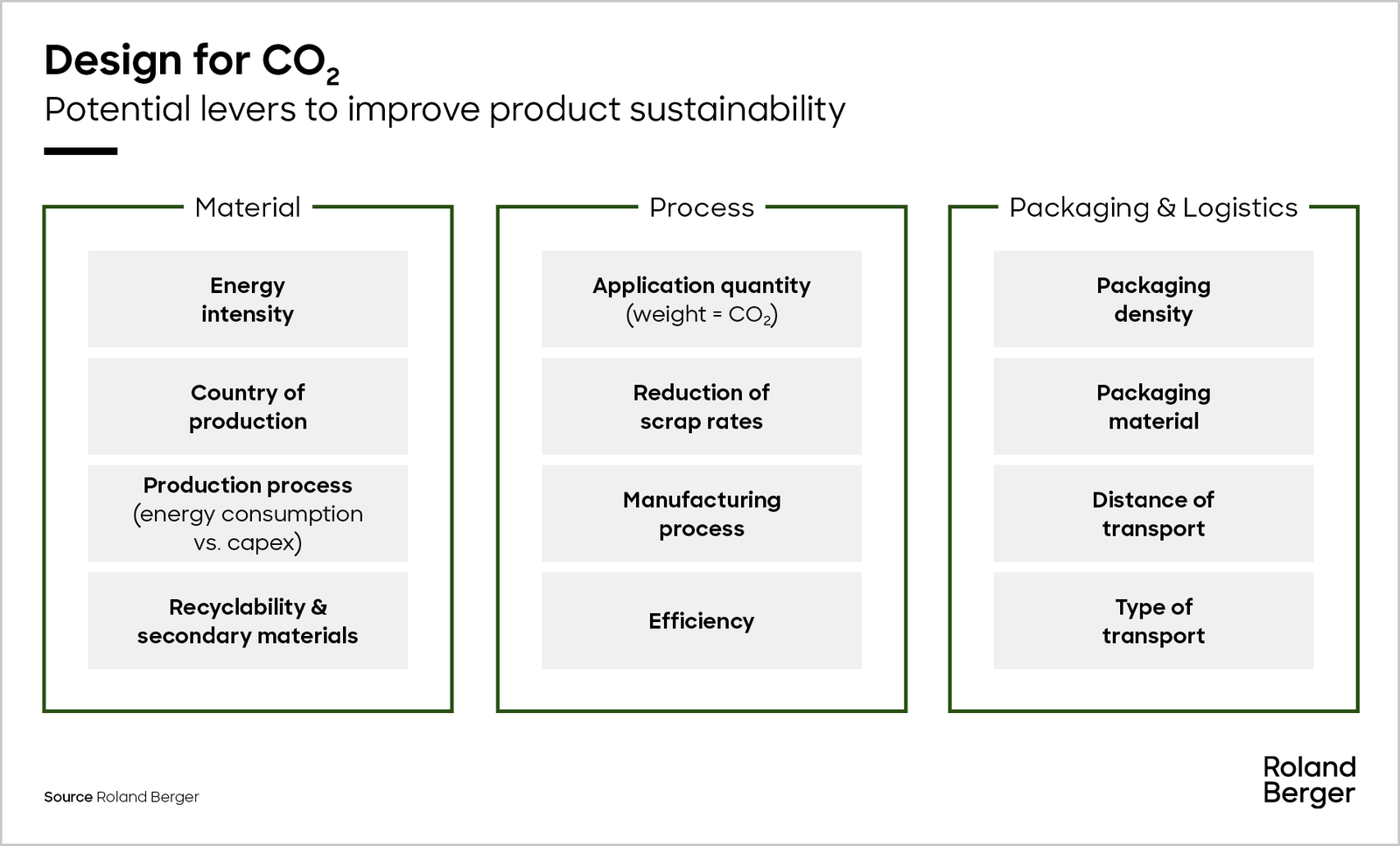
According to our calculations, roughly three quarters of a typical product carbon footprint from a Tier 1 supplier comes from materials. Manufacturing processes make up most of the rest, with a small share coming from logistics and overheads.