Yet modernization is a challenging segment to access and succeed in. The installed base, which dictates modernization opportunities, lacks transparency, making it difficult to access the segment. Customer needs and key purchasing criteria are highly diverse due to the many different types of modernization jobs – hospitals have very different requirements to hotels, for example. OEMs must therefore develop the right offering and optimize operational and
supply chain
capabilities to match it. Not an easy task.
So where does this leave potential new entrants looking to exploit modernization’s growth opportunity? This short report, a deep-dive following our
Elevator Market Outlook 2030
series, outlines the key success factors. It provides exclusive elevator market intelligence, including highlighting growth opportunities, before looking at the two most important requirements for capturing modernization business – tailoring offerings to customers’ needs and building best-fit operational setups to support them.
The elevator market
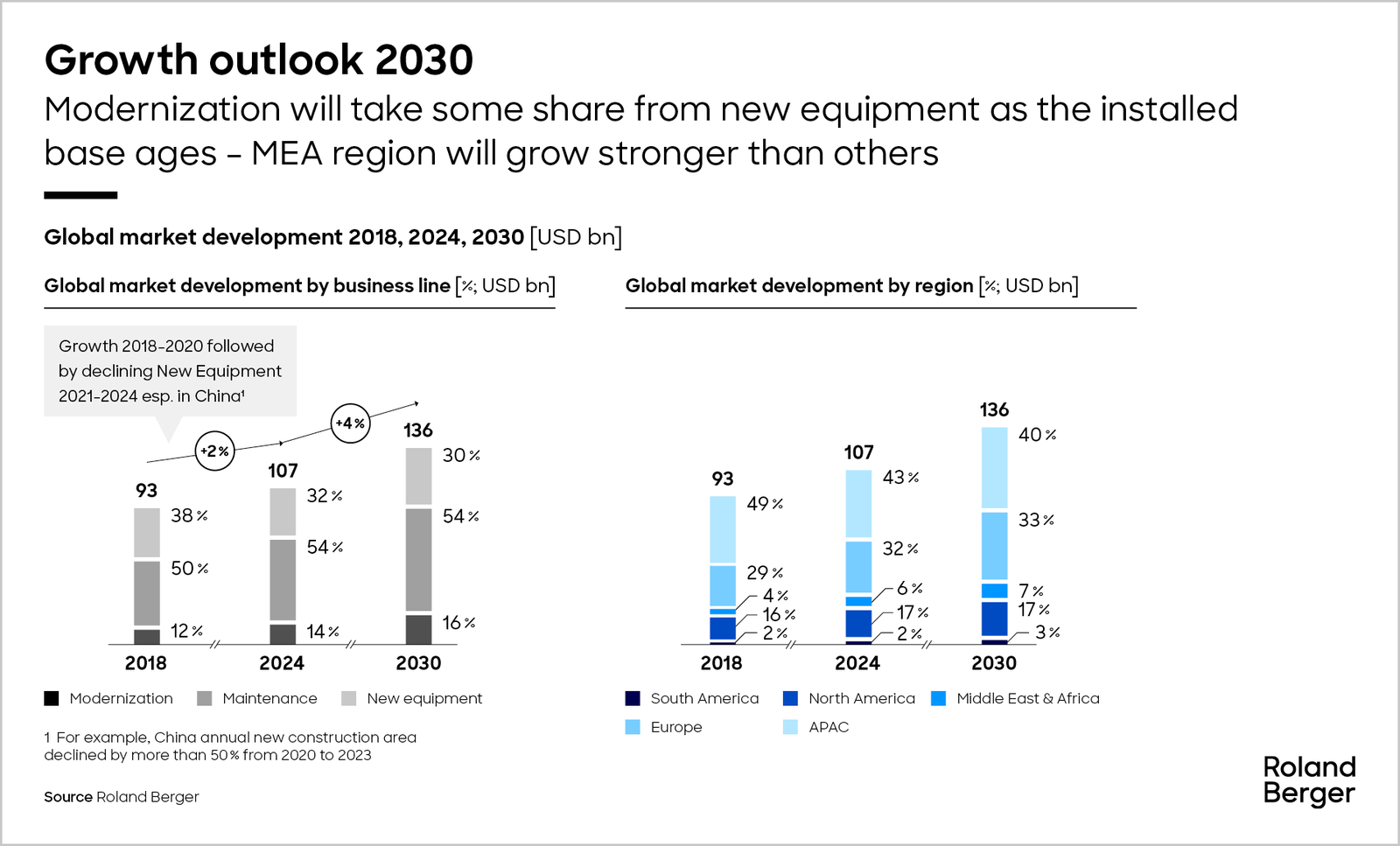
Three segments dominate the elevator industry. The modernization segment covers the refurbishment or renovation of existing elevator equipment. This ranges from a modest electronic update to upgrading a whole car, traction machine or even shaft. The new equipment segment is self-explanatory, while the maintenance segment includes both regulated inspections and the servicing of parts. Overall, the market was worth around USD 107 billion in 2024, and is forecast to hit USD 136 billion in 2030.