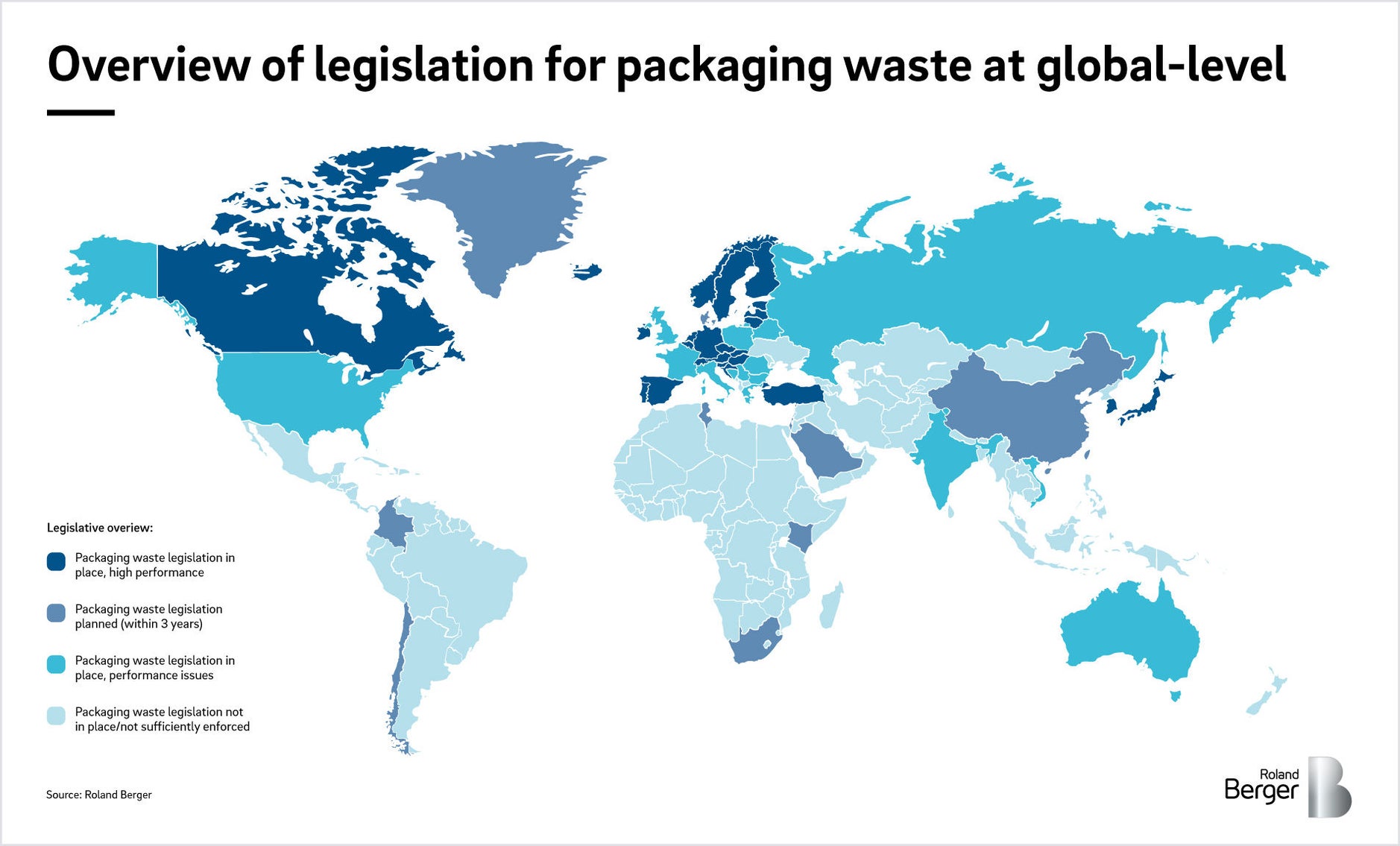

Over the last 10 years, global awareness of the impact of packaging waste has not only gained massive momentum, but our whole approach to sustainable packaging has been revolutionized. Through legal obligations and sanctions, media publicity and increased awareness from fast-moving consumer goods (FMCG) producers, sustainability in packaging has been firmly entrenched as a top priority in the industry. If industry players are not including sustainability as one of their key strategic pillars, it won’t just be detrimental for the planet, it will also hinder their success – a sentiment reiterated in Roland Berger’s latest study, “Packaging sustainability 2030”.
Globally, around one million plastic bottles are purchased per minute. This equates to over 500 billion per year. Despite this massive plastic consumption, less than 15% of plastic packaging is recycled, while over 10 million tons of plastic enter the ocean each year. Such concerning figures have helped to assert the environmental impact of packaging waste and corresponding legislative efforts as one of the key concerns of our generation. In response, Roland Berger’s fact-based study – derived from interviews, reports and statistical analyses – aims to identify best practices and raise awareness for sustainable packaging at the highest management levels.