A mandate for the C-suite
The decisive barrier to AI success has shifted – and leadership is now the constraint. Technology readiness is no longer the binding limitation, and access to capital is rarely the limiting factor. What holds many organizations back is a lack of engineering discipline in how AI is governed and operated at scale. Success now depends less on which tools are adopted and more on whether the operating model has adapted to run AI as a system rather than manage it as a collection of projects.
This shift has direct implications for leadership. AI industrialization cannot be delegated to a single function or driven through isolated initiatives. As Industrializers continue to compound their advantage, the gap between them and the rest will widen into a durable competitive divide. Crossing that divide requires a deliberate change in focus, moving away from exploration toward operations and from launching pilots toward running systems in production.
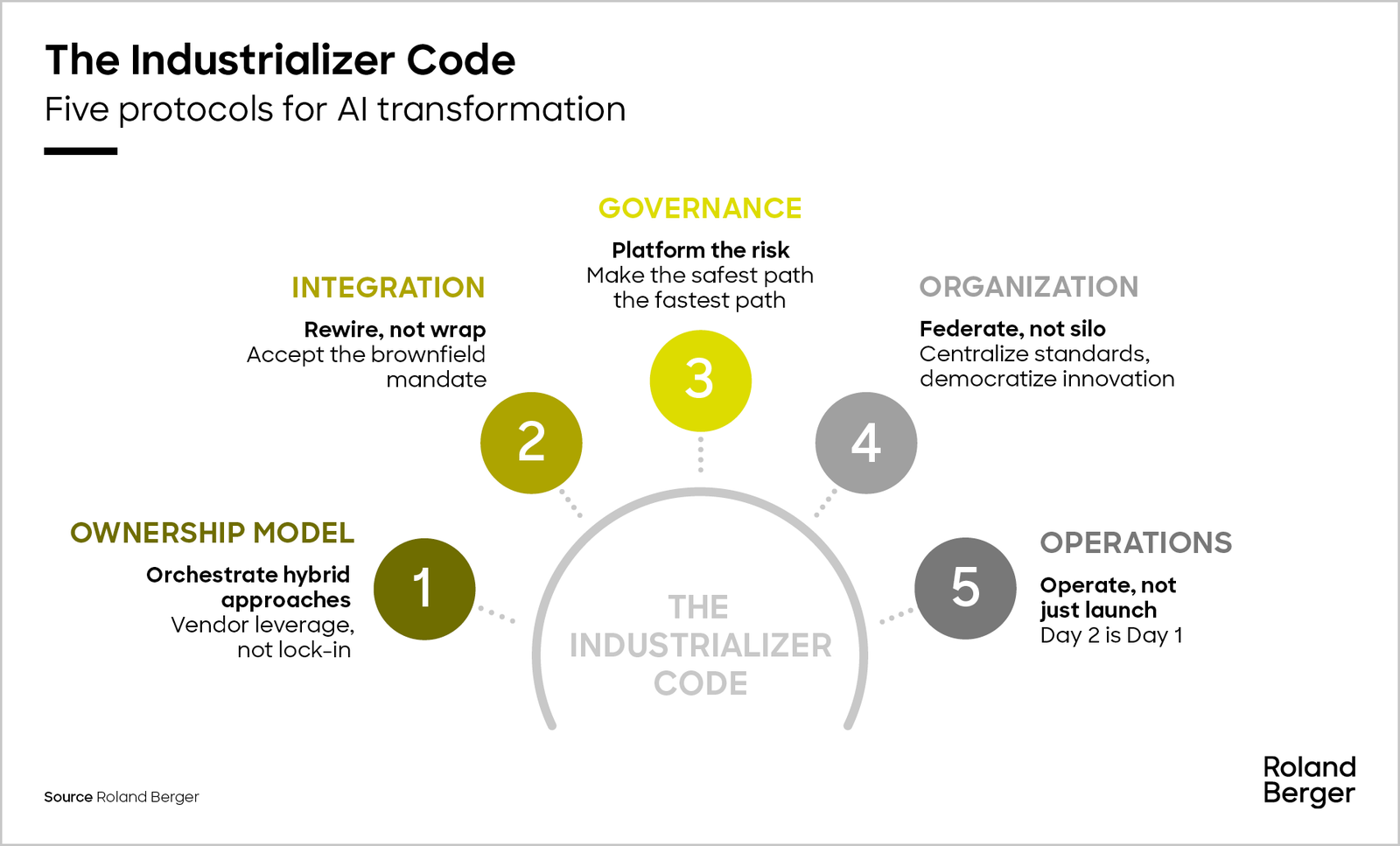
For the CEO, the mandate is to orchestrate rather than innovate. The task is not to champion individual use cases, but to create the conditions for systemic value. That requires changing what is rewarded. Innovation theater must give way to impact that compounds across the enterprise, supported by a federated operating model that centralizes standards while allowing innovation to scale beyond silos.
For technology and finance leaders, the mandate is equally clear. CTOs and CIOs must build infrastructure that makes the right behavior easy, embedding governance into platforms rather than enforcing it through committees. CFOs must fund shared capabilities instead of isolated projects, shifting capital toward platforms that scale and compound over time. Industrializers understand that individual initiatives may fail, but a well-designed system improves with use over time.
Engineering value in an AI-first world
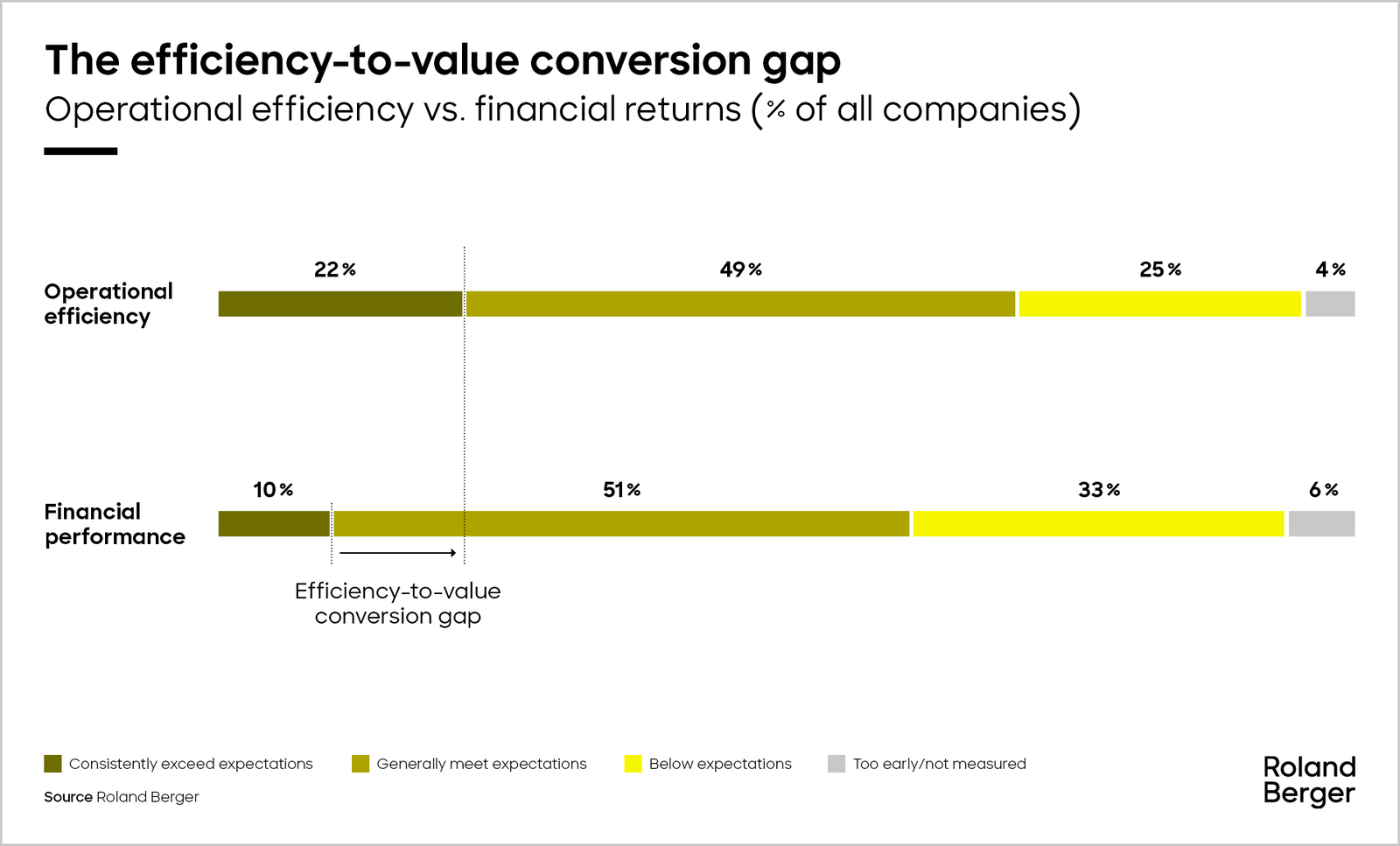
Why are almost ninety percent of firms underperforming despite record levels of AI investment? The answer is uncomfortable. The market has not stalled for lack of ambition, budget or access to technology. It has stalled because many organizations have misunderstood what the task really is. While AI deployment has accelerated, most still approach it as a set of projects to be launched and optimized in isolation.
A small minority has taken a different path. These Industrializers treat AI as a standard industrial capability, designed to be engineered, governed and run at scale. What separates them is not the models they buy, but the machine they build around those models. They wire AI into the enterprise, align speed to production with speed to value and focus on operating systems rather than celebrating launches.
As we move into 2026, this distinction will matter more, not less. The AI value gap is widening, and it will harden into a lasting competitive disadvantage for those that fail to adapt. You cannot buy your way out of this
transformation
– you have to engineer your way through it.