A solid business model?
At first sight, q-commerce looks like simply a step-up in service levels – a natural progression from same-delivery to maximum 30-minute delivery times. But, in fact, we believe that it represents a completely new convenience channel, with its own unique business model. What sets it apart from "traditional"
e-commerce
is that it mainly targets spontaneous, emergency and emotional purchases by consumers. What is more, it competes not only with traditional online but also with stationary convenience retail formats, such as corner shops and minimarkets.
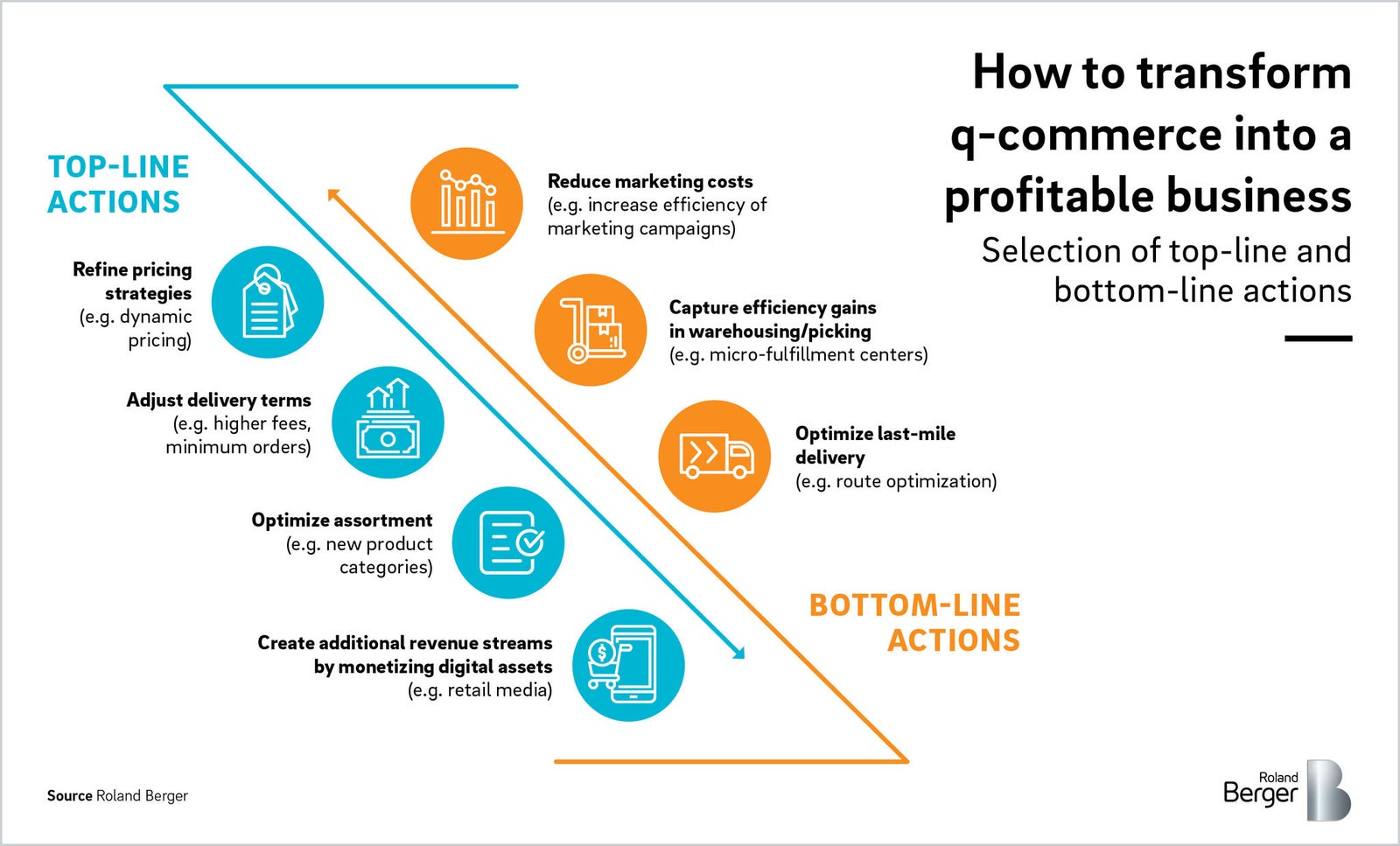
The q-commerce market initially focused primarily on groceries and meal deliveries. Now, players have started expanding into other retail categories, for example, offering a cross-category assortment made up of fashion, beauty and home decoration items. The size of the potential market means that retailers would be wrong to ignore it. For example, if around 12 percent of the EUR 730 billion groceries market in the United Kingdom, France and Germany move online by 2030 and q-commerce accounts for just 15 percent of online orders, the market will be worth EUR 13 billion. And if q-commerce expands to include more online product categories than today, this would mean a sizeable additional increase in market size. The critical question, however, is whether the revenues from product margins, commission fees, customer delivery fees, service fees and in-app advertisements can cover operating costs and make the business model lucrative. The answer to that question is unclear at present: Product prices in q-commerce are similar to those in the supermarket, marketing for
brand-building
can account for up to 30 percent of total costs in the initial phase, and delivery fees rarely cover the actual costs.