Following several years of decline, the
German construction industry
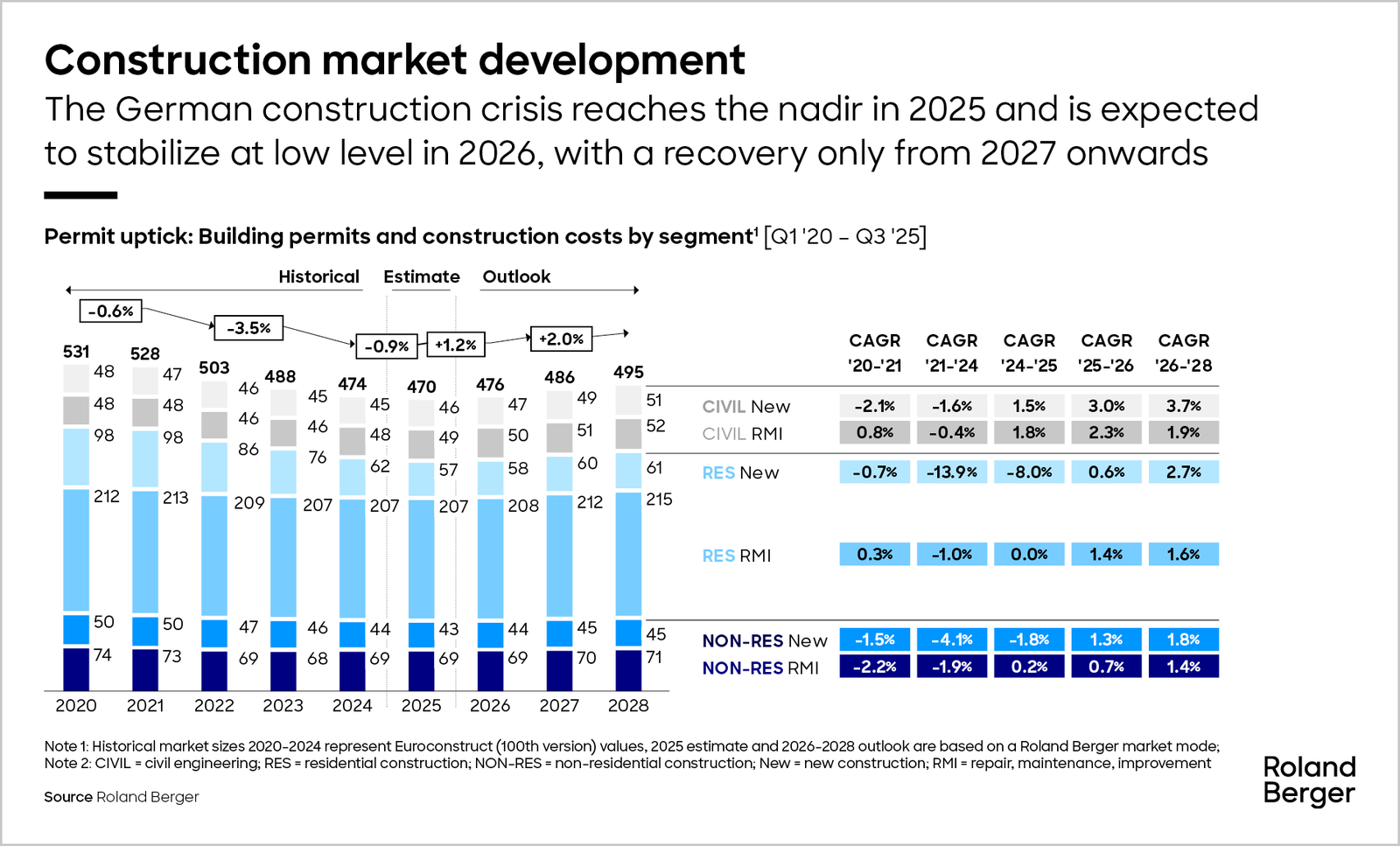
is forecast to stabilize in 2026 and move into growth territory in 2027, according to Roland Berger’s latest industry assessment. Our annual Construction Radar predicts growth of around 2.0% per year between 2026 and 2028, with new-build civil engineering as the strongest growth driver.
The forecast is built on the back of measurements of numerous key industry indicators and fundamentals, many of which are expected to turn positive in 2026 or 2027 for the first time in several years. The announcement of Germany’s EUR 500 billion infrastructure and climate fund is a major factor behind the expected recovery, according to the report.
The latest edition of the radar, available to download on this page, presents the findings for each indicator, from business sentiment to construction permits awarded, offering analysis and forecasts across industry segments. It also provides a valuable assessment of the new infrastructure fund and its likely impact, before evaluating profitability levers across the value chain.
Positive but subdued
While the construction industry remained in crisis in 2025, with the market continuing to shrink, the radar suggests that the low point has been reached. The market is expected to stabilize in 2026, albeit at a low level, with even the new residential segment – the key driver of the construction crisis in recent years – showing improvement. The recovery is forecast to gather real pace from 2027, supported by strong growth in the new civil engineering and new residential construction segments.