Space-enabled solutions: a EUR 1 trillion+ potential in 2040
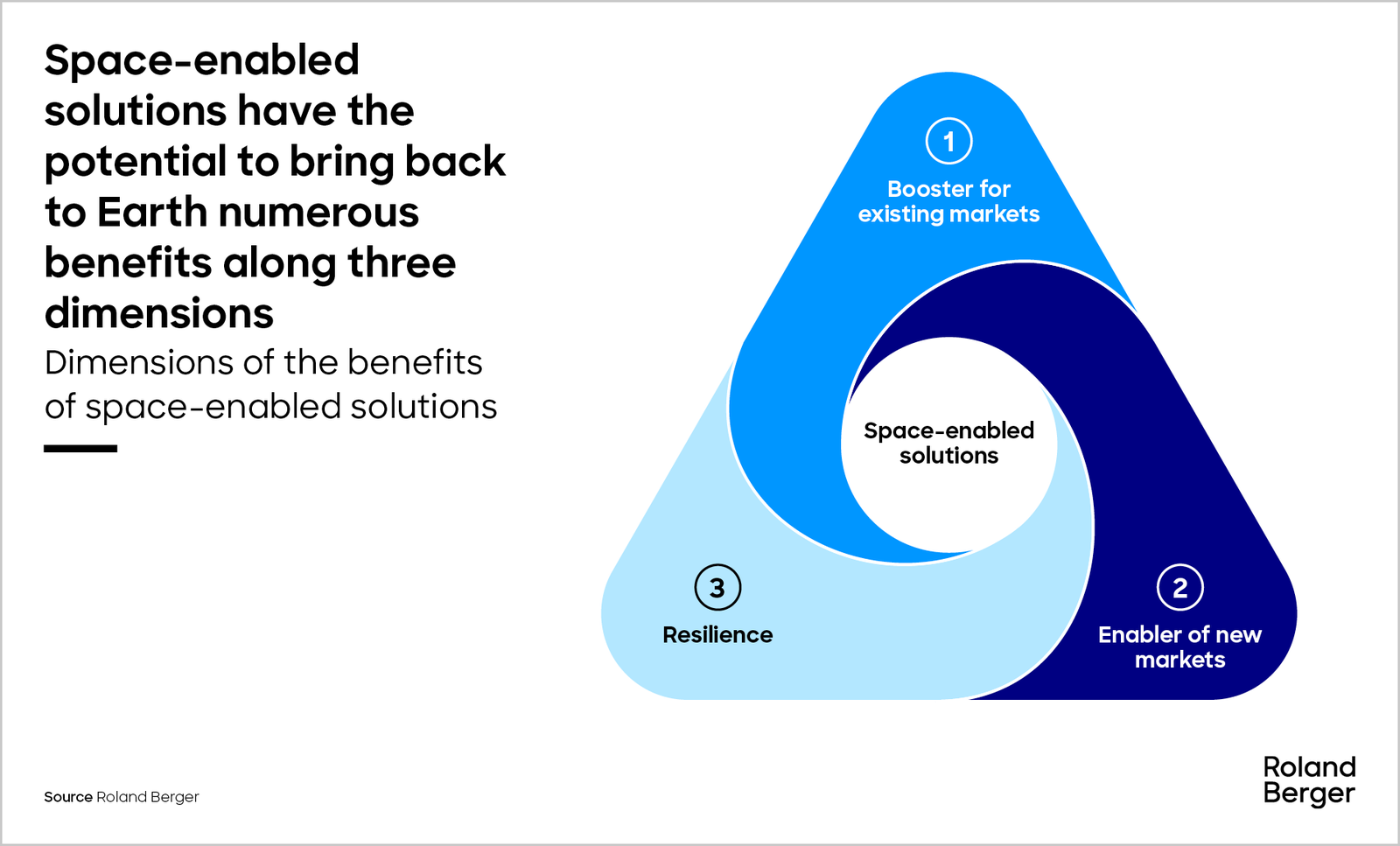
Space-enabled solutions offer significant economic advantages to various sectors, acting as a strong booster for organizations capable of leveraging such technologies to gain a competitive edge. Roland Berger has developed a model that predicts the anticipated demand for space-enabled applications spanning Earth Observation and PNT in 17 distinct industrial sectors. Furthermore, it takes into account the overall future expansion of the SatCom market. This model offers valuable insights into the prospective market size of space-enabled solutions. These solutions have applications across various sectors, encompassing autonomous driving (automotive), precision farming (agriculture), telemedicine (healthcare), as well as the enhancement of wind farms and solar power plants.
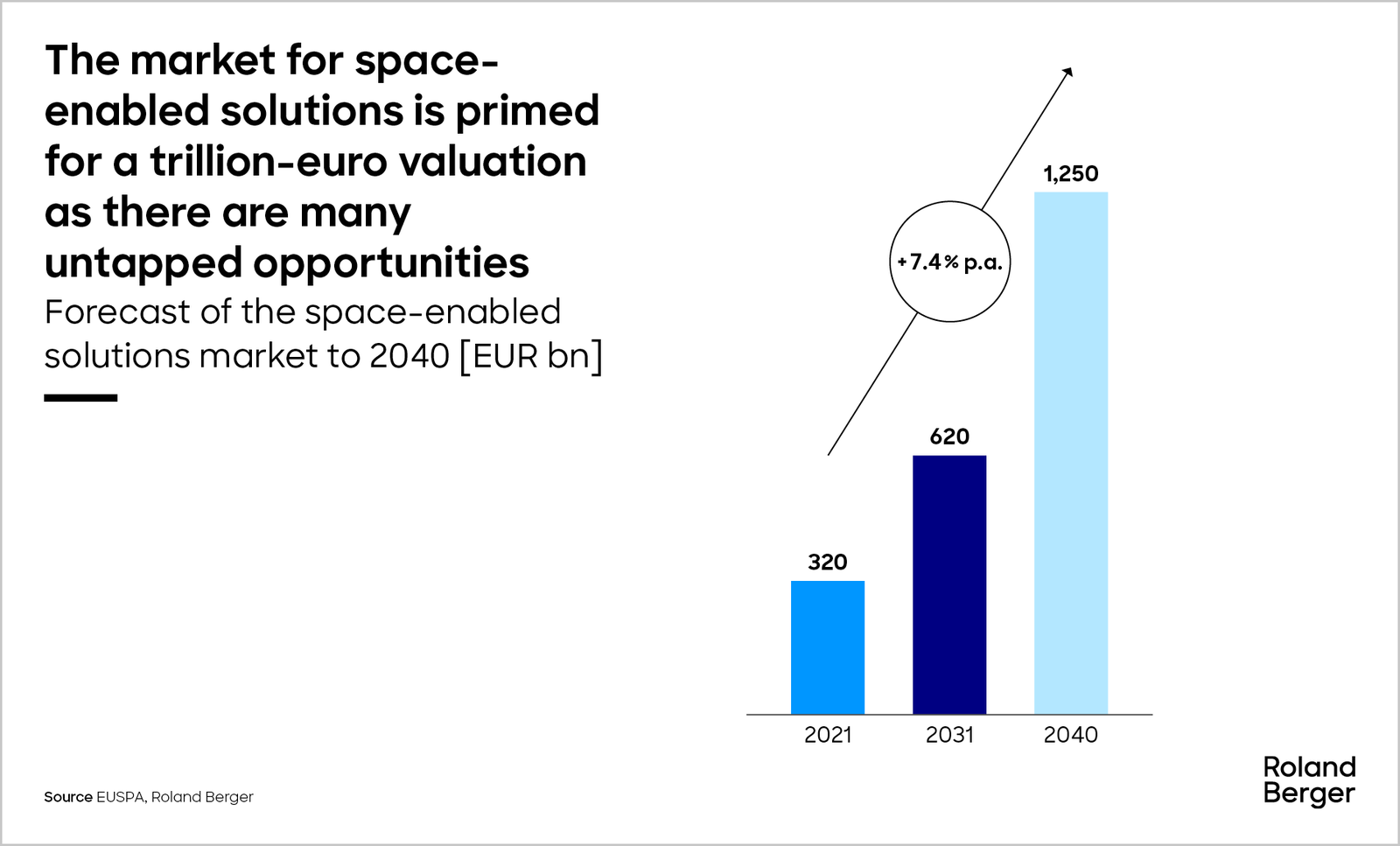
According to our forecast, space-enabled solutions are projected to represent approximately EUR 1.25 trillion by 2040. This growth will be driven by increasing digitalization and dependence on communication infrastructure, including space-based technologies. The automotive sector is expected to experience significant growth, with cars requiring hardware and software solutions for positioning and communication. This is essential due to the rising data exchange between vehicles and the surrounding infrastructure. In Germany, the automotive industry stands to gain from a thriving European space-enabled economy.
Additionally, in the consumer sector, the growing connectivity of devices like smartphones and wearables, equipped with positioning chips, will meet the rising demand for location-based apps, such as ridesharing and fitness apps. Other sectors, such as energy, logistics, and agriculture, will also witness increased adoption of space-enabled solutions.