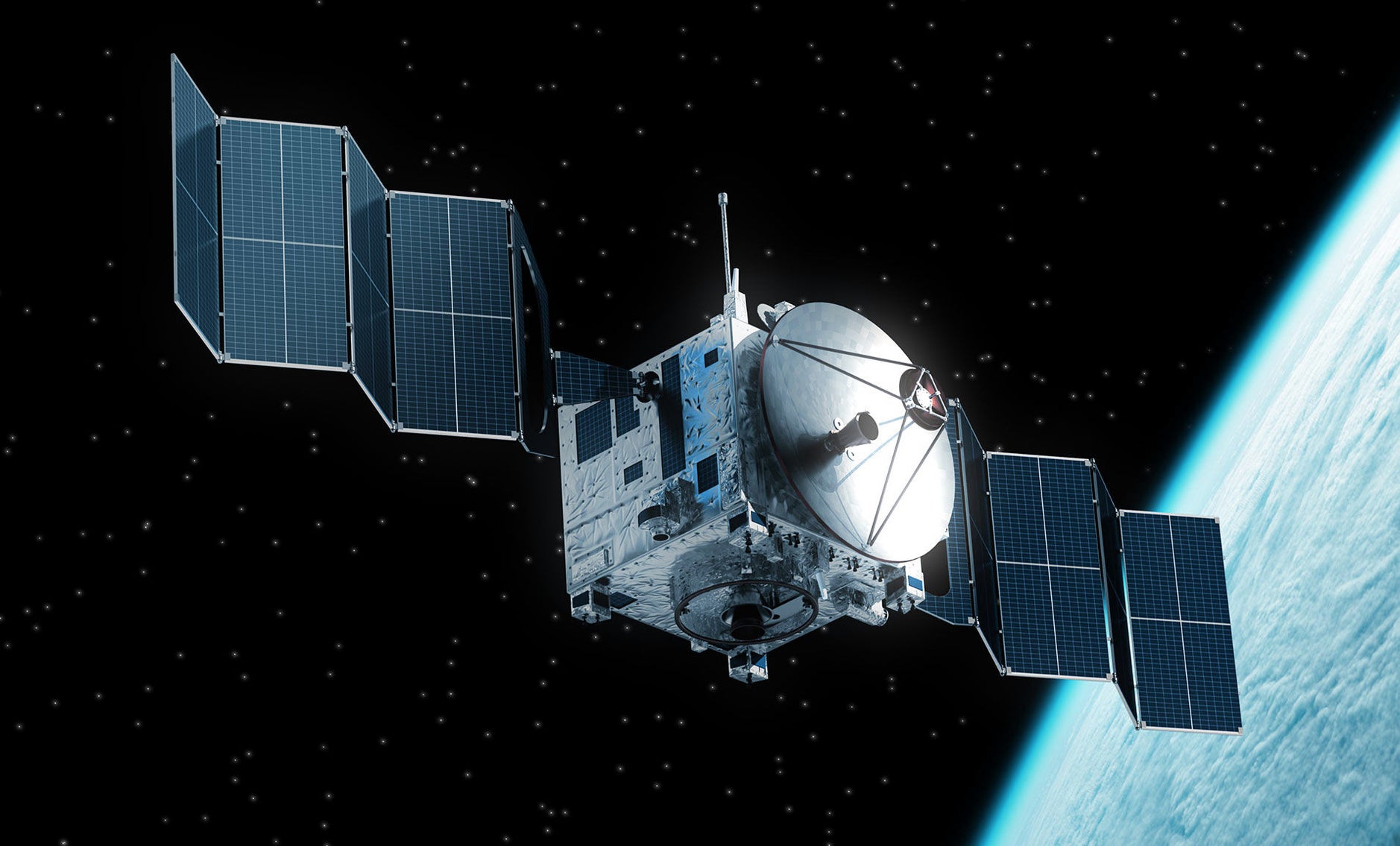
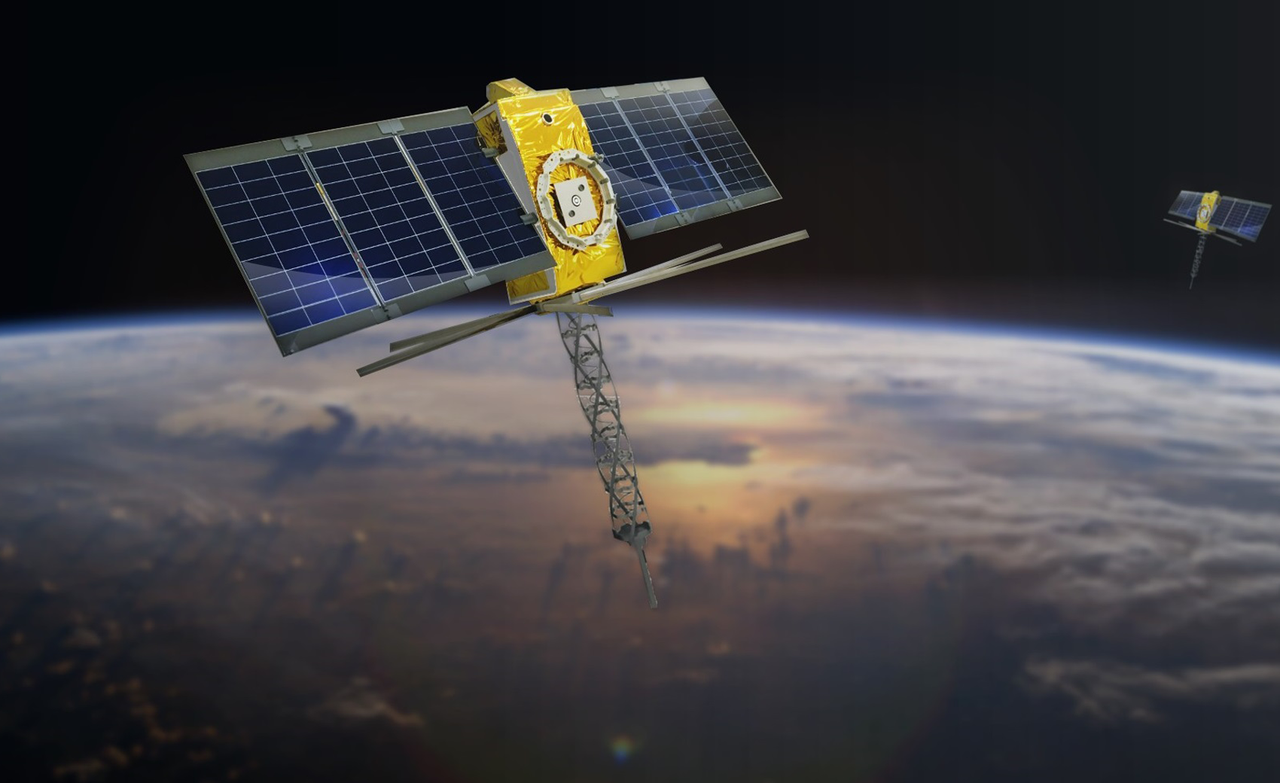
Despite popular imagination, the vast majority of satellites orbiting Earth are not large, car-sized spacecraft with wing-like solar panels. Rather they are shoebox-sized devices, often carrying little more than a camera and transmitter. So-called small satellites, or smallsats, weigh less than 600kg and typically operate between 200 and 2,000km above Earth. This proximity enables them to supply very fast communications links (for internet connections in remote places, for example) or capture very detailed images (for mapping etc).
They often have to cooperate in large networks (for example, planned mega constellations for global communication involve up to 41,000 satellites) to ensure sufficient coverage of the Earth. But their small size, low weight and low Earth orbit makes them easier and cheaper to launch than traditional, larger spacecraft. These advantages, along with the ever-increasing demand for global connectivity and Earth observation data have resulted in a booming market. Several big players are involved, and their mega constellation projects are driving the boom. In 2020, 87% of the 1,190 smallsats launched were for constellations. The total number launched is almost three times what it was in 2019, and is projected to almost double in 2024.
But the small-satellite sector is still developing and faces several barriers. These include a lack of a
robust busines
s case for a majority of companies involved in the field, and a dependence on a small number of mega constellation projects. One of its biggest challenge, however, is a launch bottleneck. the number and schedule of current launch systems, mostly large conventional rockets, is severely limited. This is hindering smallsat projects and putting pressure on launch services.
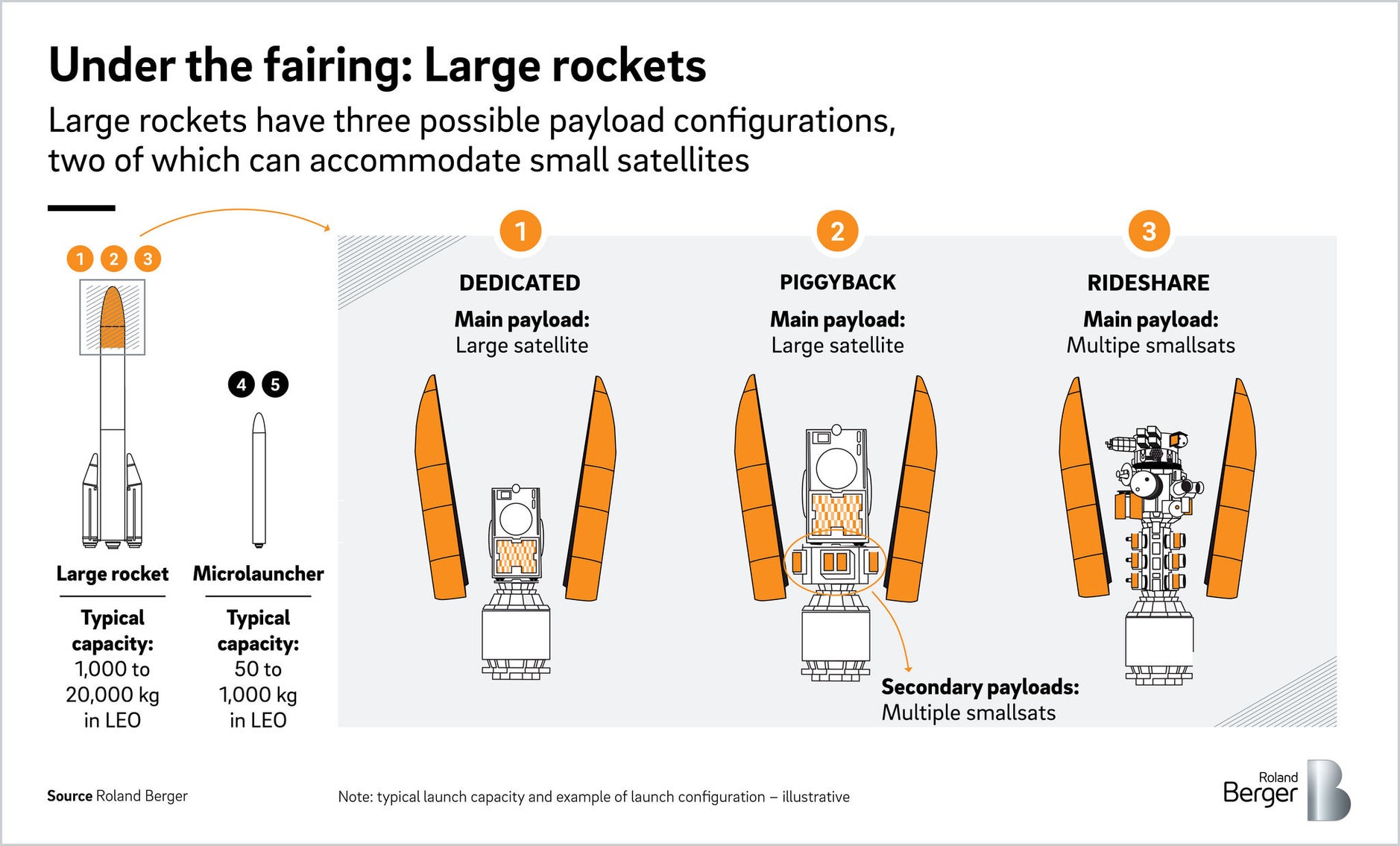
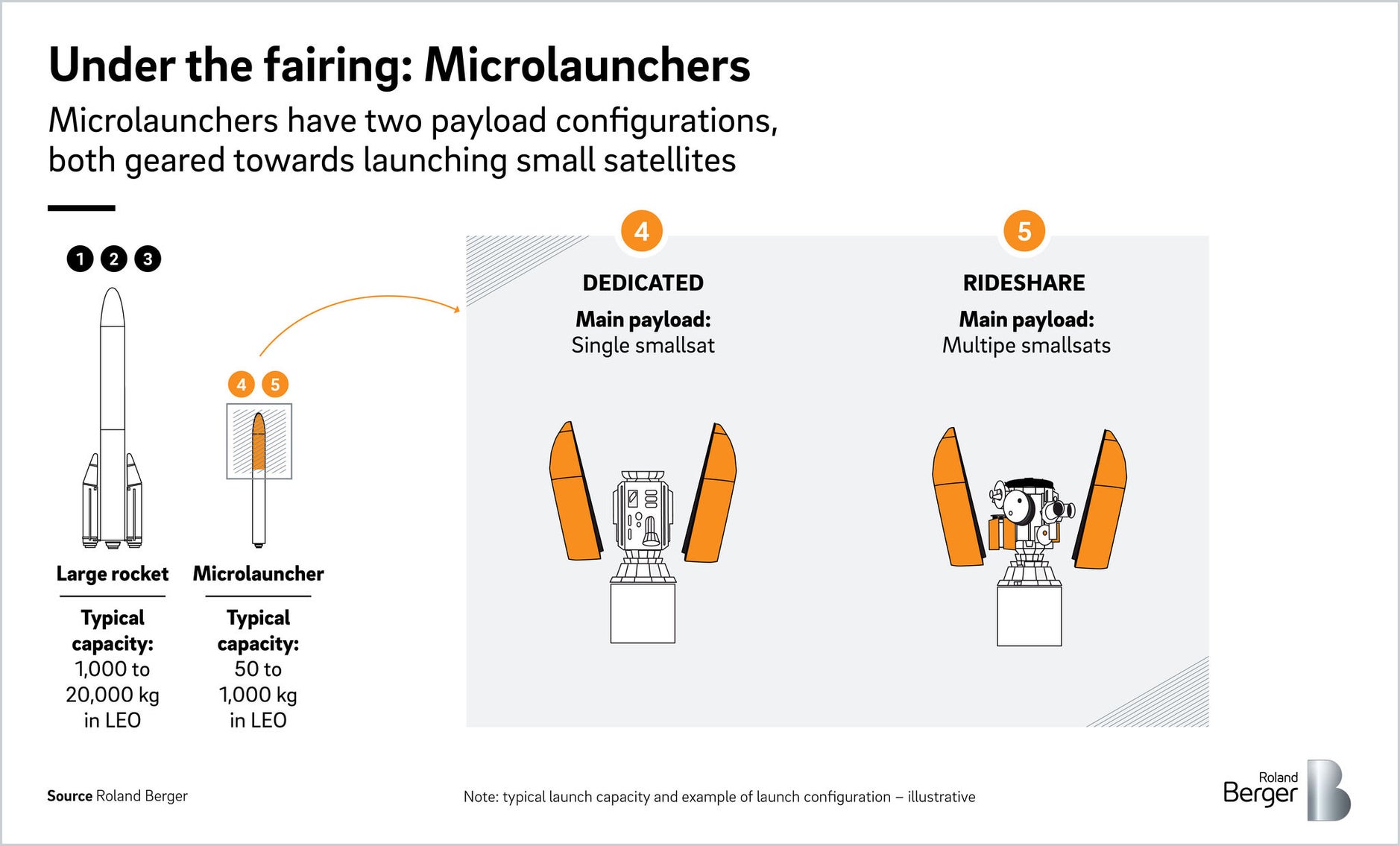
Microlaunchers, dedicated smallsat launch vehicles, offer a solution. Several types are already in use, typically carrying between 1 and 20 satellites. Solutions include dedicated smallsat rockets launched from mobile or static platforms and airborne-launched vehicles. Microlaunchers also face the competition of large rockets using smallsat deployers fitted under their fairings (so-called rideshare or piggyback solutions). Overall, more than 100 microlauncher projects have been announced worldwide since the early 2000s. The US dominates the market, with 44% of projects based there, while 33% are in Asia and 23% in Europe.