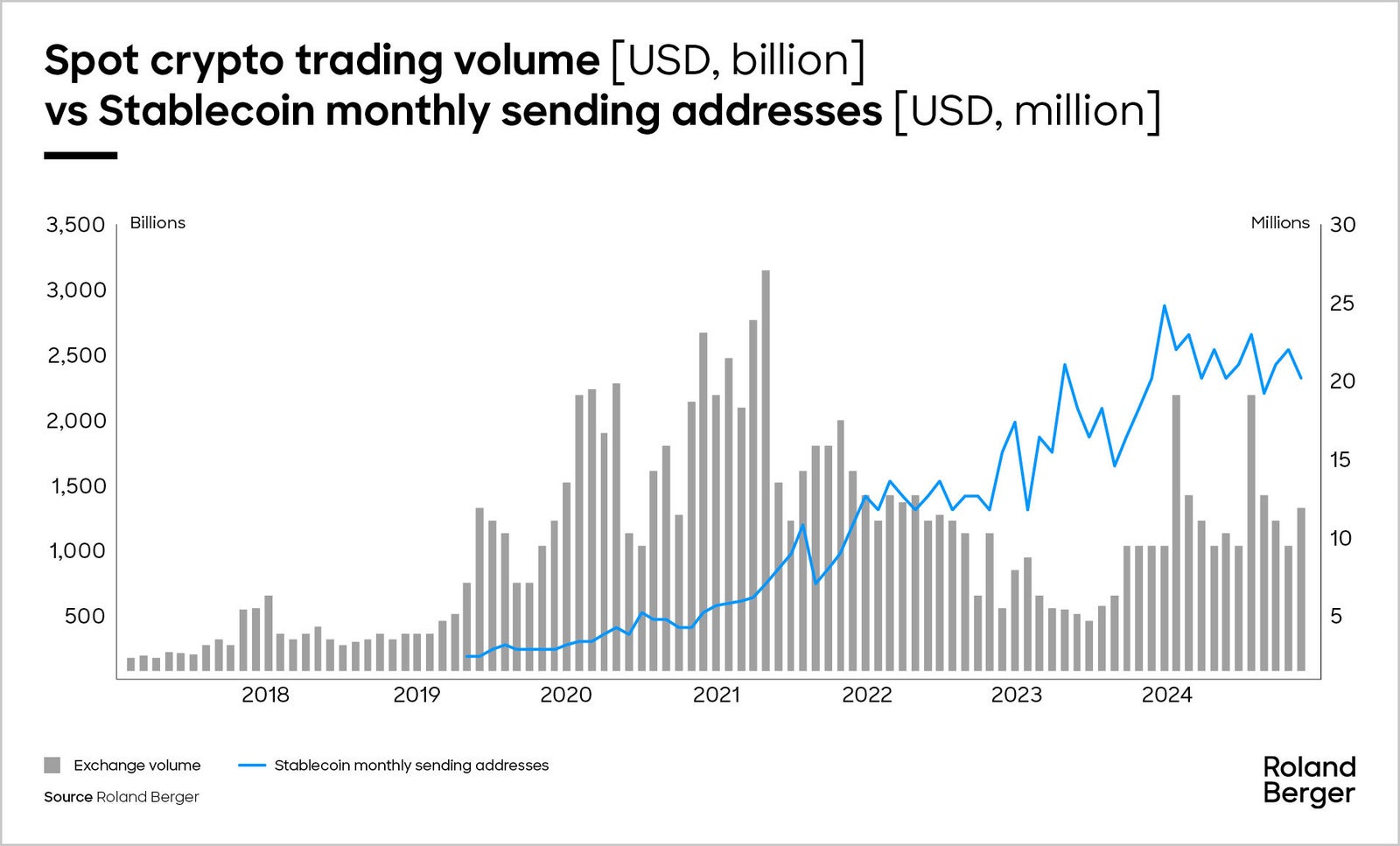
Having amassed more than USD 215 billion in total market capitalization, stablecoins today represent an increasingly viable alternative to traditional banking and payment services, offering faster, cheaper and direct transactions. Stablecoins make it possible to transfer money internationally in a matter of seconds and at minimal cost. As such, they have the potential to disrupt traditional financial services – from payments and remittances to core banking services such as checking accounts.
Although stablecoins have now found product-market fit, several challenges to their adoption remain. These primarily relate to the stability of the reserves upon which stablecoins are backed, integration with traditional financial services, user experience and regulatory acceptance. Stablecoin issuers, blockchain players and regulators are making progress in addressing these challenges. To remain competitive, traditional financial players such as banks and credit card providers need to assess how and when to integrate stablecoins into their service offering, while central banks and regulators should evaluate which guardrails to put in place to maintain stability without stifling innovation.
The advent of stablecoins demonstrates that the future of money is subject to a continuous process of evolution. Traditional financial institutions need to adapt as a matter of urgency.