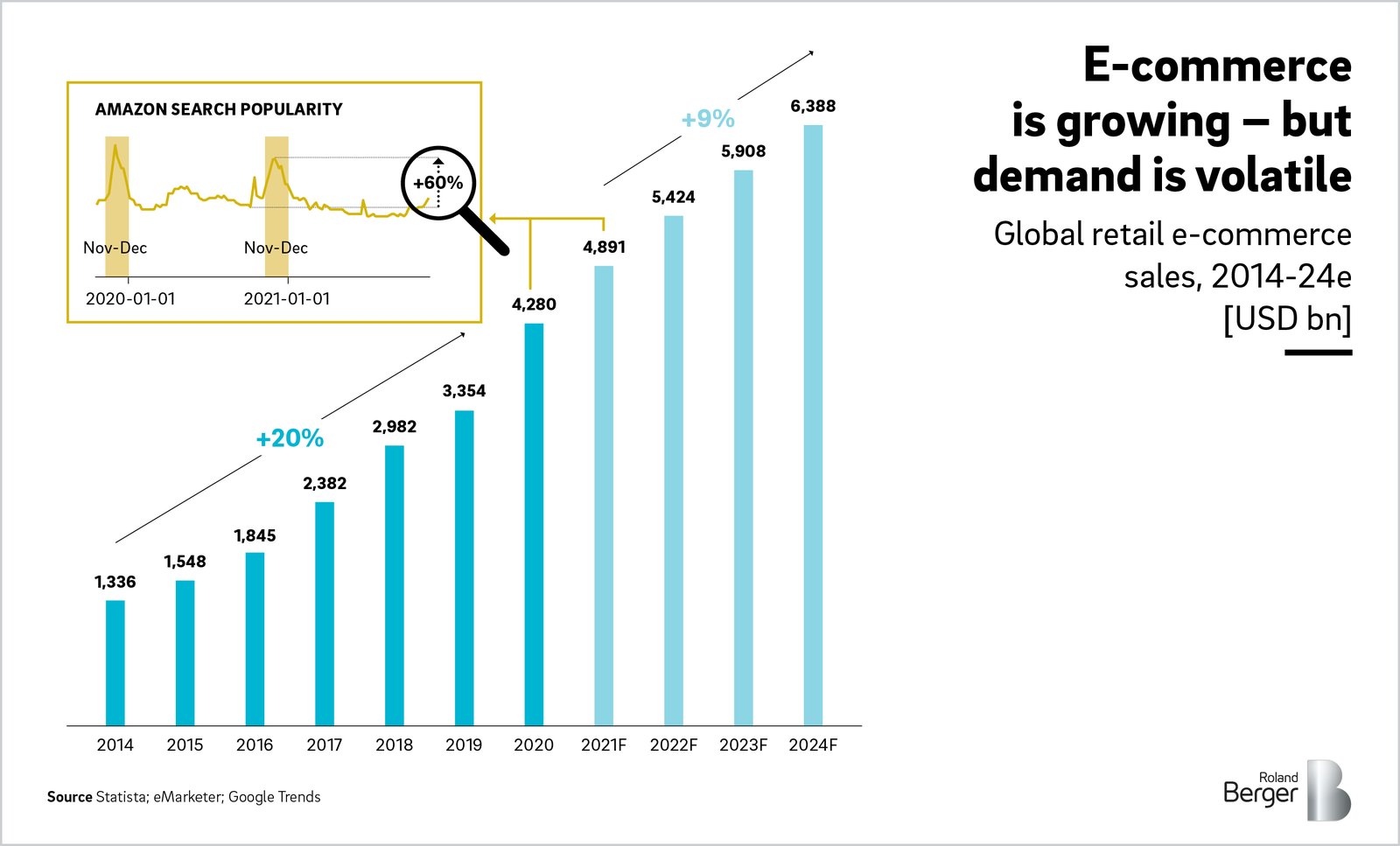
Spurred on by the Covid-19 pandemic, consumers increasingly expect ordered items to be delivered as fast as possible and at affordable prices. Convenience is becoming the order of the day. Global e-commerce sales have been booming and the market is expected to continue growing around 9% annually over the coming years. To meet these demands, logistics operators have “atomized” deliveries (i.e., fulfilling orders in fragments), which in addition to increasing complexities and costs, has also led to an overtaxed urban infrastructure and rising emissions. Roland Berger’s latest study, “From atomization to massification | Urban logistics must make a U-turn to achieve a sustainable future”, explores how a sustained collaboration between all involved stakeholders – from logistics operators to infrastructure providers and more - may be the only way to relieve the pressure placed on city infrastructures while ensuring that customer demands are met in a timely yet sustainable manner.


Study
Urban logistics: From atomization to massification
To meet growing customer demands for delivery speed and cost, urban logistics turned to “atomization.” This is no longer sustainable and logistics players risk bowing down to city regulations. Roland Berger explains how to avoid this.
Published September 2022. Available in