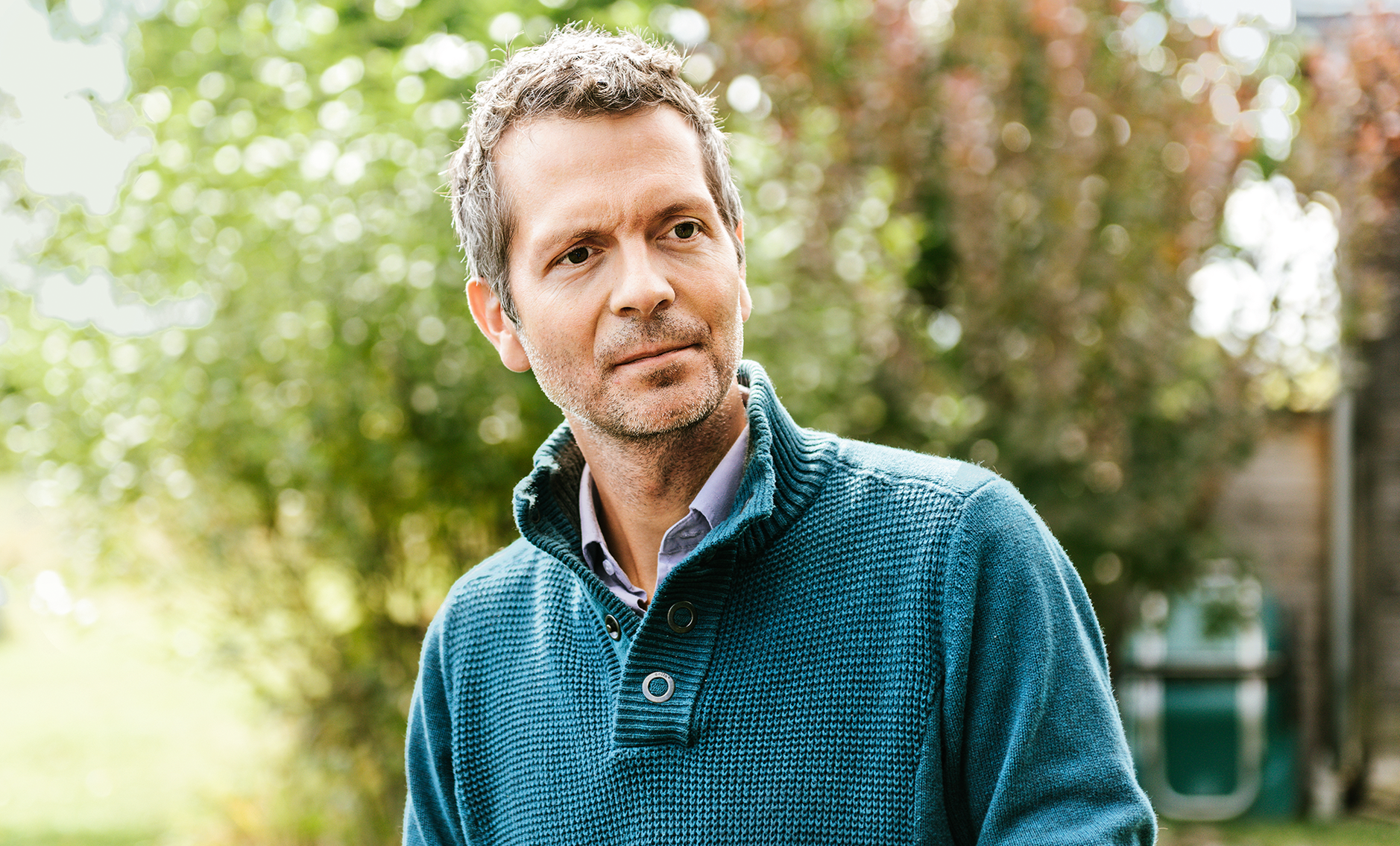
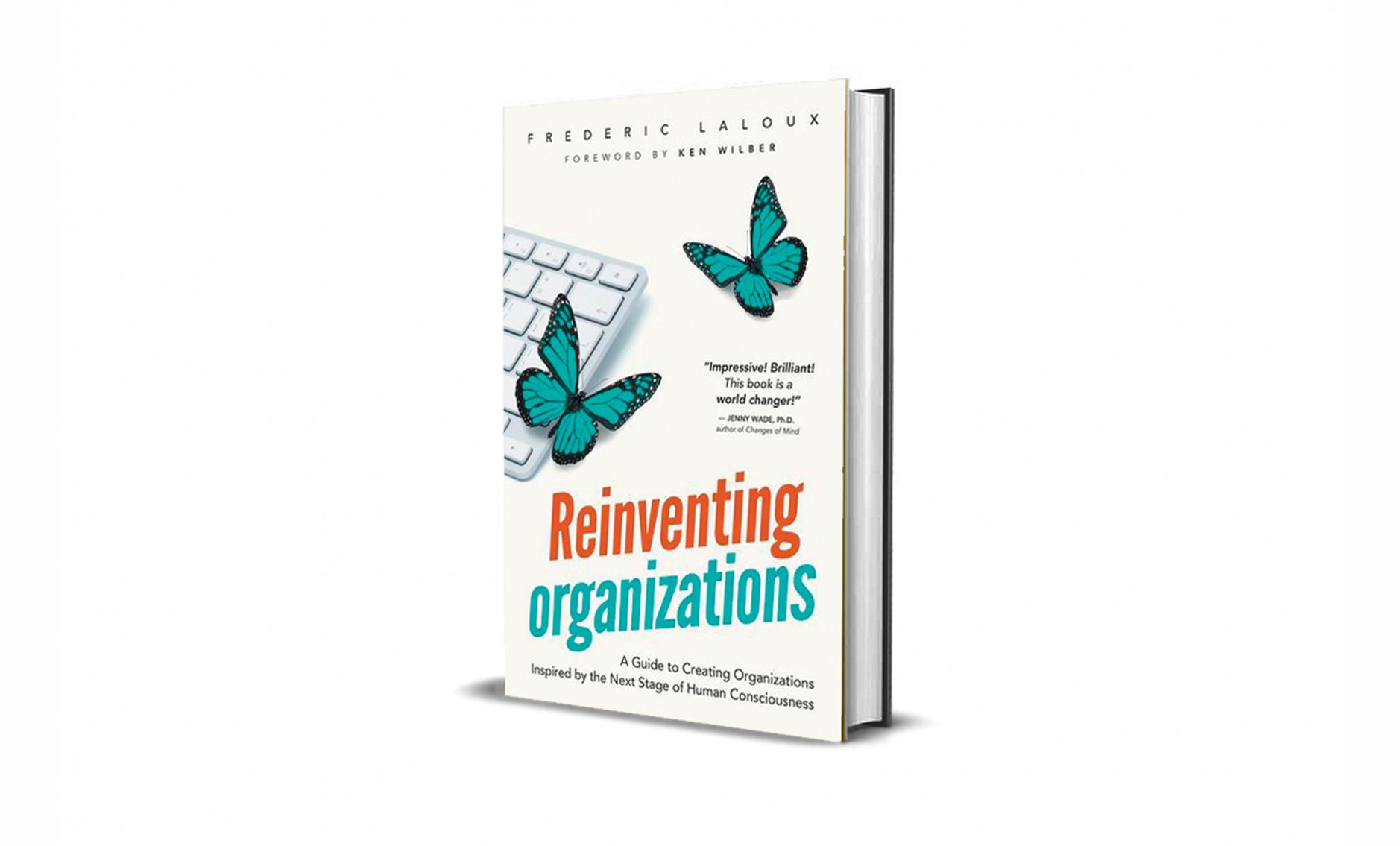
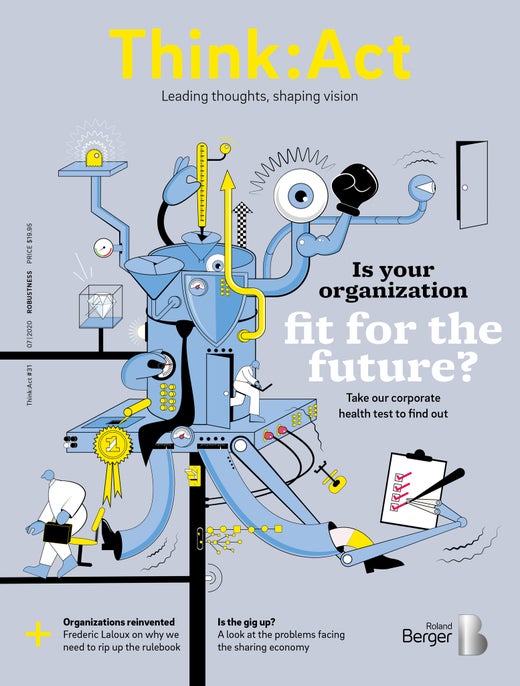
He doesn't often give interviews, and when he does, he likes to do them virtually – so as not to "put more carbon in the air." Speaking on a Zoom chat from his eco-community in New York State in February, just weeks before the coronavirus outbreak went global, Frederic Laloux's ideas about how companies need to change seem strikingly prescient.
Is the "reinvented organization" the way to create robust and resilient entities at a time when everything seems to be changing?
Traditional management, with its fixed job titles and reporting lines, its silos and bureaucracy is predicated on stability. It's inherently fragile when there is disruption, it's ill-equipped even for gradual change. By contrast, this emerging organizational model I've researched and shared – organic and networked – is all at once extraordinarily resilient, productive and soulful. Sadly, while it's in so many ways superior, it is still out of reach for most organizations because most leaders today still inhabit a mechanistic worldview […]
The mechanistic perspective sees the world as a complicated clockwork that a few clever minds can fully grasp and comprehend. In every organization, a handful of brilliant people must peer into the future and then map out a plan – two, five, ten years ahead – with all the initiatives and milestones needed to get there. Once the strategy is determined, you need to make sure the vast machinery of the organization – the thousands of people in their respective boxes of the org chart – execute this plan faithfully. If you see the world as a machine to be optimized, that's what you do.
But what if the world is not a complicated mechanic? What if we see it as it really is – a hugely complex, interconnected, nonlinear living system in constant flux? That makes a mockery of any plans that constrain it to a preset course?
Let's face it, by the time you make a brilliant plan, the world might have changed already. In this world, you need everyone – not just a few people at the top – to sense into what is changing and make the necessary decisions. In such a world, the whole system is constantly adapting and morphing towards its purpose.
Which makes organizations more resilient …
Indeed! Here is another way to understand this: Imagine an ecosystem like a forest. Forests are hugely complex systems. For some reason, this year, winter comes much earlier than expected. Imagine the five biggest trees saying, "Okay, everybody, freeze! We have an emergency. Don't do anything until we have thought [it] through. Once we have a brilliant plan, we'll let you know what to do." Yet, by the time they come up with their plan, spring has already arrived and it is too late. In reality, in a forest, the whole system – trees, moss, fungi, insects – immediately adapts as one and responds to deal with the situation.
So, we need to learn more from nature – not something we often do in corporate life. You say this mechanistic worldview feeds a process of maximization. Can you expand on that?
This mechanistic way to see the world has just one aim: You want the maximum output with the minimum input. Right?
There is really nothing else to a machine. This simplistic worldview has unfortunately permeated everything, including our personal lives. If you are offered a job that makes more money, you would be stupid not to take it, even though you might actually know, deep down, that this job will make you miserable. If you can have a bigger house, a bigger car, a nicer sounding job, you should take it. Yet, slowly but increasingly, some people are tired of this imperative to maximize their lives. I noticed this when my book became this sudden bestseller all around the world. A lot of readers asked me questions not about the book, but about my life choices.
At first, that surprised me. They naturally assumed that with a bestseller in my hand, I would give a talk every evening to rake in speaking fees, build a consulting firm around the book. That's the assumption of maximization we all carry to some degree in our heads. But they heard that I continued to live a simple life, saying no to almost all requests to keep spending lots of time with my children rather than in hotel rooms. That's what they wanted to talk about – because they too were tired of the game of maximization, and that topic was almost as interesting to them as what I wrote about in my book.