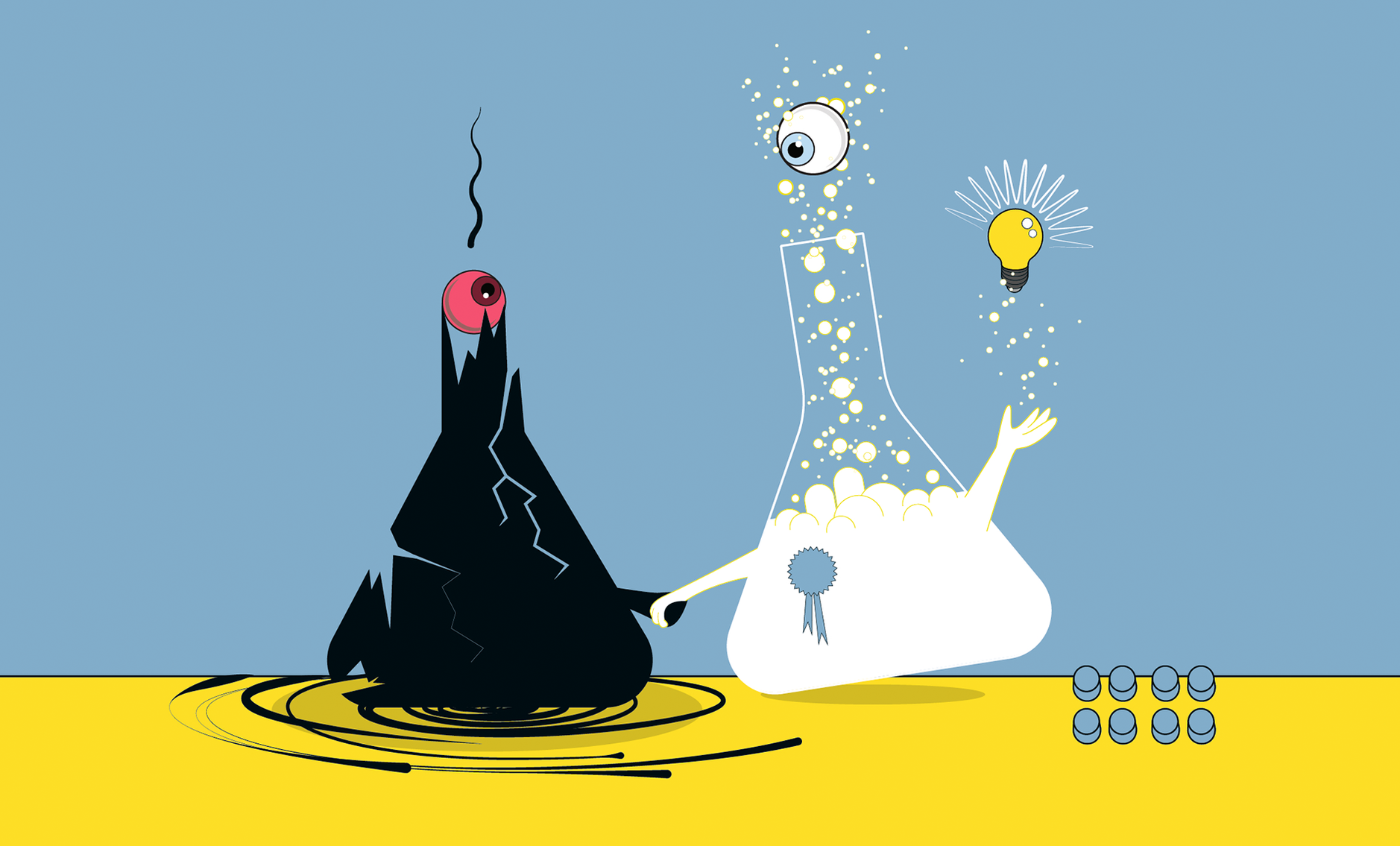
Jeff Bezos is one of them: In his 2015 letter to Amazon shareholders he wrote: "I believe we are the best place in the world to fail (we have plenty of practice!), and failure and invention are inseparable twins. To invent you have to experiment, and if you know in advance that it's going to work, it's not an experiment." Usually, we think of experiments as something lean and mean. More like a lab exercise than like real business. Bezos doesn't see it this way. "As a company grows, everything needs to scale, including the size of your failed experiments," he wrote in his shareholder letter three years later. "If the size of your failures isn't growing, you're not going to be inventing at a size that can actually move the needle. Amazon will be experimenting at the right scale for a company of our size if we occasionally have multibillion-dollar failures."
Phew! But if you prefer to experiment on a slightly lower budget, look at the other giant that is embracing failure and experiment: Google. Google Earth, Google Maps, Google Mail, they all started as experiments. Gmail even set a record for time in beta mode. After its April 2004 launch, it took more than five years before the beta label was removed. The number of failed experiments at Google is legion. Or, to be precise: 166, according to the "Google Cemetery" website.
Google even developed its own tool to fast-test innovative ideas: pretotyping. It follows on from rapid prototyping, a Silicon Valley methodology where you fail fast but learn fast too. Alberto Savoia, Google's first engineering director and now a lecturer at Stanford University explains it as being "the best way to make sure that the idea you want to build is 'The Right It' before you invest what it takes to build it right." He advocates the 3-digit-case: A few hundred bucks and a few hours of time should be sufficient to bring it to the first test level. Of course you get to a lot of fast failures that way, but, according to Savoia, also get to more successes and fewer missed opportunities.
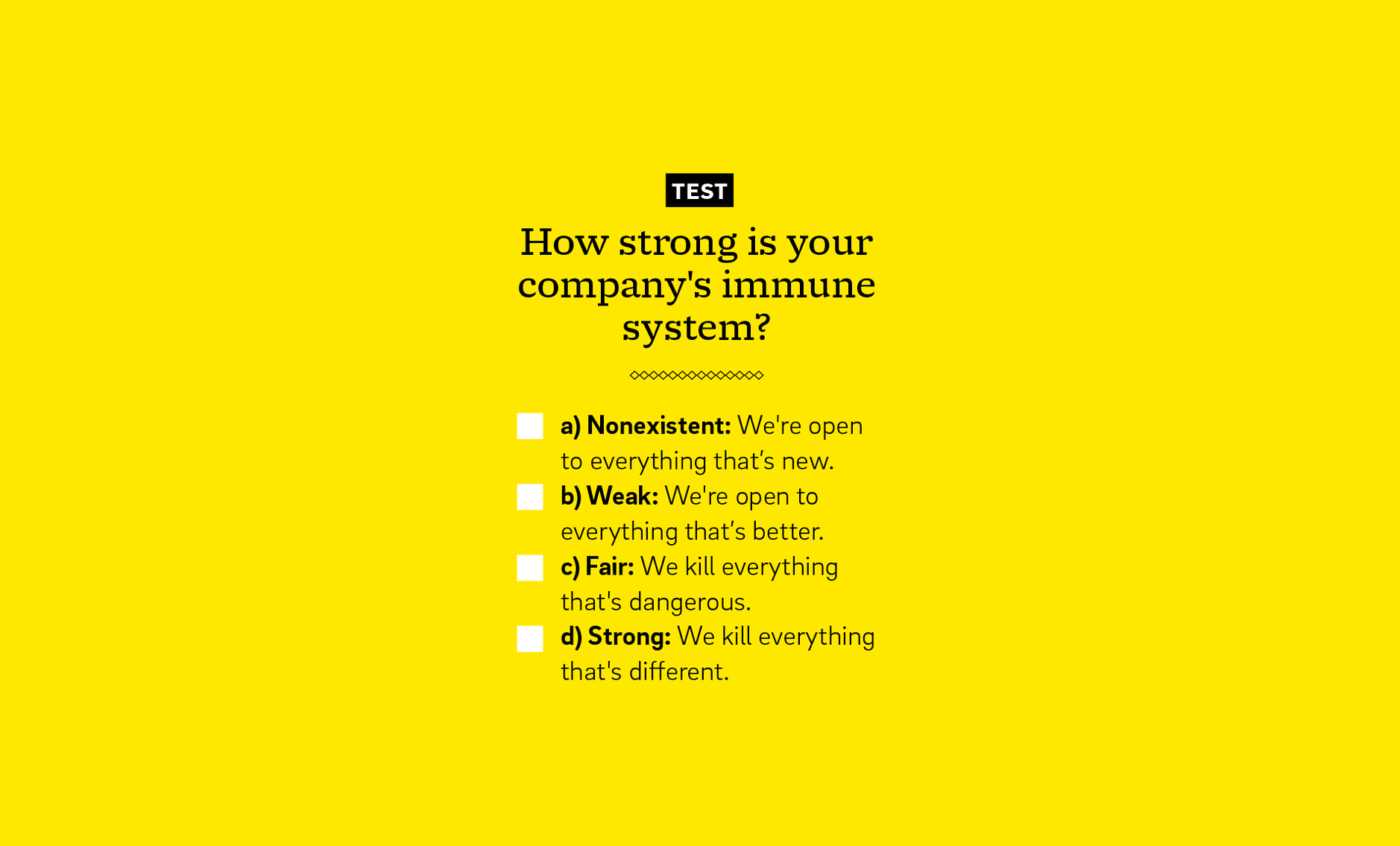
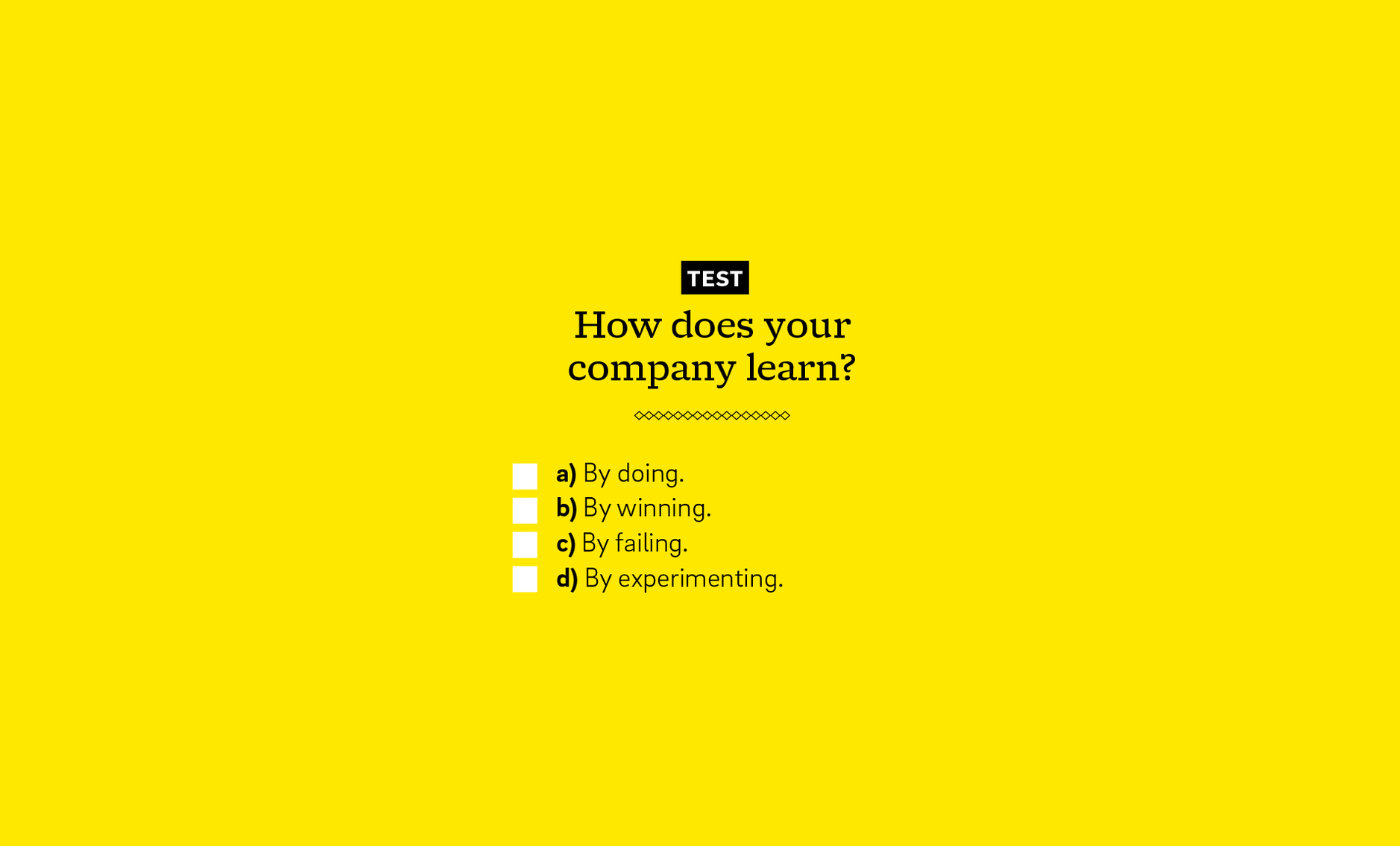
So why not think about combining C and D. The more experiments you start, and the sooner you cut off the ones that don't succeed, the more you learn – and the better the ecosystem where the successful experiments can thrive.