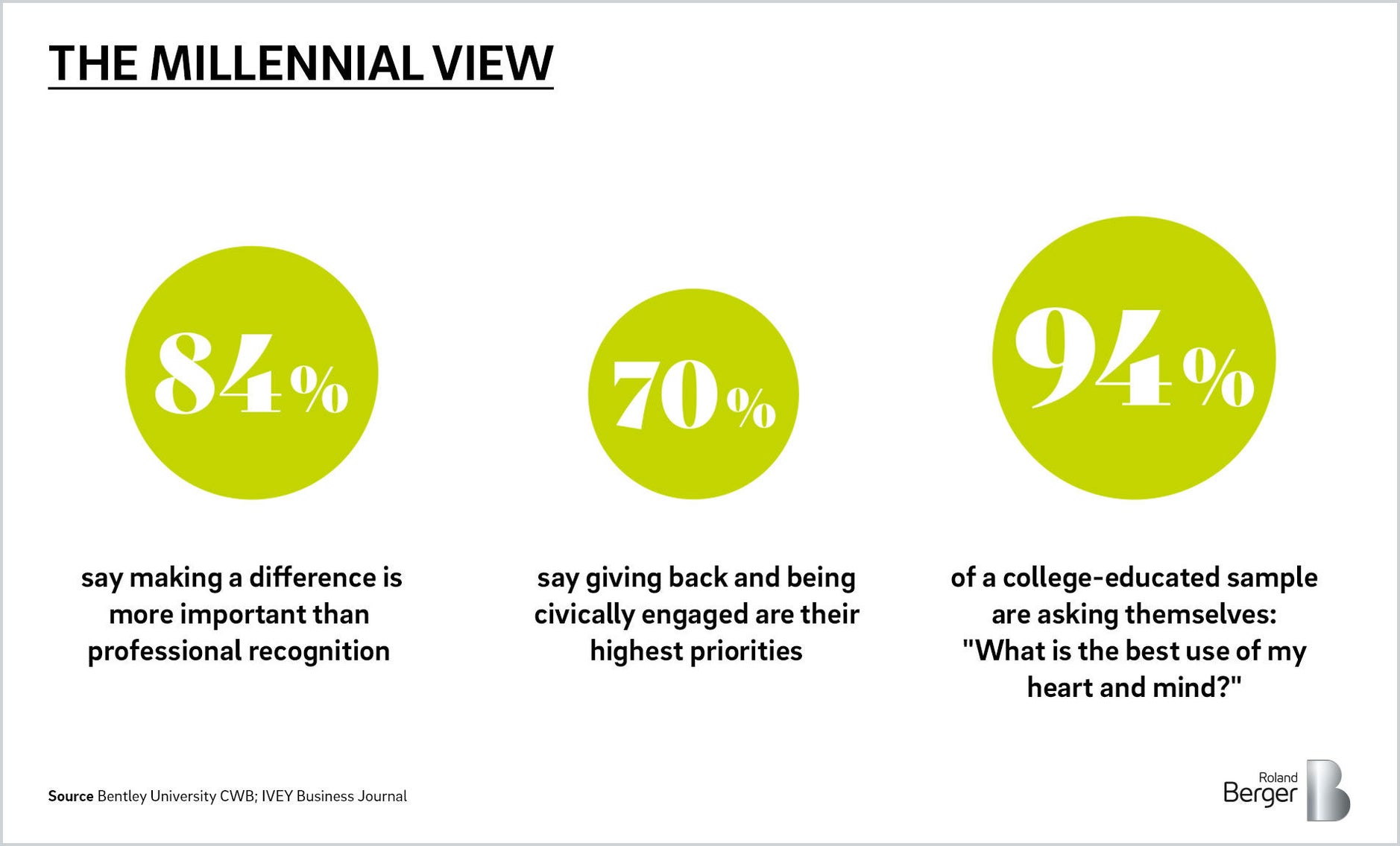

The long-held assumption that businesses exist simply to make money for shareholders is being challenged. There is a growing trend to focus on the longer term and the wider social impact that a business can have. How has this shift come about? And, more importantly, how can a successful company embrace "purpose"?
With his 1962 book "Capitalism and Freedom", the influential economist Milton Friedman set out the ground rules for how business should interact with society. "There is one and only one social responsibility of business," he wrote, and that was to "use its resources and engage in activities designed to increase its profits so long as it stays within the rules of the game, which is to say, engages in open and free competition without deception or fraud." In other words, it is none of business's business to get involved with anything other than creating value for shareholders. Or as it has been reduced to a now famous adage: The purpose of business is business.