From core to periphery
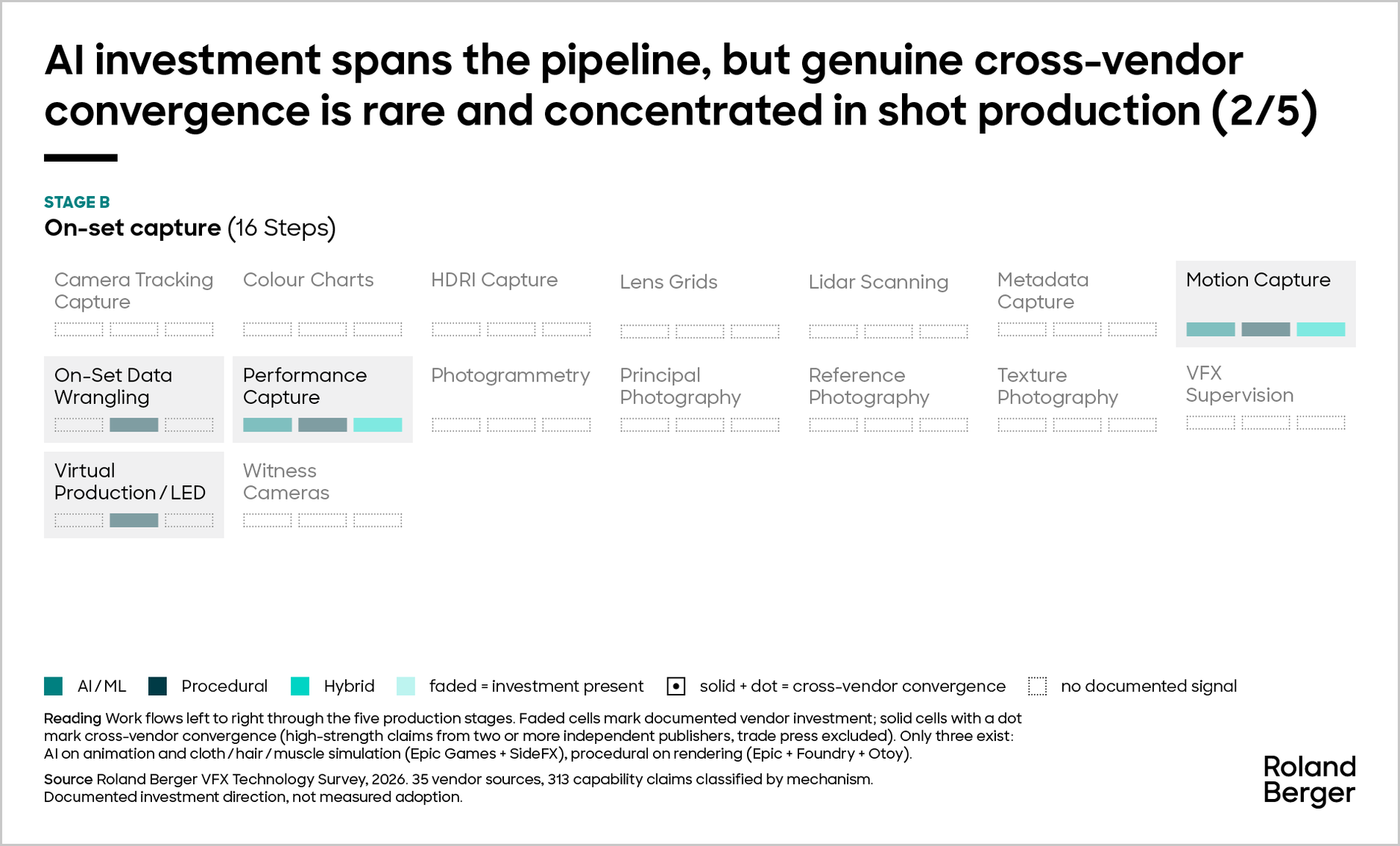
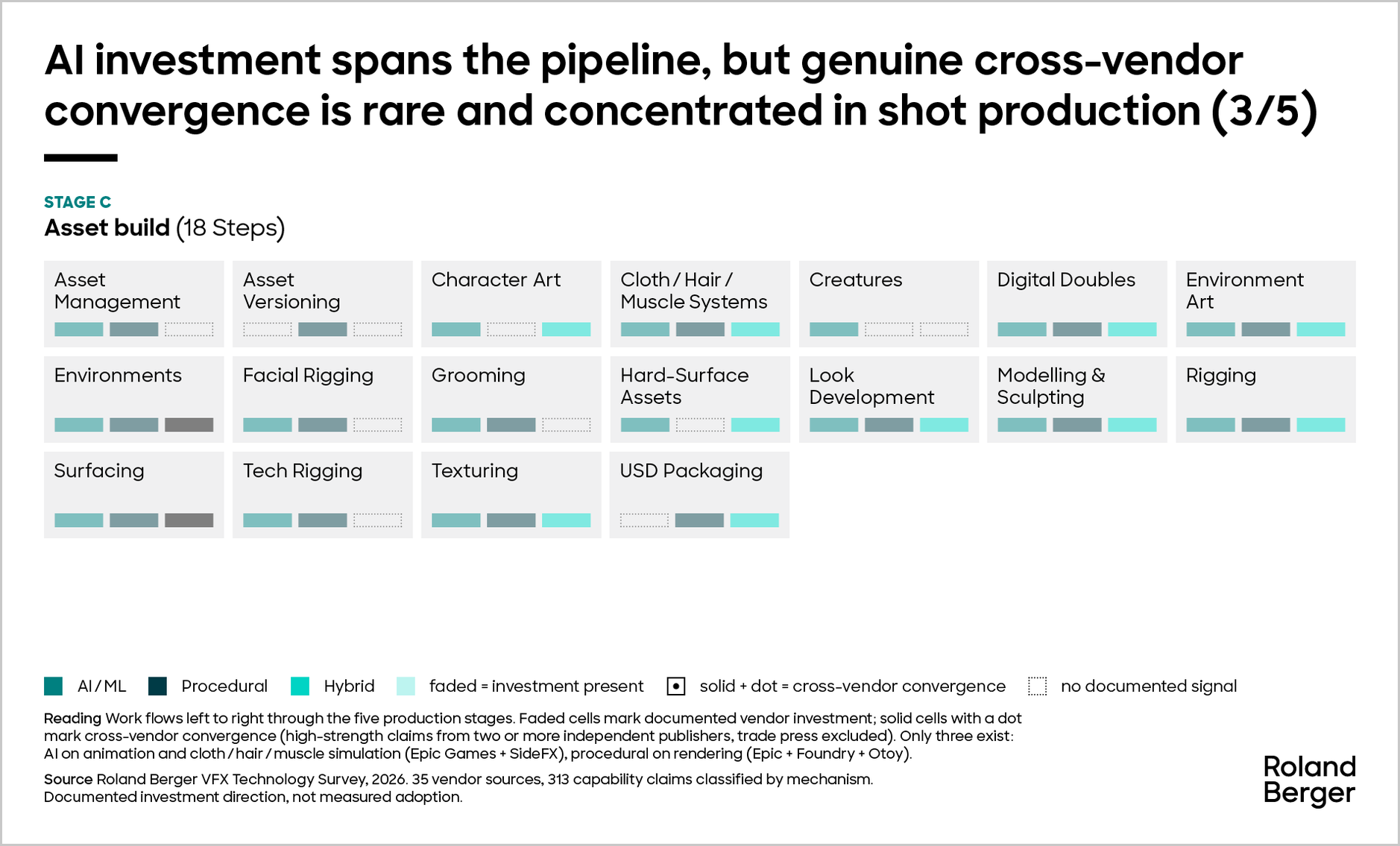
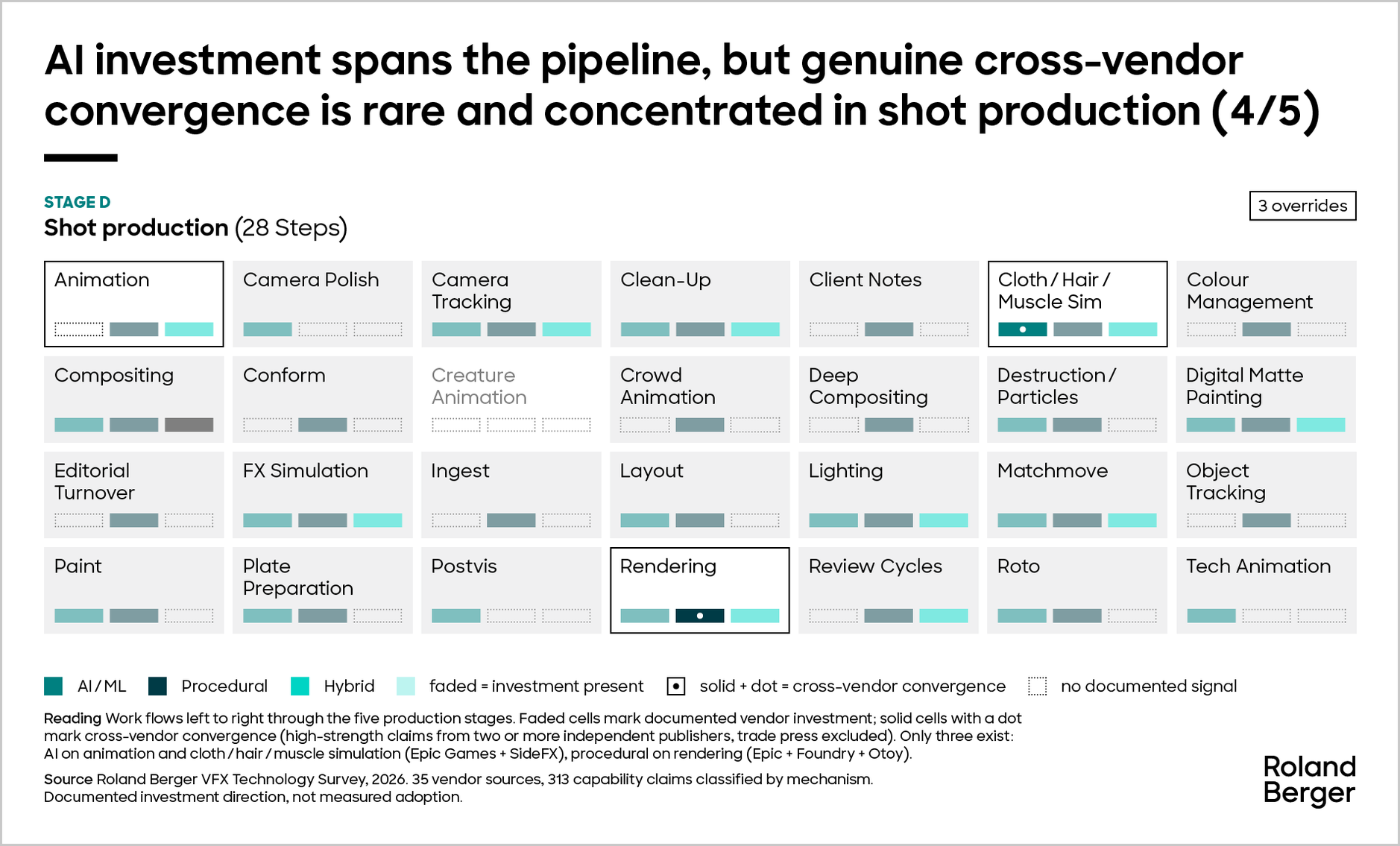
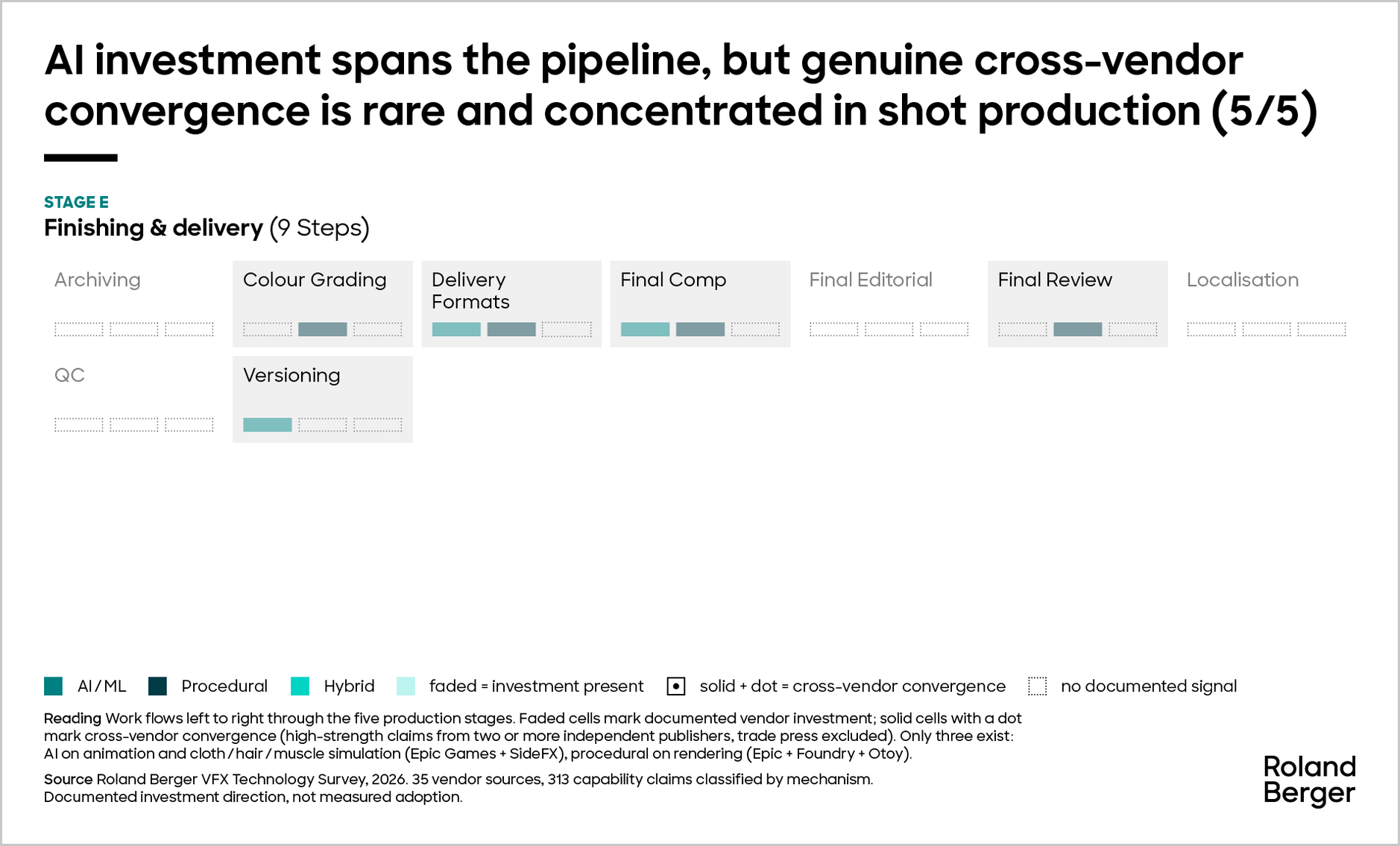
Two distinct zones of change are emerging: a contested execution core and a newly visible pre-production periphery. The execution core includes areas such as compositing and rendering, alongside animation and texturing. On a simple feature count, these areas look busy: vendors of different types are documenting capability across them. But the pattern is not always deep convergence. Some steps show strong single-vendor depth rather than broad
market
agreement. Foundry’s CopyCat in Nuke, for example, trains on artist-supplied frames and propagates the result across a sequence. That is a substantive machine-learning capability, but it should not be confused with proof that every compositing problem has become a multi-vendor AI battleground.
The clearest area of deeper machine-learning convergence is character work, especially character deformation, and the simulation of cloth, hair and muscle. Epic Games and SideFX have each documented ML approaches in this area, using models trained on artist-supplied outputs. The common feature is narrow, supervised learning, not generic model generation.
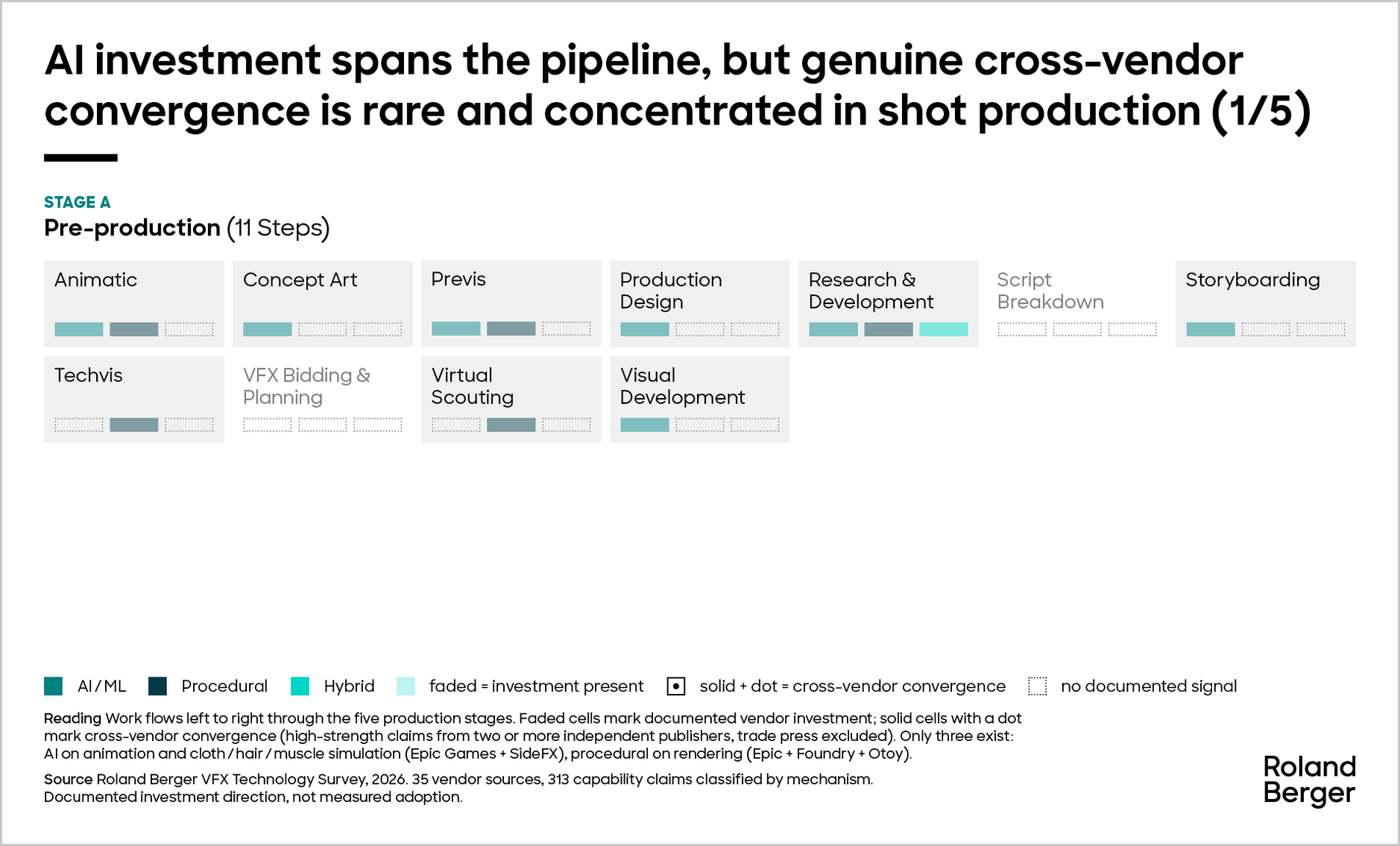
The periphery looks different. Pre-production has historically been less productized by established VFX software vendors. Concept art, visual development, previsualization (previs), storyboarding and shot planning were not deeply integrated into the VFX software stack. That has created room for AI-native and adjacent vendors to enter. Runway, Luma AI, Alibaba’s Wan and Unity are targeting these earlier workflow steps with documented capabilities. The strategic point is not that these tools have already replaced production workflows. It is that they are entering stages where incumbents were less entrenched, and where studios can move closer to the point where a show is being shaped, not just where shots are being delivered.