Practical lessons and pitfalls
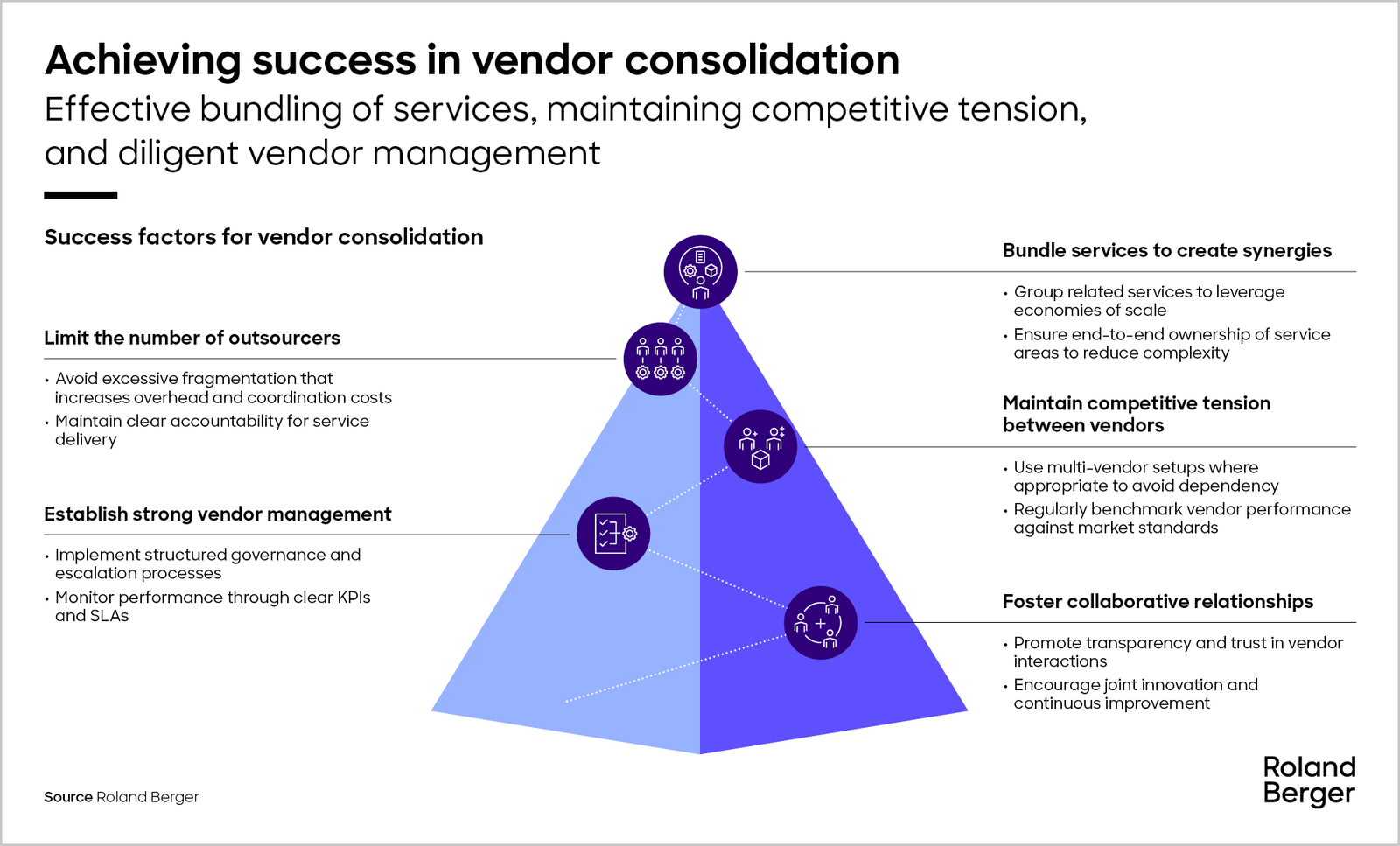
From project experience of multiple vendor consolidation projects in various industries, several lessons emerge about what to do – and what to avoid – when consolidating vendors.
1. Don't underestimate stakeholder resistance - Business units often have "favorite vendors" they trust, even if contracts are small or expensive. Removing those vendors can generate pushback. Strong change management and clear communication of benefits are essential.
2. Avoid vendor lock-in - Large integrators will push for sole-supplier arrangements. Resist the temptation to consolidate to one vendor per tower. Always keep at least two capable players in your ecosystem.
3. Look at total cost of ownership - The cheapest vendor isn't always the best choice. Evaluate costs holistically, including transition, governance, risk, costs for potential change requests, and potential innovation benefits.
4. Establish clear exit ramps - Contracts should include exit clauses, benchmarking, and mechanisms to rebalance scope if performance falters.
5. Balance global efficiency with local needs - Consolidation often pushes toward global contracts, but local regulatory or cultural requirements may still require flexibility. A "glocal" design – global frameworks with local adaptation – works best.
Capabilities needed internally
Vendor consolidation is not just about changing contracts. It requires strengthening internal capabilities. A strong, centralized vendor management office (VMO) is crucial, as this team tracks performance, manages governance, enforces standards, and maintains competitive tension. Procurement teams must also have the strategic
sourcing skills
to run large, complex sourcing events and structure contracts that balance consolidation with competition.
In addition, clear escalation paths, joint steering committees, and performance dashboards are necessary to manage fewer but larger vendors, forming the foundation of strong governance structures. Finally, sourcing leaders need the soft skills to manage internal politics, address fears, and align business units behind the consolidation strategy.