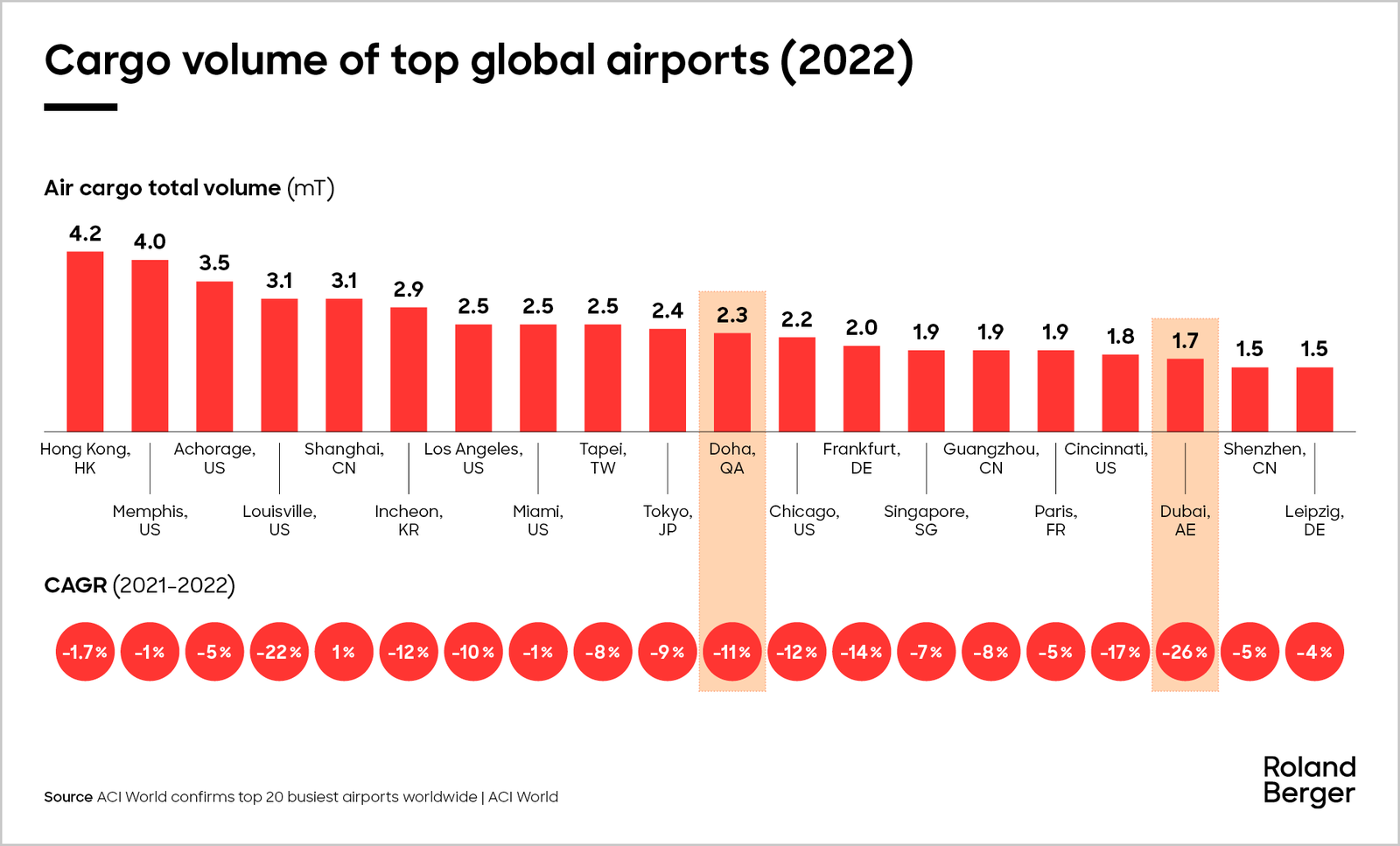
The top global airports leverage several strengths to attract over 40% of international air cargo volume. Strategic geographic location is one of the key strengths, especially for cities like Doha, Dubai, Hong Kong, and Anchorage. The strategic positions of Doha and Dubai between Asia, Europe, and Africa reinforce their status as a key transit point for global air freight routes, contributing to their high volume of air cargo trade. Hong Kong's strategic location, at the heart of Asia, positions it as a crucial gateway to China and other Asian markets, making it a prime choice for businesses. Lastly, Anchorage's geographic location at the crossroads of air routes connecting North America with Asia and Europe has made it a key refueling and transshipment point for cargo aircraft traveling between these continents.
Additionally, predominant air carriers or postal services significantly influence air cargo trade volumes in cities like Memphis, Louisville, Dubai, and Doha. Memphis's status as the global hub for FedEx, one of the world's largest express transportation companies, has transformed the city into a crucial center for air freight operations. Similarly, Louisville's prominence in air cargo trade is due to UPS's global air hub, which efficiently distributes packages to destinations across the country and around the globe. In Dubai, the presence of Emirates and its extensive network reinforces the city's status as a global hub for air cargo trade, attracting businesses seeking reliable and efficient transportation solutions. Likewise, Doha's Hamad International Airport features modern cargo facilities and serves as a base for Qatar Airways Cargo, bolstering the city's role as a prominent hub for air cargo trade.
Further, world-class infrastructure is crucial in supporting the high air cargo volume and highlighting airports’ key strengths. For example, Shanghai's modern cargo facilities at Pudong International Airport and extensive flight network contribute to its prominence in air cargo trade. In contrast, Los Angeles's modern cargo facilities at LAX, coupled with its efficient logistics infrastructure, solidifies its position as a premier hub for air cargo operations. Similarly, Tokyo, Doha, and Dubai airports boast extensive cargo handling facilities and world-class infrastructure, ensuring smooth operations for air cargo shipments.
The Middle East
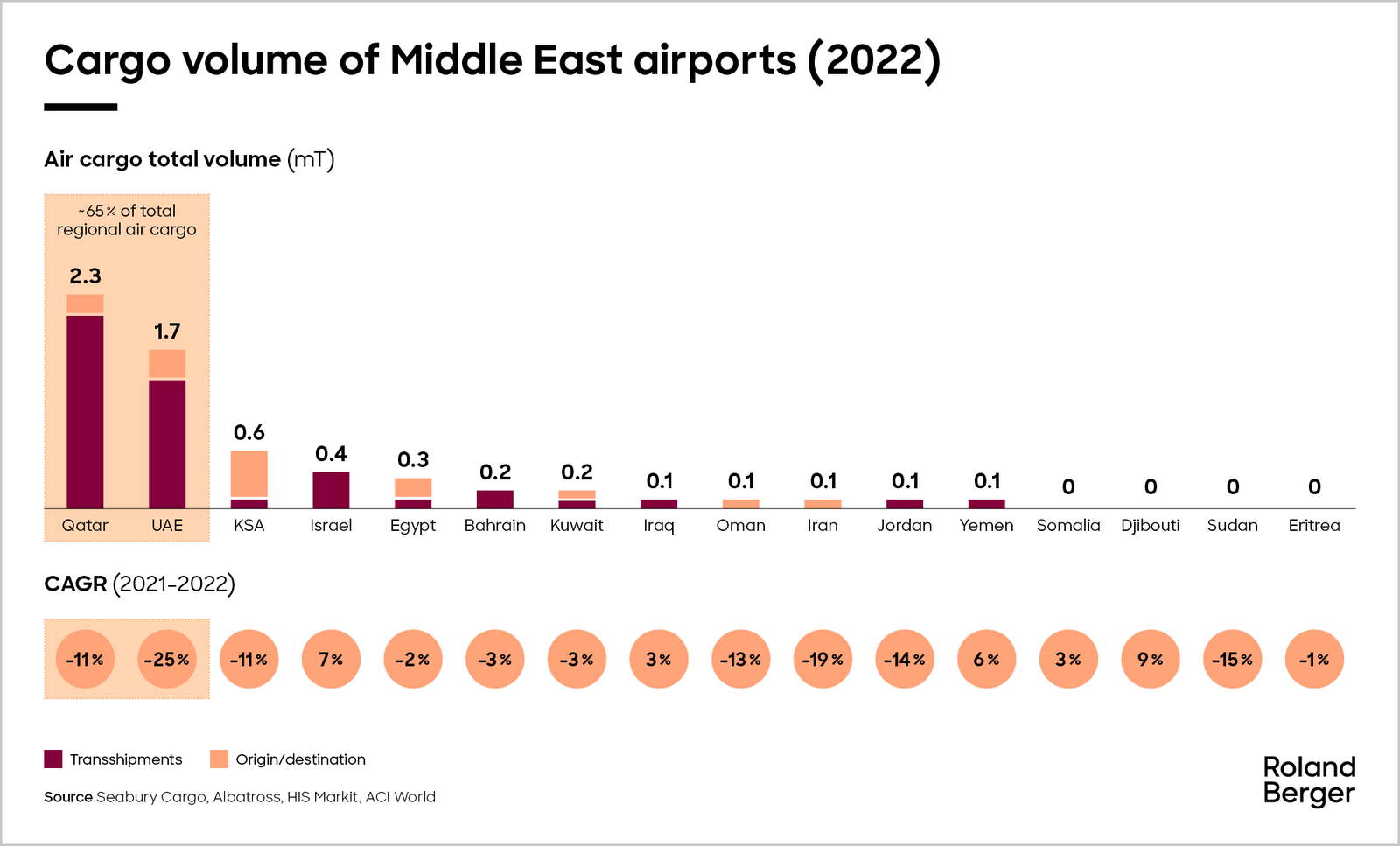
The Middle East comprises approximately 6 million tons of air cargo — 5% of the global air trade. There is competition within the Middle East to be a dominant transshipment hub, with Doha and Dubai handling roughly 65% of the Middle East air cargo volumes.