Key takeaways: What this means for the market
Three conclusions stand out for equipment OEMs and investors navigating this environment.
Supply chain control is becoming a competitive moat. The companies that establish preferred supplier relationships, co-invest in capacity, and co-develop next-generation product architectures in the next 12 to 24 months will hold a structural advantage that is difficult to close retrospectively. Those that wait will compete for residual capacity at a premium — or find that preferred access has already been contracted away.
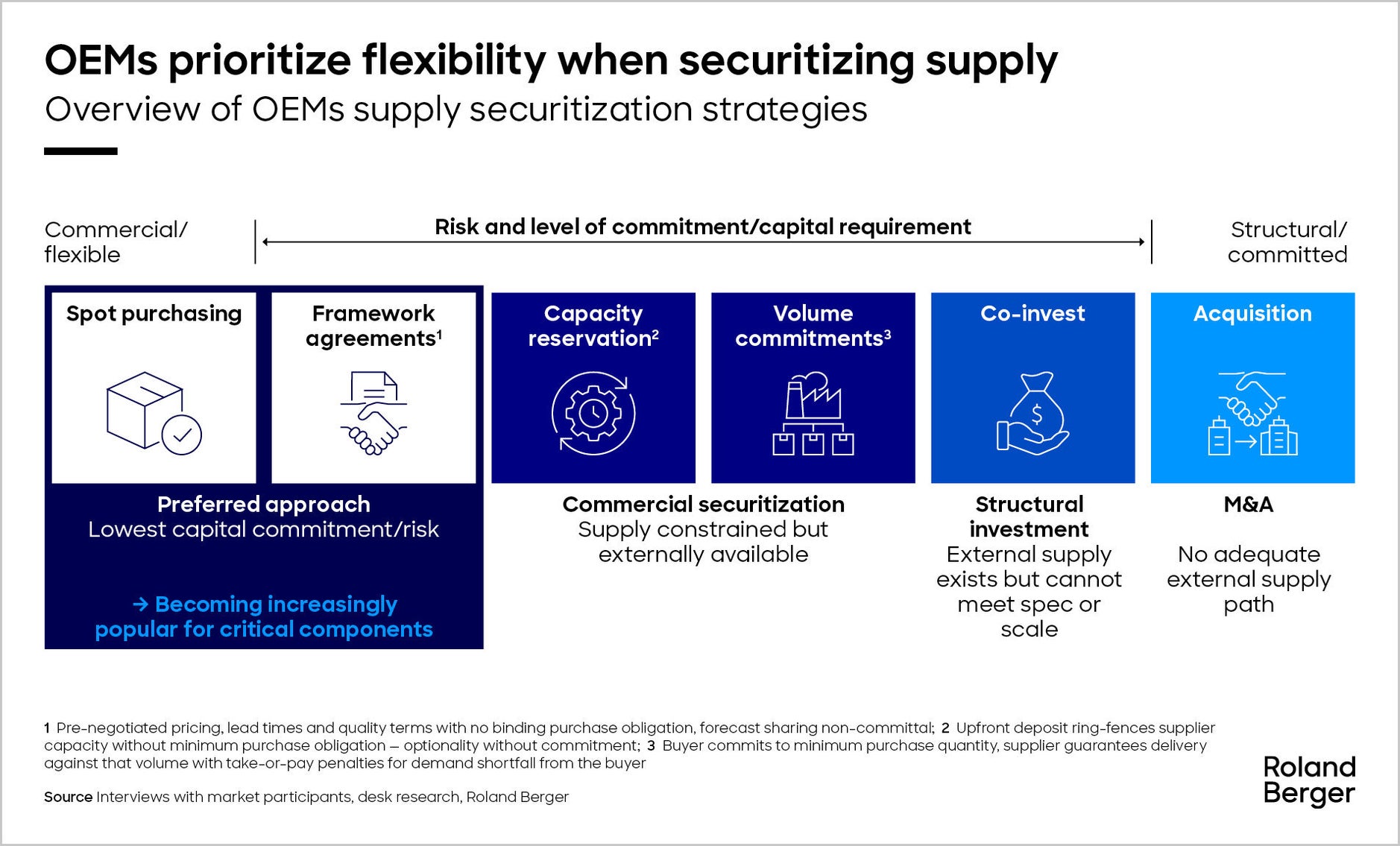
The investment required is escalating, not stabilizing. Each tier of supply securitization, from framework agreements through co-investment and acquisition, carries greater capital commitment and longer lead times to activate. OEMs that have not yet moved beyond spot purchasing or basic framework agreements are operating with a growing gap relative to peers who have already committed to structural supply arrangements.
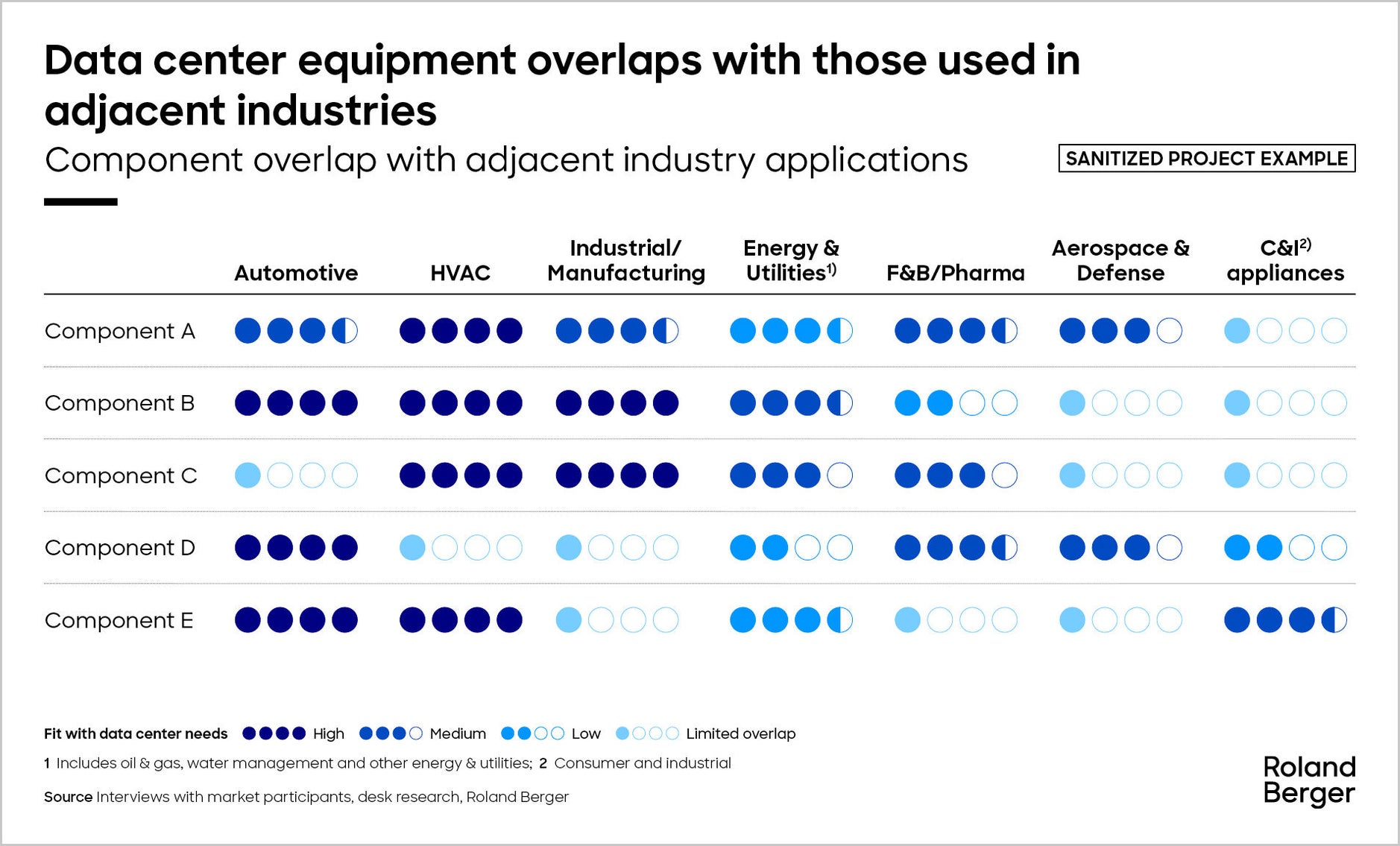
Adjacent industries are an underdeveloped resource. Automotive and industrial suppliers with relevant process capability represent a faster and more capital-efficient path to supply base expansion than purpose-built alternatives, particularly as the volume and repeatability requirements of AI infrastructure buildout begin to align with the production rhythms those industries already operate at scale.