How to reduce supply chain risk
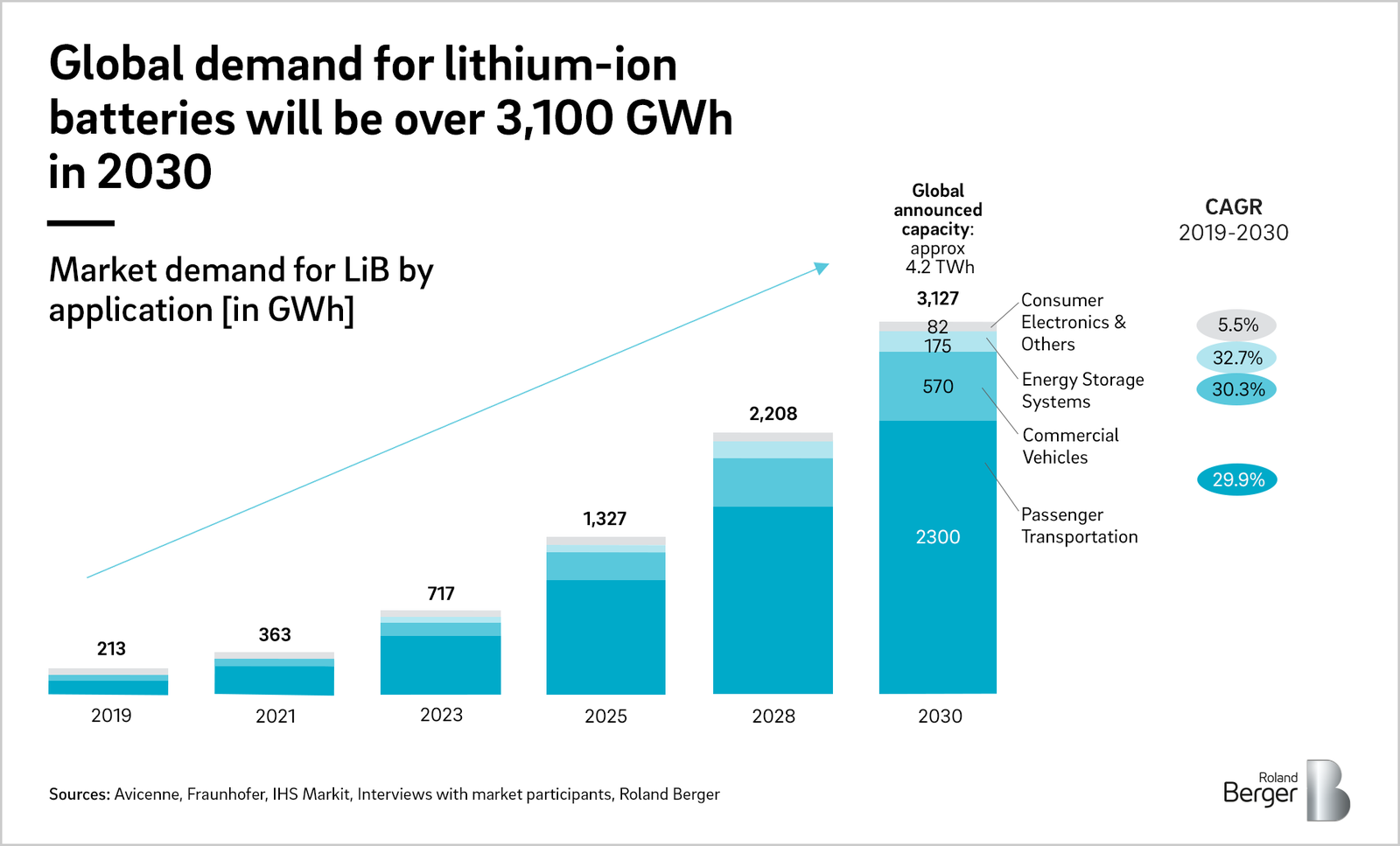
If battery producers are to successfully meet the massive jump in demand for electric vehicles, the supply chain must evolve. The processes used today largely date back more than 10 years, when batteries were much smaller and mostly used for consumer electronics, rather than large electric vehicles.
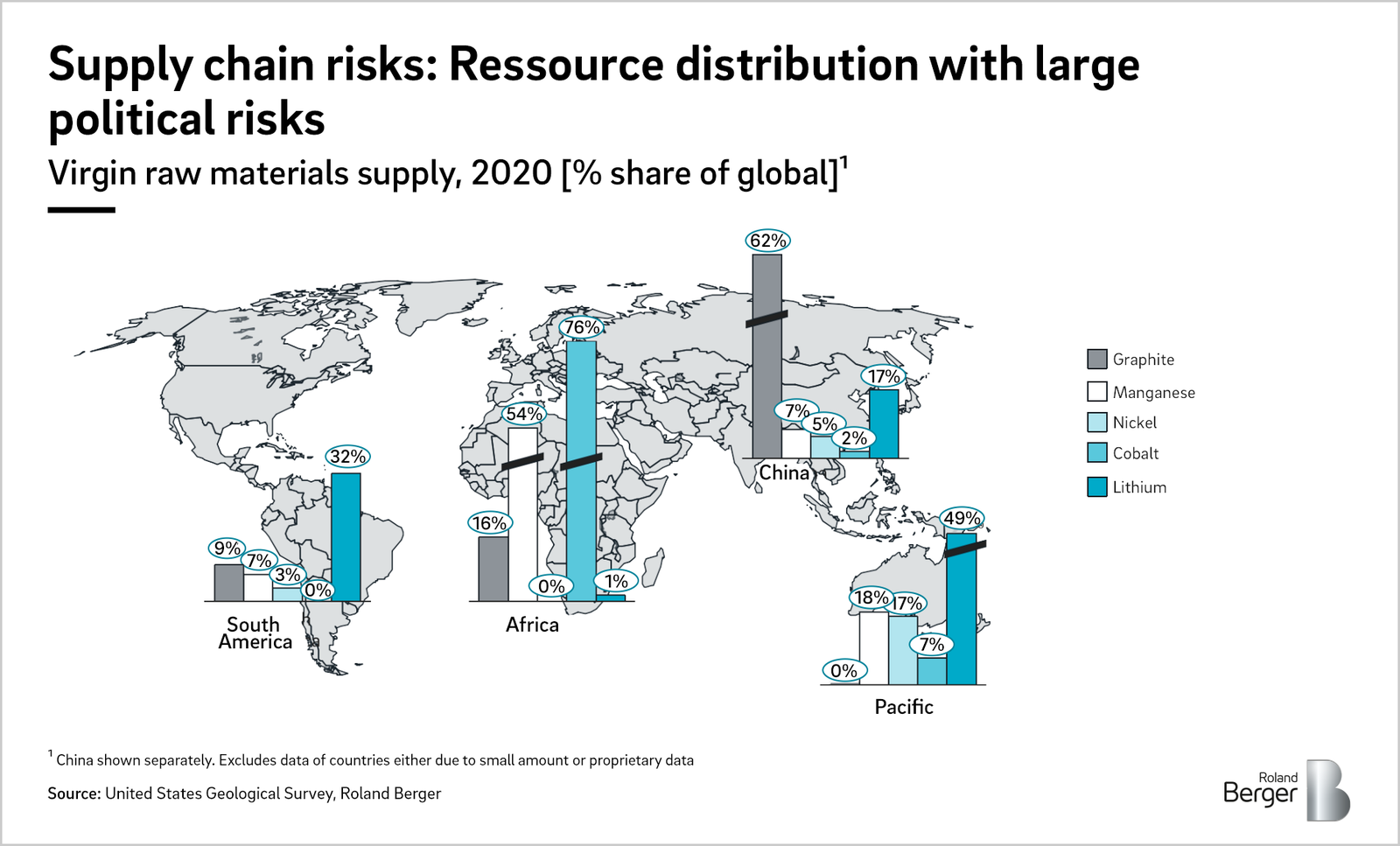
On a production level, a more integrated approach between metallurgy and chemistry will help secure supply and reduce costs. Greater regionalization and co-location for multiple steps in battery manufacturing can also improve sustainability and reduce geopolitical and ESG risk, as well as lower costs. Political decisions also push for a more regionalized supply chain, as shown again in President Biden's invocation of the Defense Production Act to kick-start domestic battery materials production on March 31, 2022
Strategically, OEMs and cell manufacturers must increase their involvement in the upstream supply chain to mitigate risks. This can range from long-term supply agreements to partnerships or even investments. Leading EV OEMs and cell makers, as well as CAM producers, are already aiming at high levels of vertical integration and becoming increasingly involved up to the mining stage. Occupying critical control points along the supply chain can provide a strong competitive advantage but does require a high degree of commitment. The ability to simulate alternative upstream LiB-supply-networks becomes crucial in developing winning battery strategies.