The urgency of the green transformation
Global warming is real – and a major threat to society as we know it. Since 1990, global greenhouse gas emissions have increased by around 45 percent. If humanity continues along its current trajectory, the United Nations Intergovernmental Panel on Climate Change (IPCC) predicts devasting consequences, including substantial losses to biodiversity, extended heatwaves, loss of soil fertility and crop yields, and damage to the fresh water supply. Acting on
climate change
is the collective responsibility of leaders in politics, business, and finance.
To change the trajectory of climate change, developed and emerging economies tighten regulations. But the "economic green transformation" – most likely one of the most complex endeavors in human history – also requires substantial innovation and structural investment. The European Union estimates that the investment required in the EU in the period to 2030 will be around EUR 8 trillion, not accounting for inflation or growth.
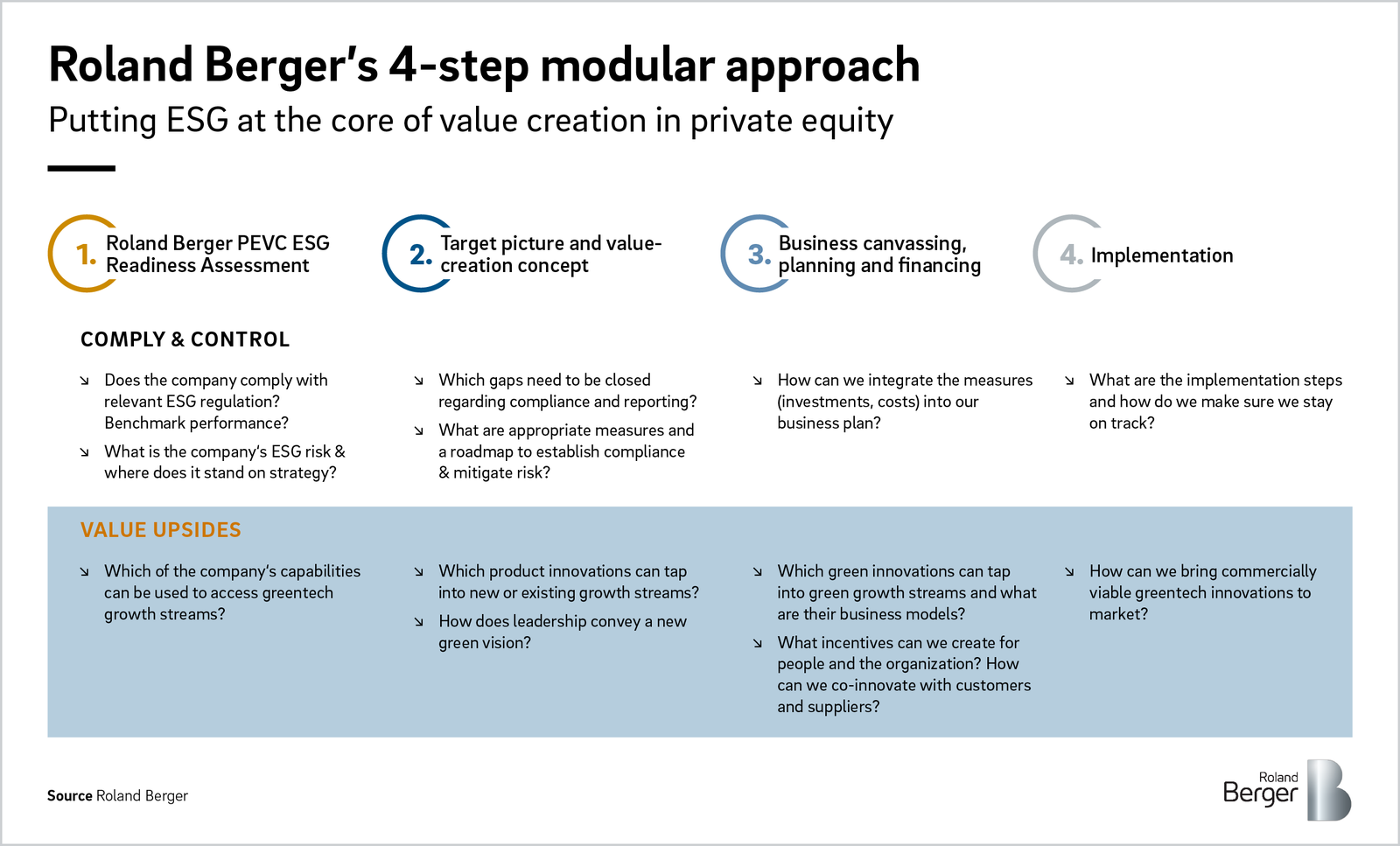
Where will that money come from? Around one-quarter from the public sector. But private equity also has a major role to play as a catalyst for the green transformation – investing in ESG-compliant assets, actively transforming companies from gray to green and creating a change for good, at the same time as generating returns for limited partners. In this paper we look at the challenges
private equity
faces and suggest strategies for transforming those challenges into opportunities.