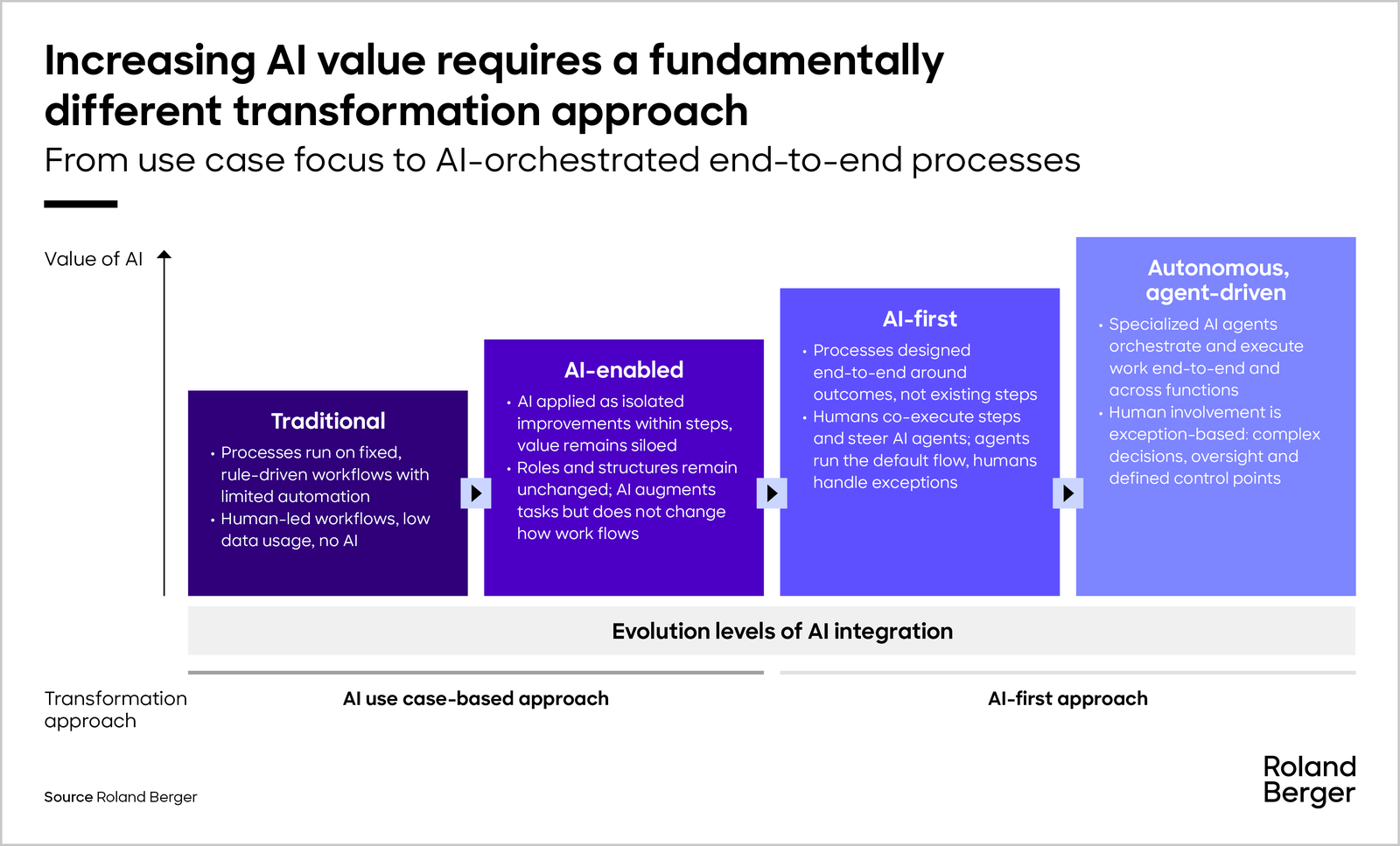
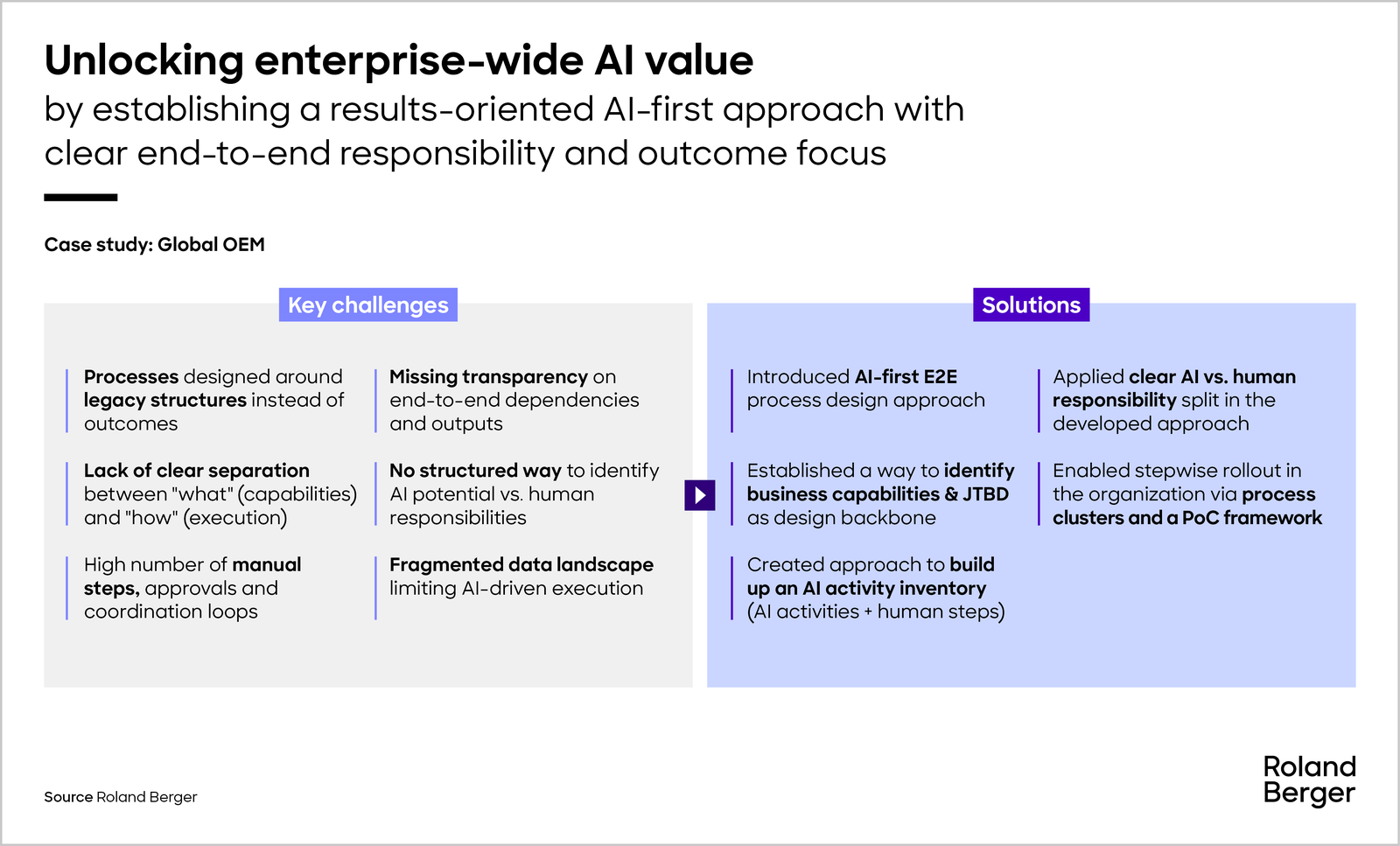
The transformation to AI-first truly begins at level 3 in the figure above, where processes are derived from clear outcome statements and critical success factors: What needs to be improved? Speed? Quality? Cost? Some combination with other targets?
Separating the "what" from the "how"
This step essentially isolates what needs to be done (the outcome, which is stable) from how it is to be done (the process by which this outcome is to be achieved, which should be adaptive). With AI technology advancing at a very rapid pace, the best way to reach an outcome today will not still be the best way tomorrow. An adaptable process design allows the "how" to be updated and improved repeatedly in line with new developments.
Addressing the "how" question more closely, the AI-first approach allows neither traditional process structures nor individual AI use cases to limit the role of automation. Instead, a zero-based design policy is adopted: Targeted outcomes are translated into business capabilities and jobs to be done, and each step is aligned with the organization's strategic business goals.
In this way, existing AI capabilities can be inventoried and embedded in process flows and decision logic from the outset. Similarly, areas where human expertise remains critical can also be defined: Explicit human-in-the-loop governance too must be built in from the start, balancing optimal automation with the need for human oversight and accountability.
While it is important to remember that "AI-first" does not mean "AI-only," the trend toward
agentic AI
will ultimately see human intervention increasingly called in by integrated, automated systems, not the other way round. Along the way to this goal, processes must be tested incrementally and refined – allowing the organization to learn and adapt – before they are rolled out at scale. This step-by-step transition will also require strong change management to mitigate cultural resistance and drive adoption, ensuring that teams understand the measurable benefits and can genuinely embrace new ways of working.
A simple example from corporate life illustrates the astonishing potential of applying AI-first design principles to familiar, everyday processes: Booking business travel involves a raft of individual steps that, while not complex, consume a great deal of time and effort – from checking policy guidelines to submitting requests, from researching travel options to booking and payment, from delivering travel documents to dealing with disruptions and documenting expenses.
By comparison, integrated AI-led travel management looks rather different: AI can instantly turn a spoken or typed request into a clean, policy-compliant itinerary proposal complete with options ranked by time, cost, risk and
sustainability
. Human selection and approval of the best options prompts AI to execute all bookings and payments. After automatically synchronizing team calendars, AI then keeps a constant lookout for delays, providing rerouting options and any support needed while also cataloguing expense records cleanly and in real time.
Excluding travel time, the traditional option typically takes five hours to complete. The AI-driven option involves only 30 minutes of human involvement, again excluding travel time. From a process perspective, this equates to a productivity gain of a factor of ten. And this is only one example of many.
Deep dive: How does AI-first design work in practice?