The vulnerability of global markets: There is no second-best solution
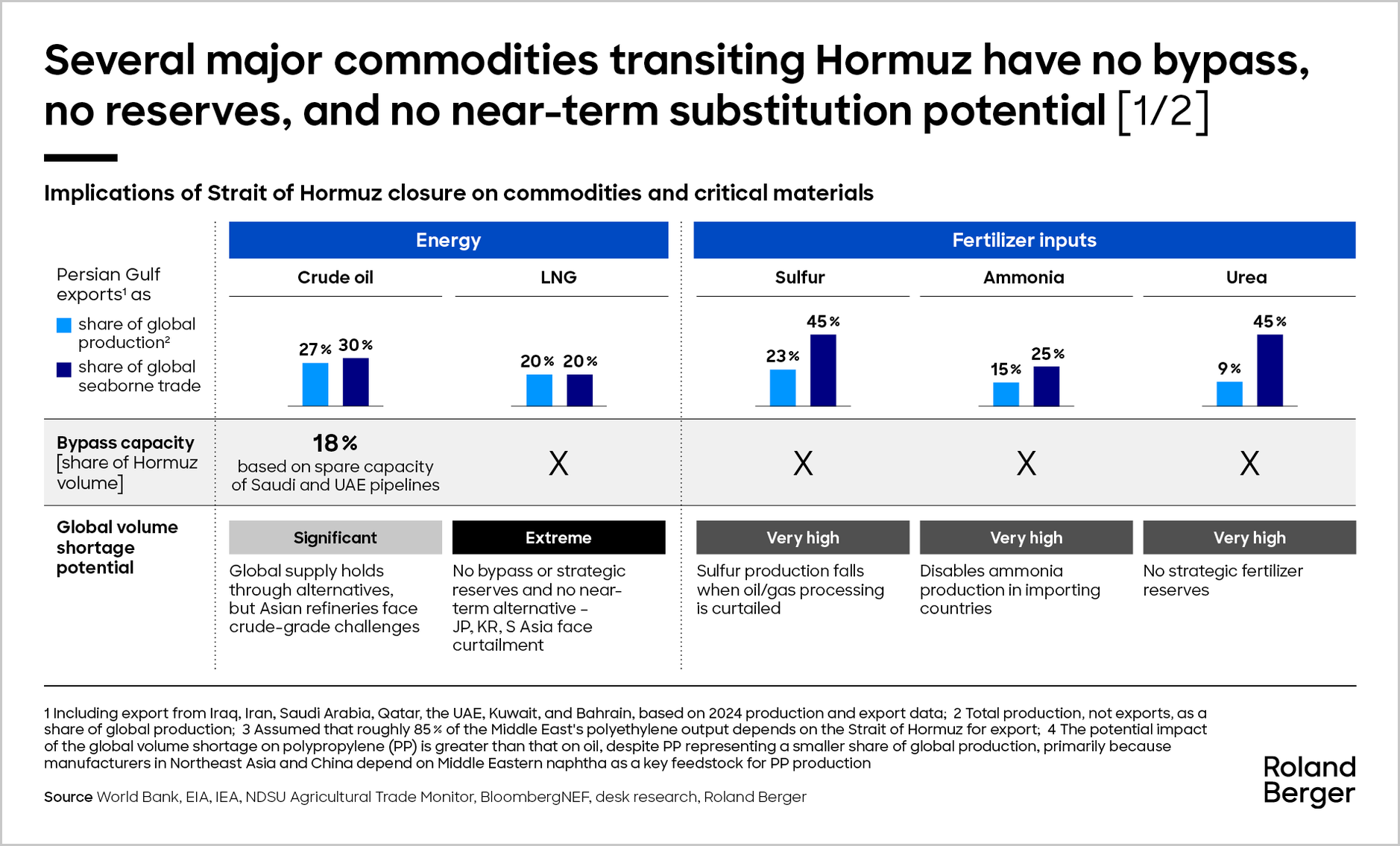
One key challenge is the limited ability to offset disrupted trade flows. Current pipelines can reroute only about 15–20% of the oil usually shipped by sea, which does not fully compensate for maritime disruptions. At the same time, there are no meaningful strategic reserves or scalable alternatives for many chemicals and critical materials. Damage to
energy infrastructure
and curtailed production will therefore likely have lasting effects on global supply, even beyond the immediate duration of the conflict.
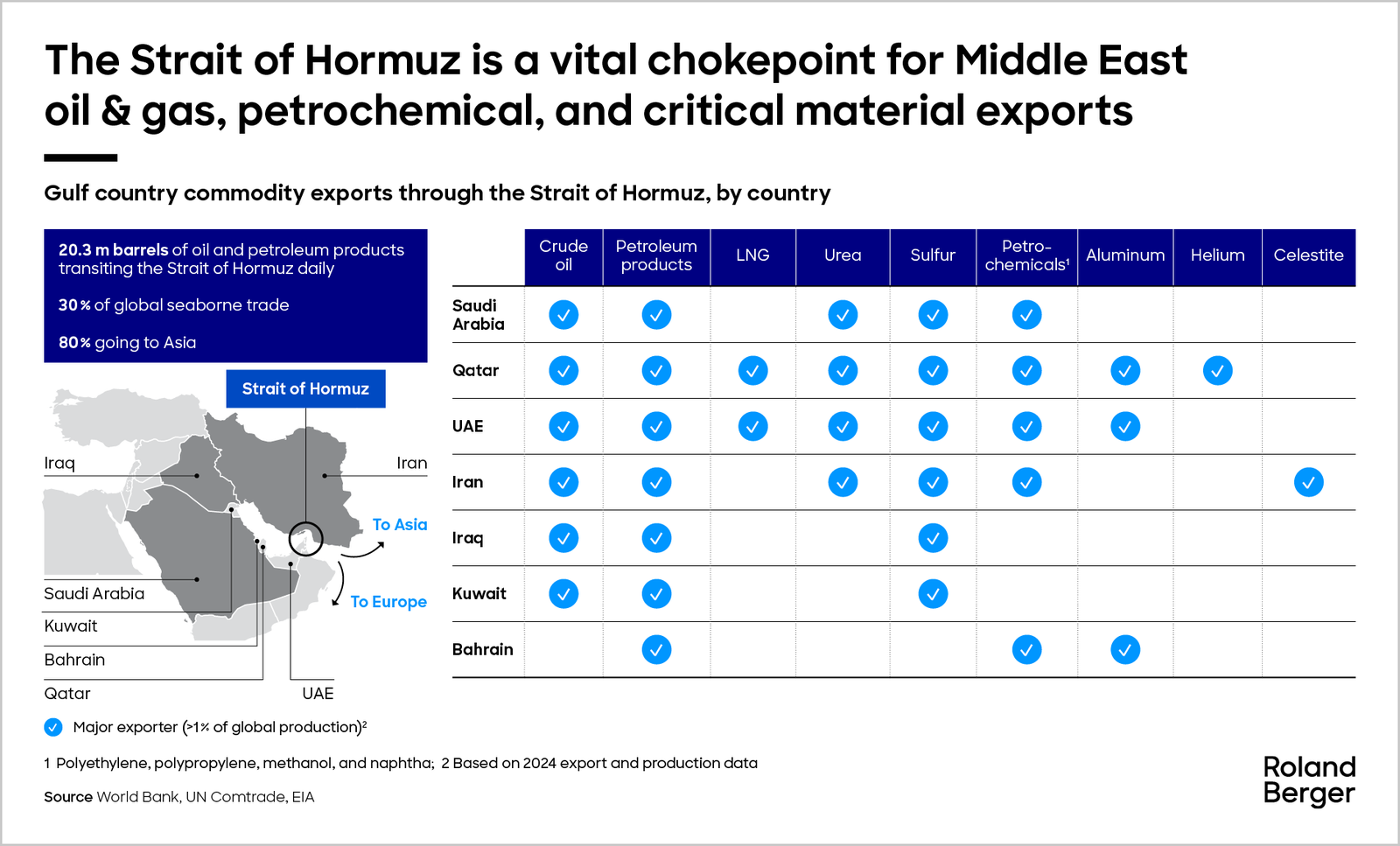
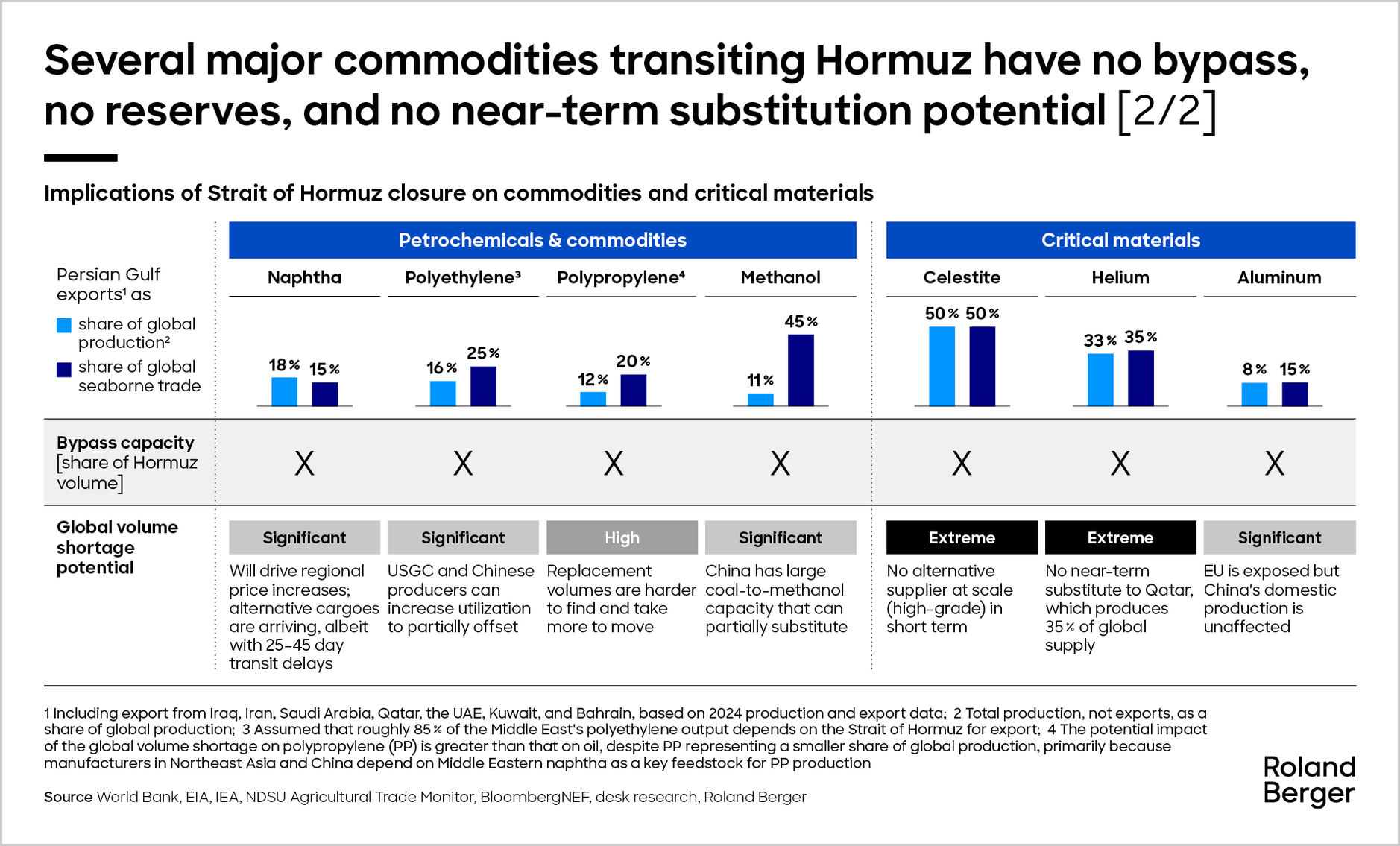
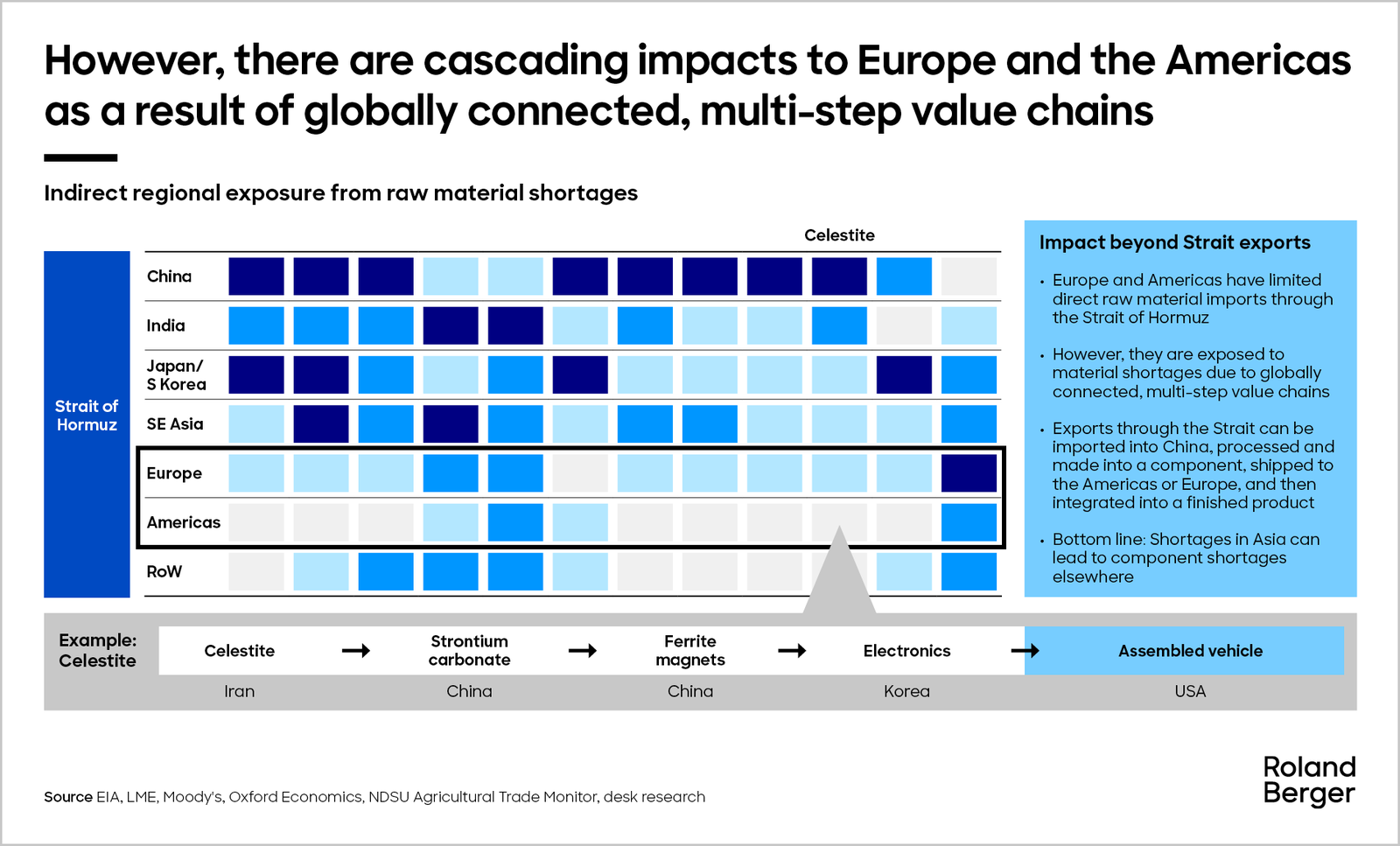
For many products such as LNG, fertilizers, petrochemicals, and critical materials, there is insufficient bypass infrastructure, limited reserves, and no short-term substitutes. While limited pipeline capacity exists, it can offset only a small portion of the disrupted volumes.
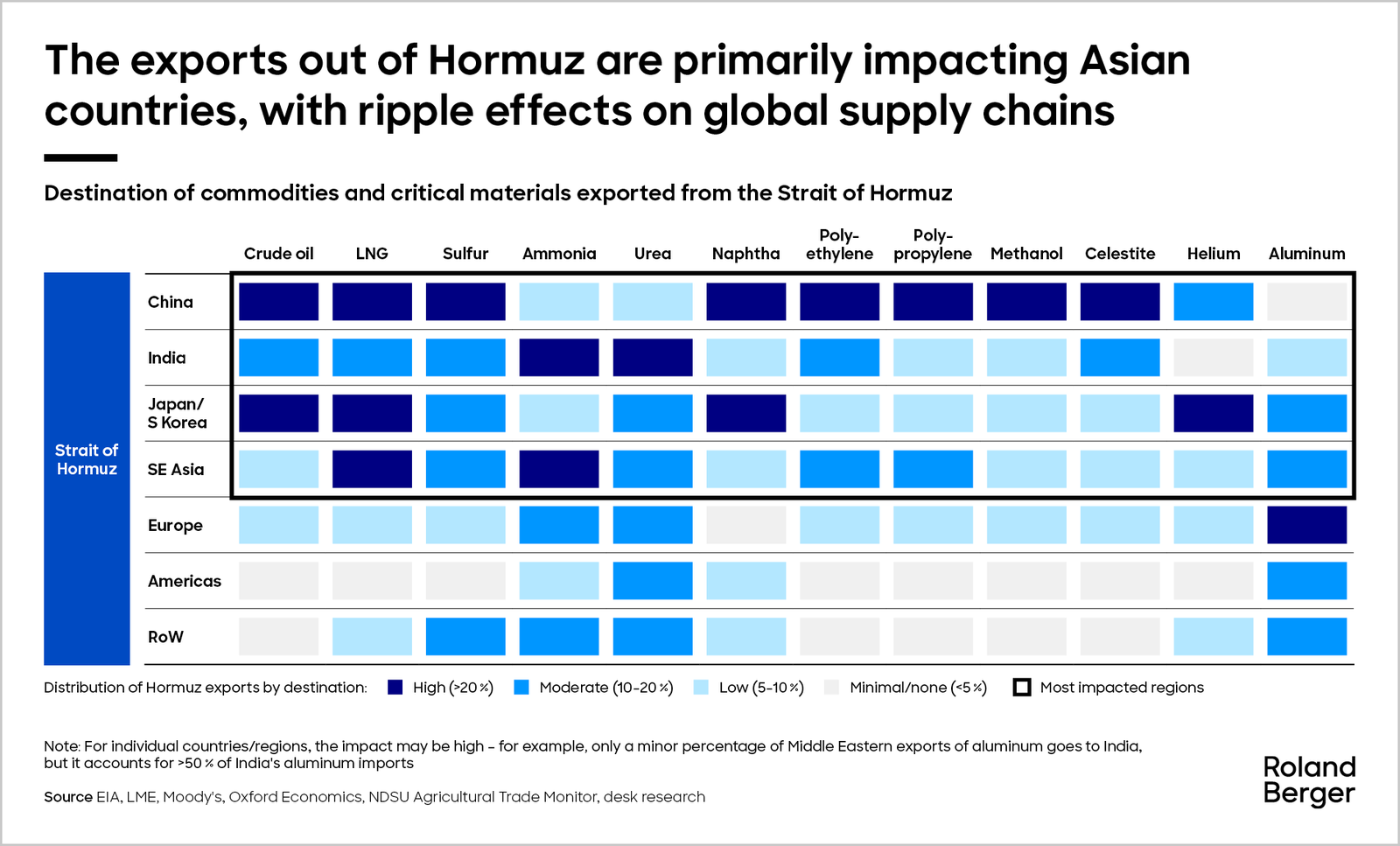
As a result, supply shortages would emerge quickly across multiple sectors, with particularly acute effects in Asia. Some commodities might be partially substituted or offset by increased production elsewhere, but these adjustments are constrained and often slow, leading to delays, regional price increases, and significant imbalances in global supply. Petrochemicals and
critical materials
are particularly vulnerable, with downstream effects on industries such as plastics, packaging, and electronics.