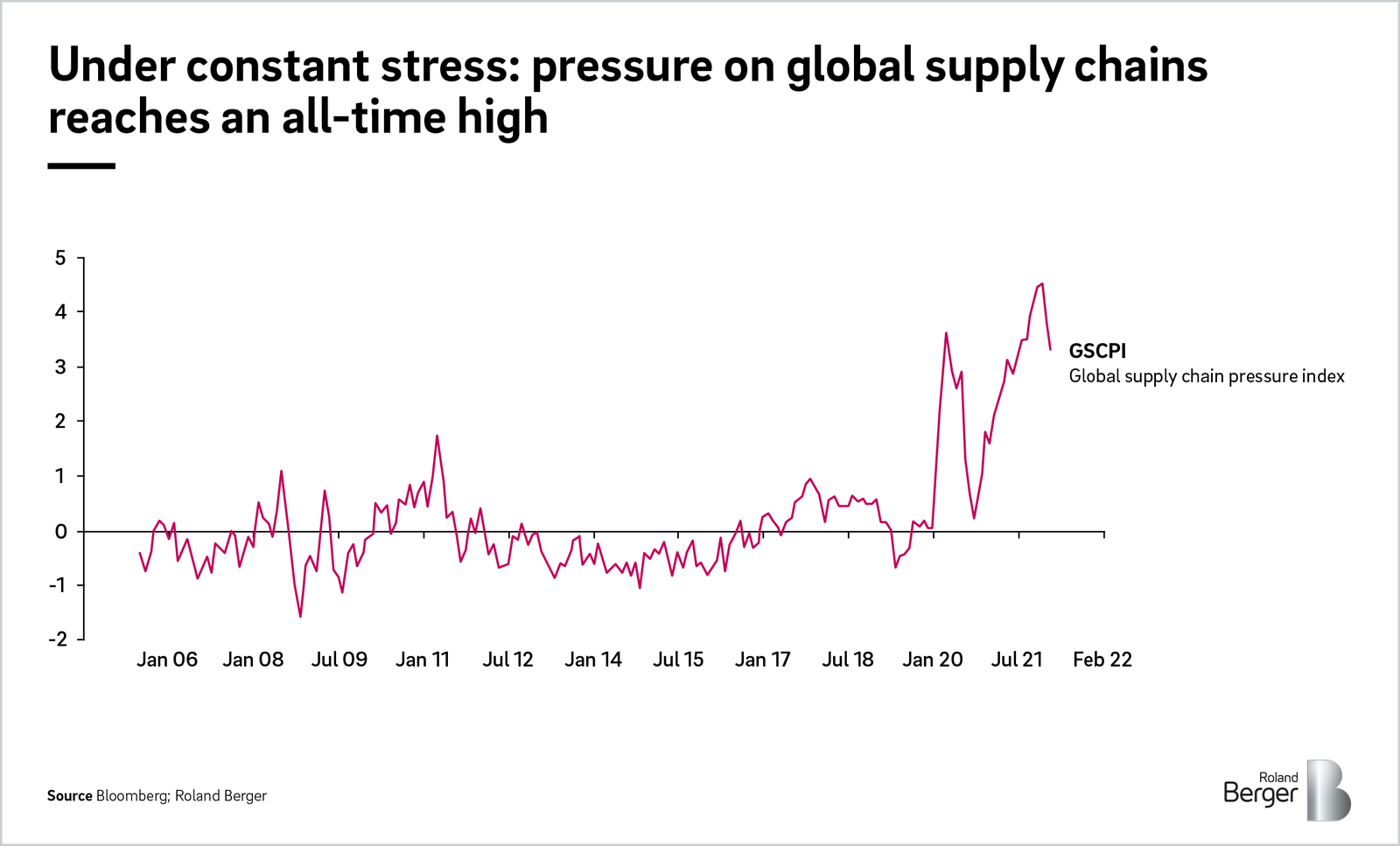
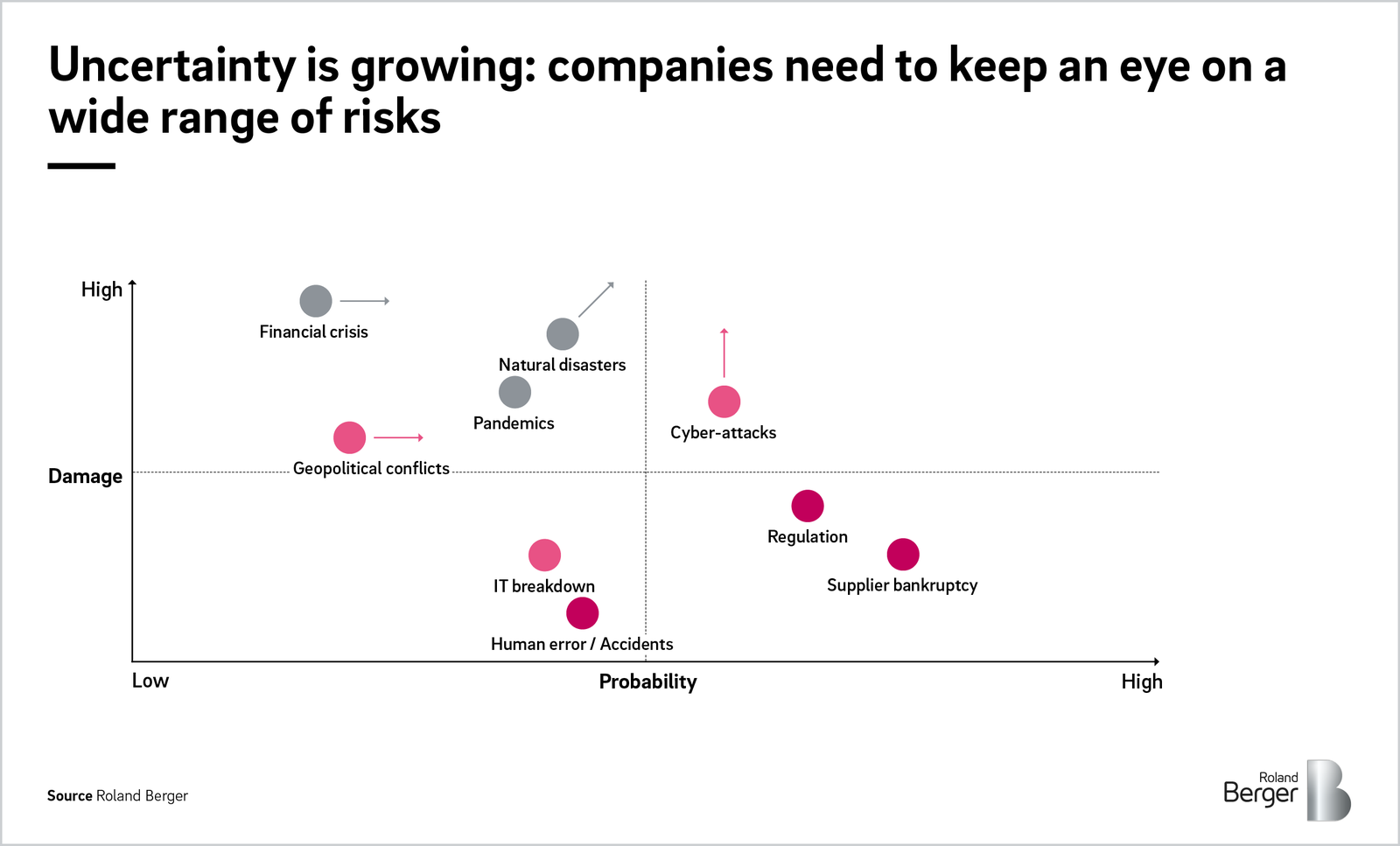
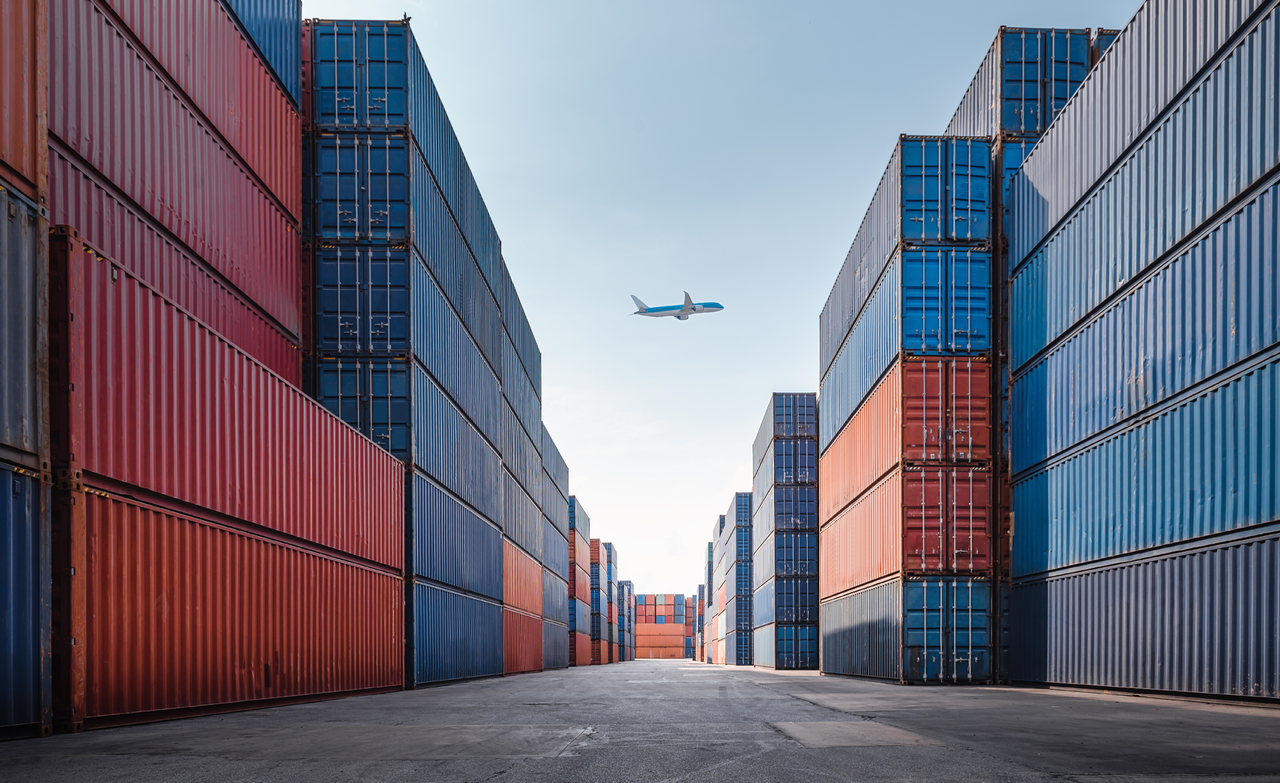
It is also clear that in a globally connected trade and value creation system, even seemingly minor incidents can cause major damage. The Ever Given accident in March 2021 falls into this category. The container ship blocked the Suez Canal for six days and brought all traffic through the waterway to a standstill. The incident cost the global economy 400 million US dollars – per hour.
Many companies have already reacted to the new uncertainty and said goodbye to the long-dominant just-in-time model. Instead of
optimizing supply chains down to the last detail
, they are now deliberately building up buffer stocks in the hope of being better able to absorb shocks. The buzzwords of the day are: supplier base diversification, production network regionalization, and inventory expansion.
Against this backdrop, there is every indication that the cycles of availability and scarcity will continue to intensify. Excessive inventories and overcapacities can quickly become a burden in times of recession. This makes it even more important for companies to prepare for the
new normal.
Individual measures are fine, but the goal should be to secure the supply chain long term. To achieve this, we recommend a three-step approach:
- 1. Achieve clarity about the status quo: Responsibility for supply chains should be managed via cross-functional KPIs. This means, for example, measuring the
success of procurement
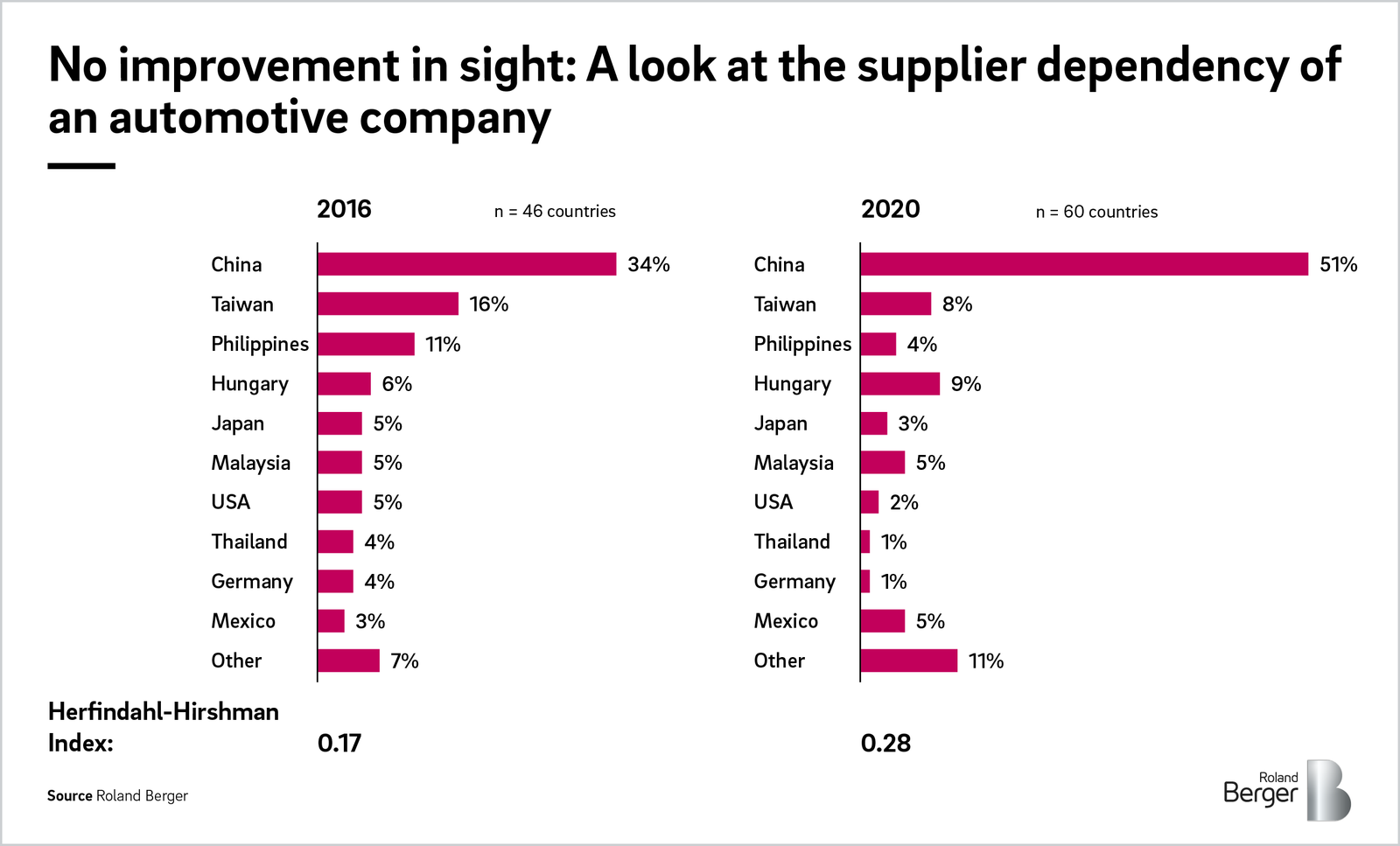
not only in terms of purchase prices but also based on lead times and payment terms. It also means having transparency about dependencies within the organization. For example, the Herfindahl index can be used to determine how supplier concentration on certain companies or countries is changing. In our example, both the number of suppliers and the number of countries in which they are based have increased. Ultimately, the vulnerability of the supply chain has also increased (see concentration index below) because the proportion of intermediate goods sourced from China has risen significantly.