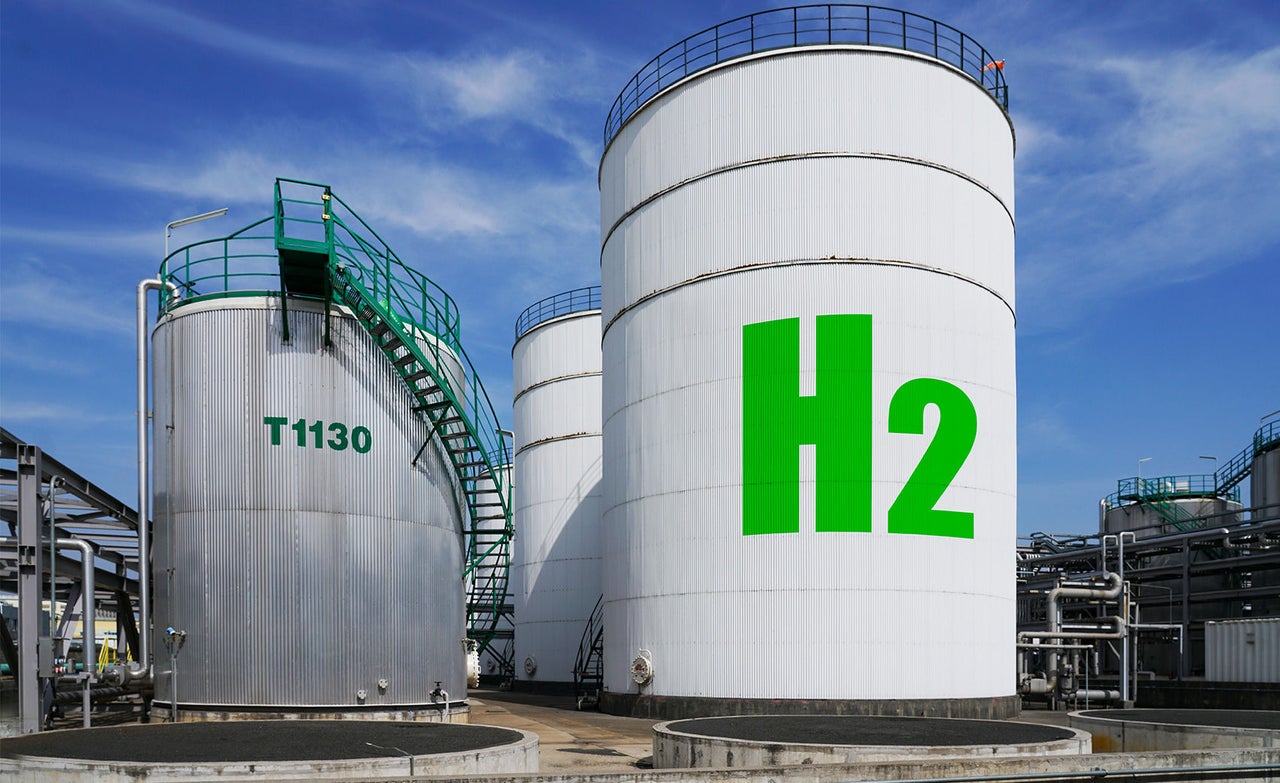
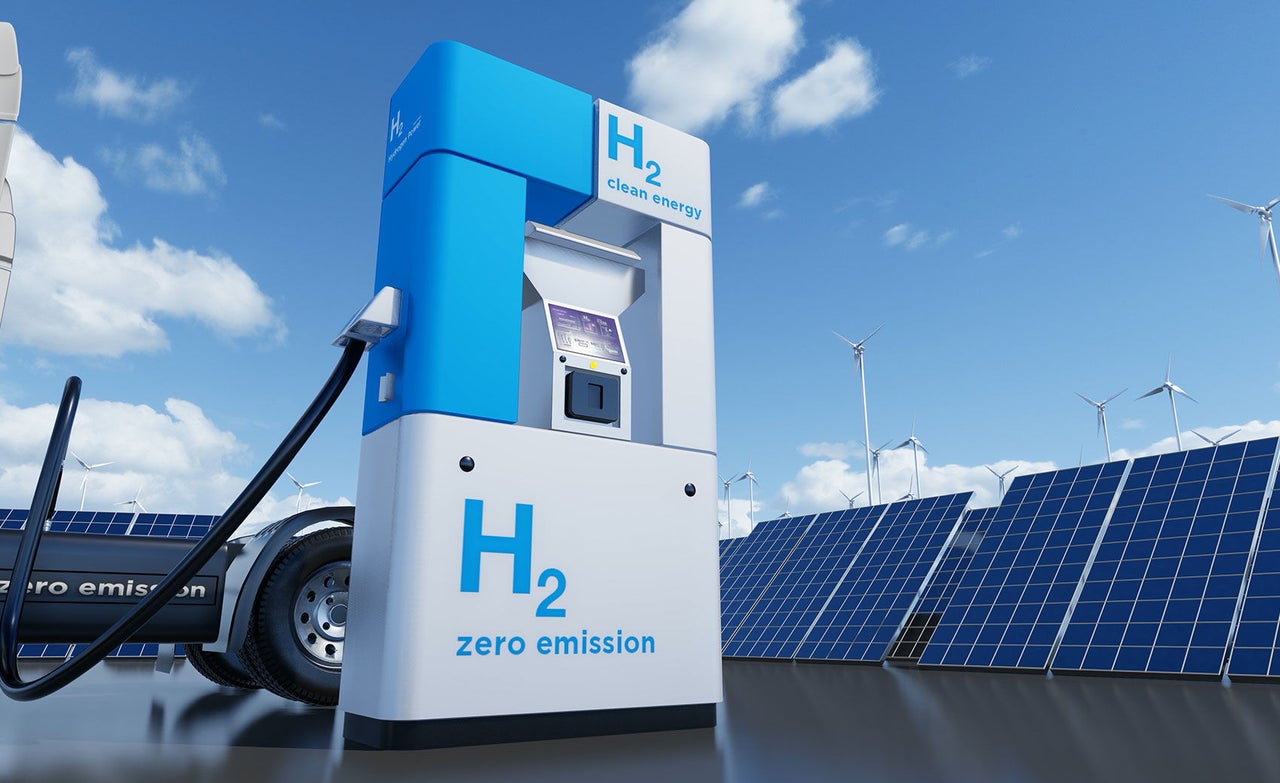
How will the world meet its ambitious emissions targets by 2030? That’s the gazillion dollar question, with a complex global answer that’s still a heavy work in progress, both politically and commercially.
One thing we do know:
Green hydrogen
(a clean but still-expensive energy source that only emits water vapor) will play a leading role in decarbonizing the world, especially in hard-to-abate industries such as transportation and shipping.
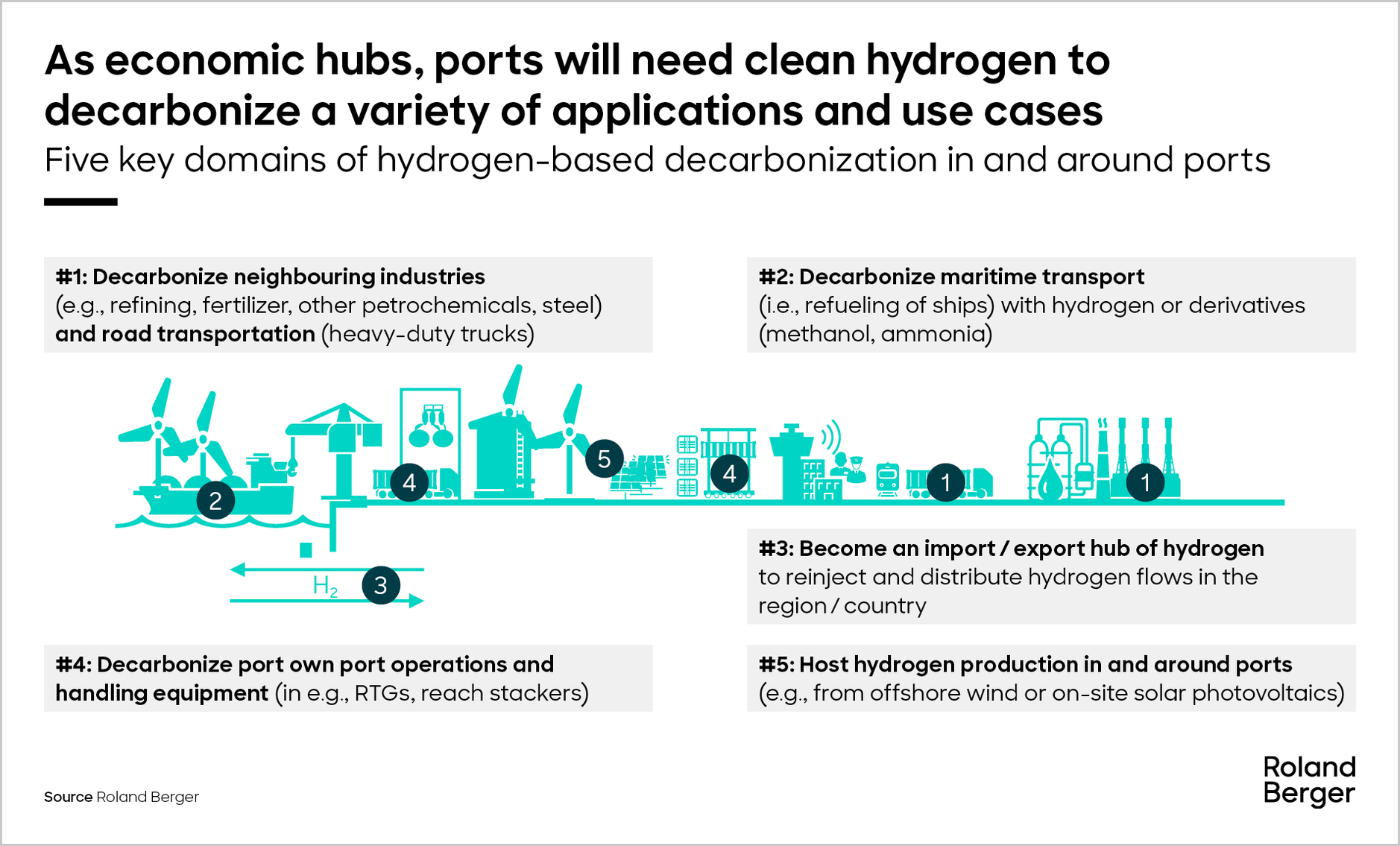
In the coming years, ports are expected to use their strategic position, infrastructure, and logistical
know-how to reduce emissions
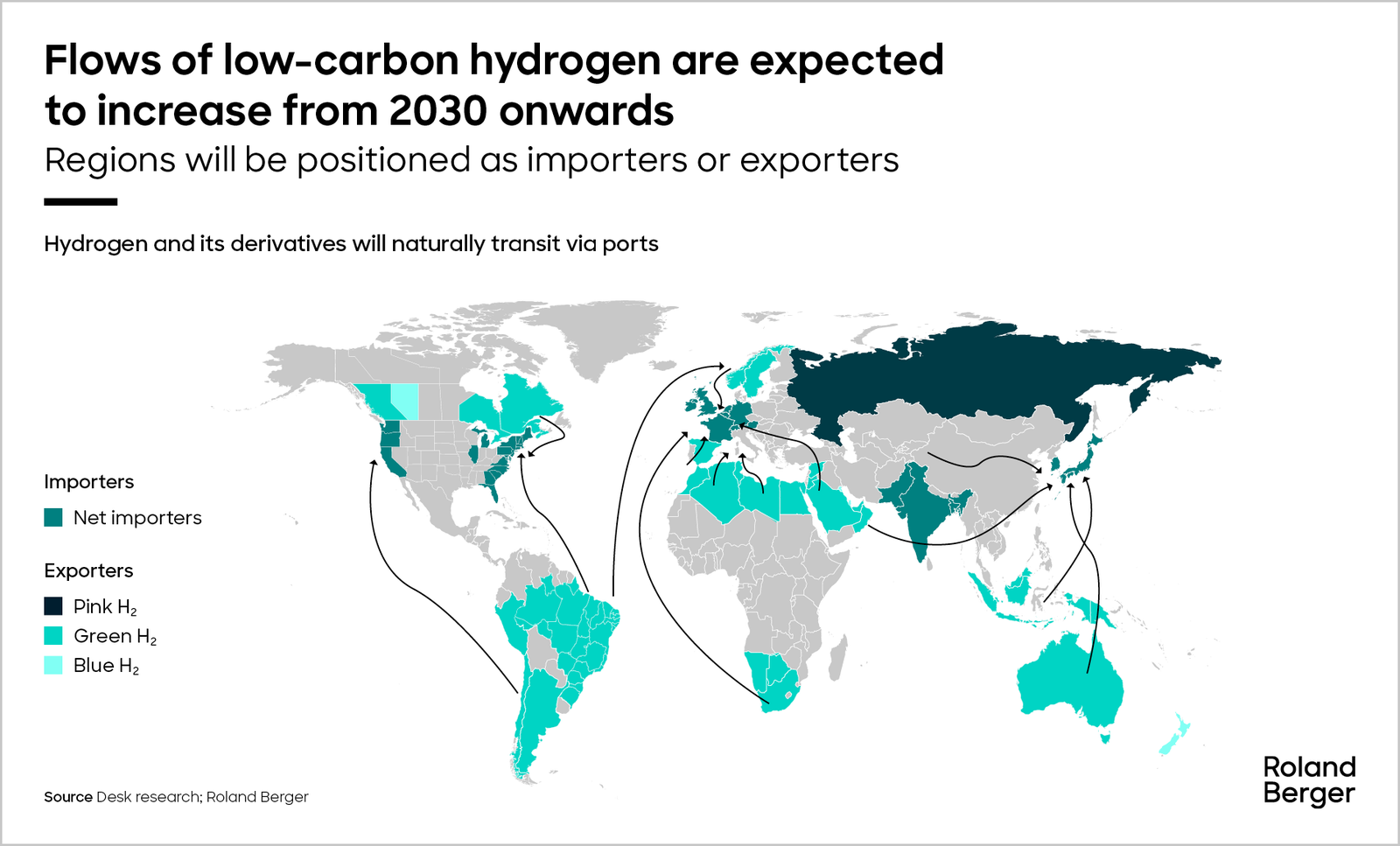
for not only themselves, but also neighboring industries, ground transportation and shipping. Not only will they become an important hub for low carbon hydrogen, they could act as a clearing house to redistribute green hydrogen flows from seacoast to inland regions.
Obviously ports must
decarbonize
their own operations and handling equipment as part of that process. What’s more, flows of carbon, as part of the nascent industry of carbon capture, usage, and storage (CCUS), will also appear in the ports’ landscape to complete their set of tools in the fight against global warming.
Nevertheless, we believe that port hydrogen strategies will play a pivotal role in the coming years, especially in Europe, where tighter emission regulations and penalties are primarily concentrated. That said, where should port authorities, concessionaires and stakeholders place their emphasis? Who should they partner with? And what does the immediate future hold for port hydrogen policy?
This is what we know, according to new research conducted by Roland Berger.