Export controls – Safety first, or a barrier to innovation?
Recent global export controls on quantum computers and related technologies, imposed by various countries, reflect a collective effort to regulate this emerging technology. The implication is that governments share concerns about its disruptive potential, not to mention its potential to be weaponized by militaries. The controls share similar specifications, such as limits on qubits and error rates, and seem to originate from undisclosed international discussions. However, the scientific rationale behind these regulations is not disclosed.
The uniformity of export controls seen in countries like the UK, France, Spain, the US and the Netherlands is the fruit of extended multilateral negotiations under what is known as the Wassenaar Arrangement. This framework, signed and backed by 42 member states, regulates the export of dual-use technologies that could have military applications. Yet despite claims that these limits are based on scientific analysis, the specific details and research supporting these decisions have not been made public.
Experts in the quantum industry have raised concerns about these measures, suggesting that they may be intended to limit the export of highly advanced quantum computers that are beyond the capabilities of simulation. However, it is important to note that the advanced nature of these quantum computers does not necessarily imply that they can indeed solve practical problems.
Moreover, it could be that such restrictions are what actually impedes innovation in this field. The readiness of quantum technology applications depends heavily on progress in research, and suffers from limitations imposed on the realization of quantum technology. Both factors will impact future roadmaps. It follows that external technical factors currently make it hard for first adopters in industry to plot reliable times to market for certain quantum applications.
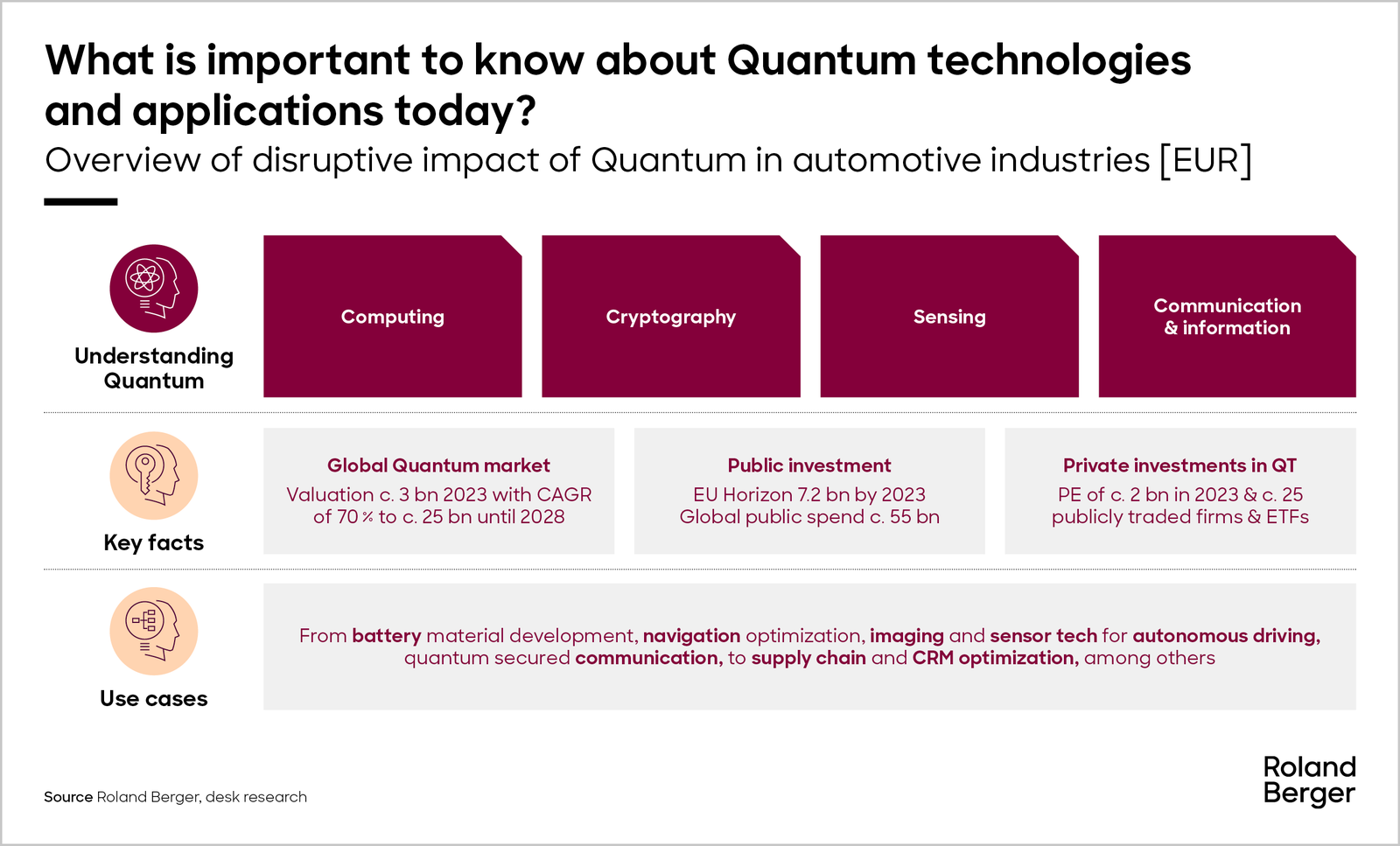
Notwithstanding, the benefits that will undoubtedly result from breakthroughs in quantum technology development remain hugely attractive. Accordingly, many industrial players are more than willing to bet on quantum and invest in its usage. This being the case, it is important to take a closer look at the market potential and dynamics of quantum technologies.