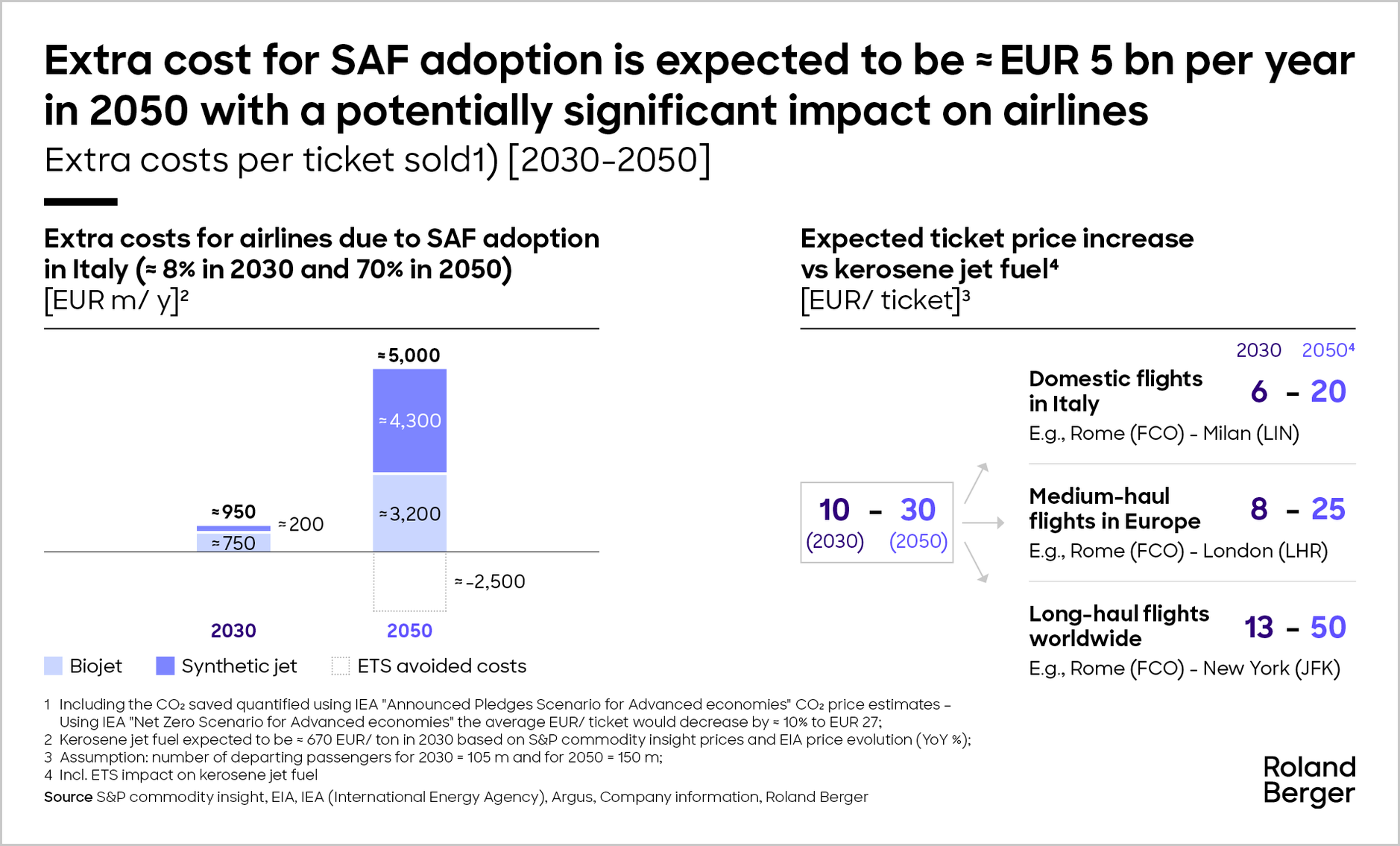
After accounting for fleet renewal, operational improvements, and even regulatory measures such as CORSIA, the majority of airlines still face a significant gap in their decarbonisation efforts. While revolutionary aircraft, such as hybrids and hydrogen designs, are being developed, they are unlikely to become a major part of the global fleet even by 2050.
In this context, the role of sustainable aviation fuels (SAF) will be crucial in the process of decarbonising the industry, as indicated by the International Civil Aviation Organization (ICAO).
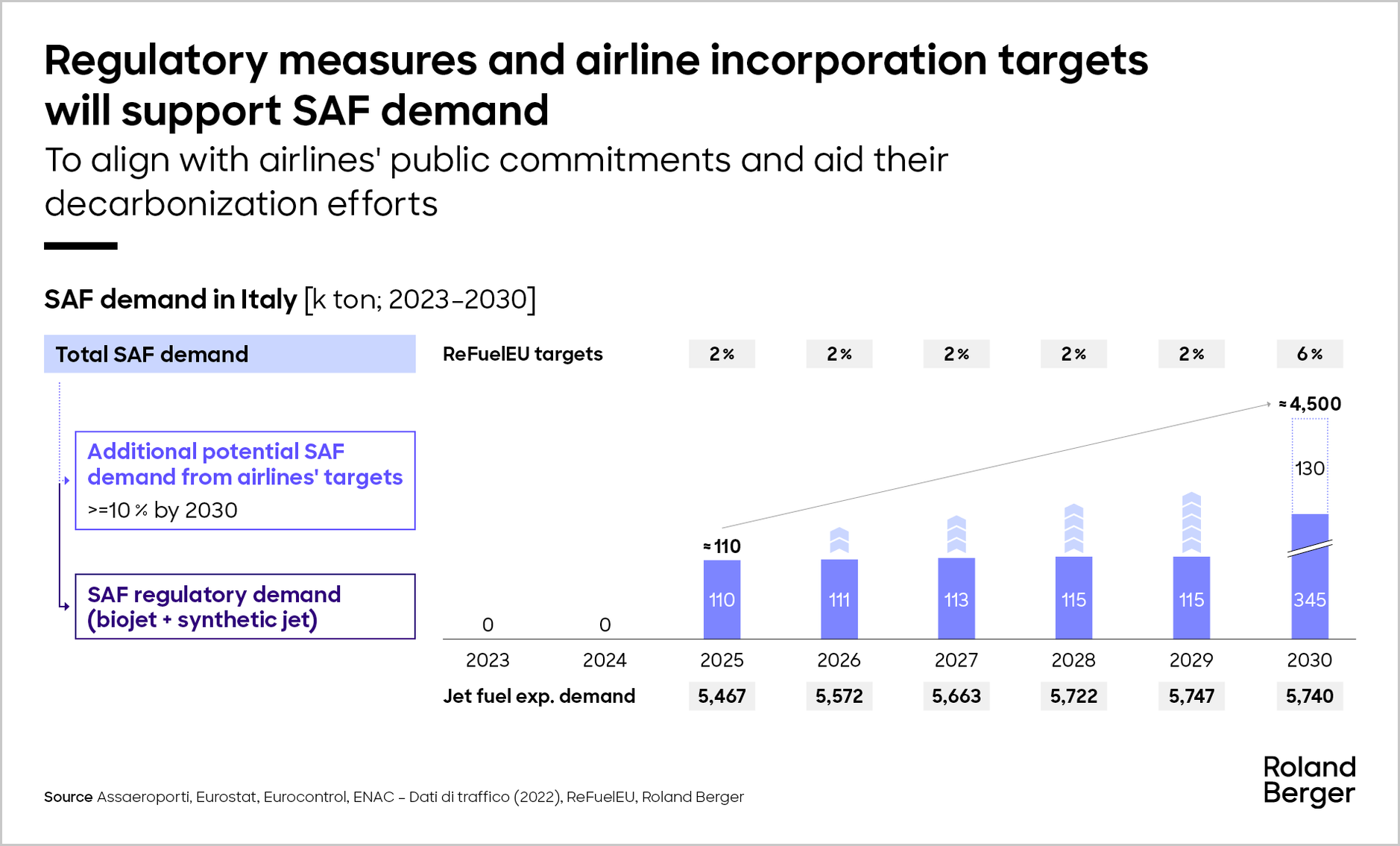
In light of this, the European Union has enacted tighter regulations for the adoption of SAF by 2050 through the ReFuelEU legislation, with the objective of accelerating the process towards climate neutrality.
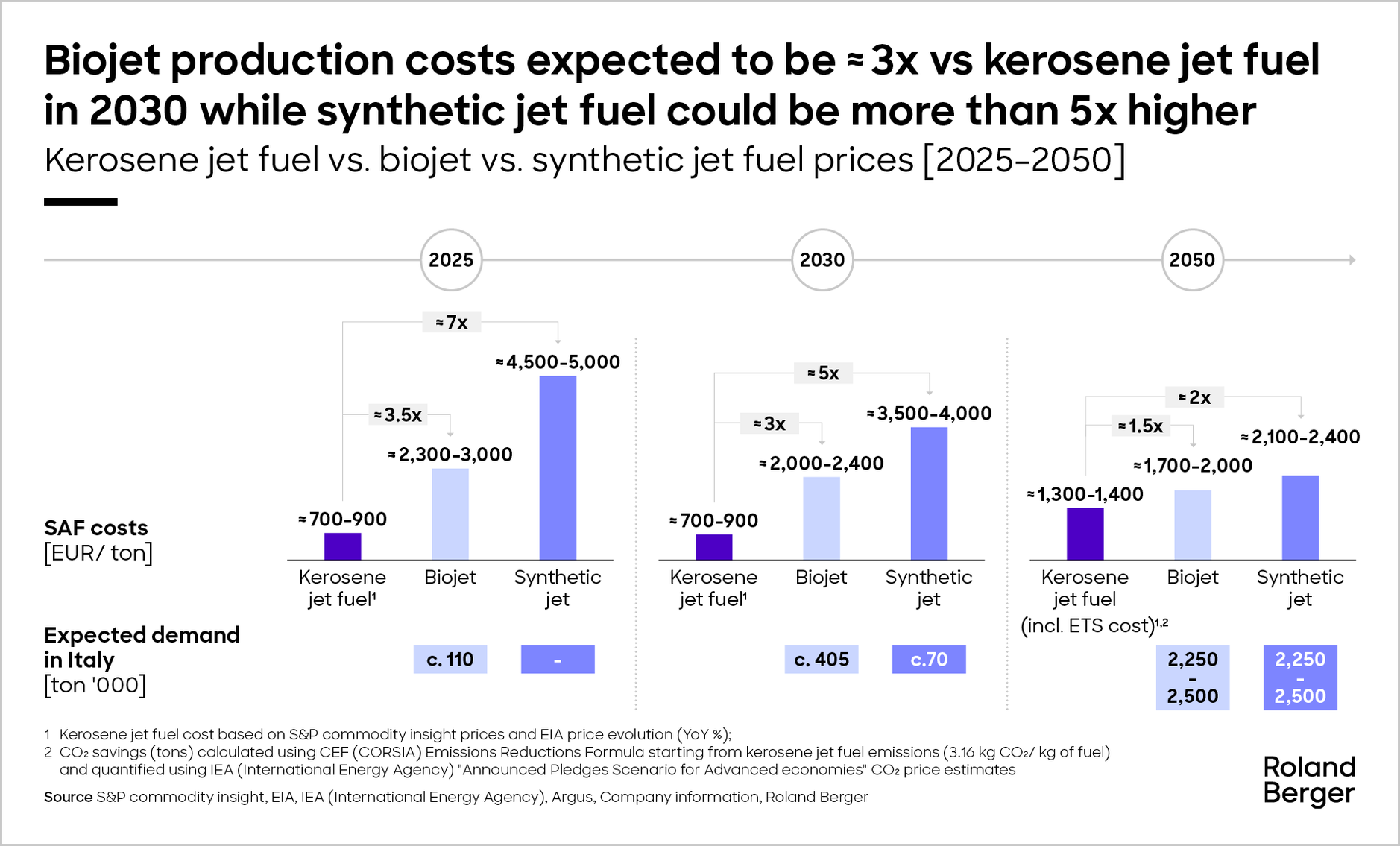
There are four categories of aviation fuels that can be part of SAF to date:
- Biofuels derived from used edible oils and animal fats.
- "Advanced" biofuels derived from forest/agricultural residues and of organic origin.
- Synthetic aviation fuels produced through hydrogen and carbon dioxide, so-called e-fuels.
- "Recycled Carbon Aviation Fuels".
Liquid and gaseous fuels produced from liquid or solid waste streams of non-renewable origin that are produced as an unavoidable and unintentional consequence of the production process in industrial plants. The latter category is currently neither tested nor produced to any significant extent.
These four types of fuel are known as 'drop-in' because they do not require any technological evolution of the engines and can be mixed together with traditional fossil fuels.
To date, only the first mentioned technology can be considered mature for SAF production: the HEFA technology (Hydroprocessed Esters and Fatty Acids), which uses spent edible oils, animal fats and vegetable oils as raw materials. This represents 85% of SAF production capacity today, and 65% of future planned capacity globally until 2030. It is clear that the major European oil companies are focusing their production plans and announcements on this technology.