SpaceX’s position illustrates why
satellite telecommunications
differ from previous technology cycles. The company controls the entire value chain: satellite manufacturing, launch, network operations, ground infrastructure, and customer delivery. This vertical integration creates a self-reinforcing flywheel that is difficult for competitors to replicate.
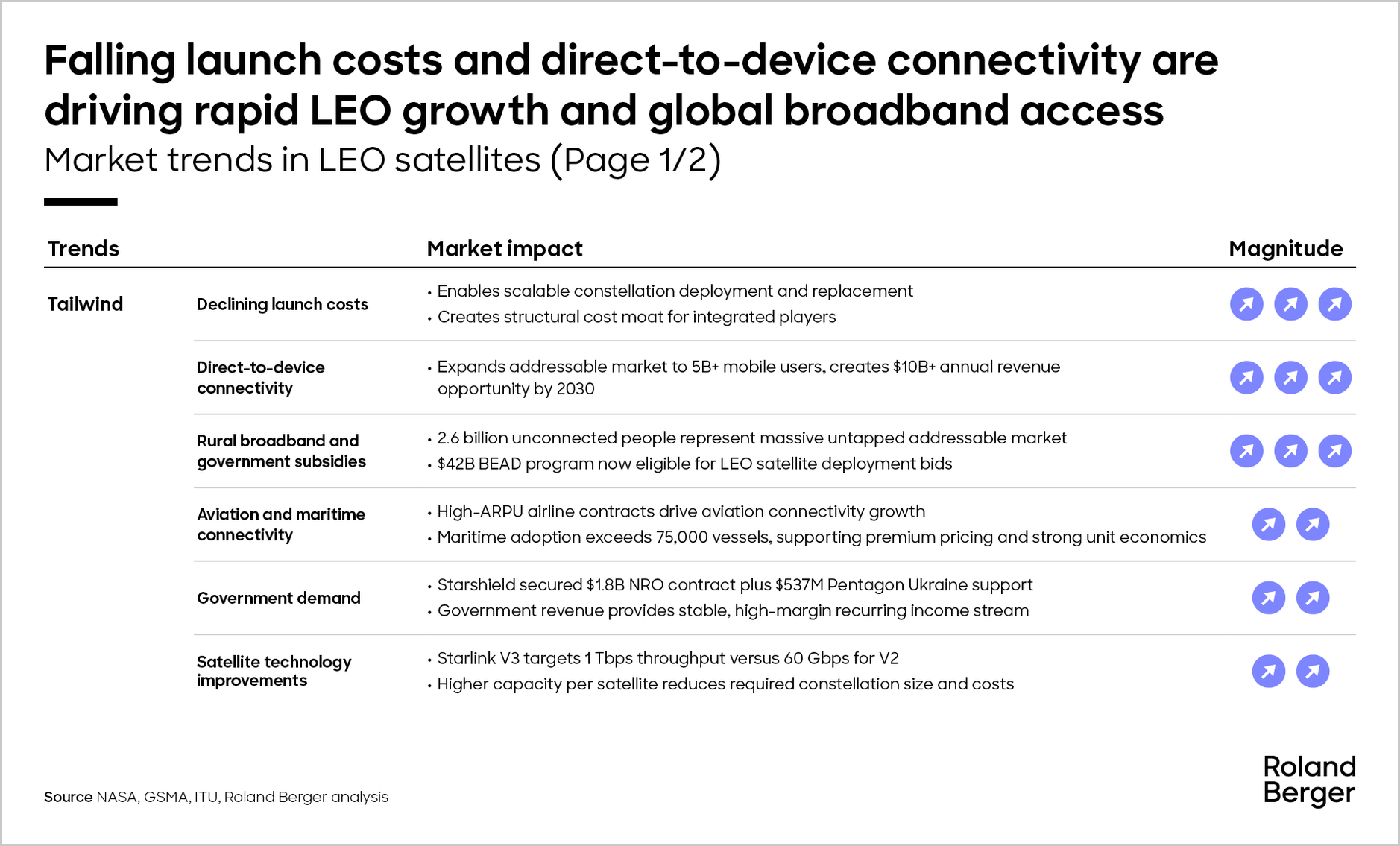
The economics are decisive. Starlink’s internal launch demand from its own constellation ensures high utilization of Falcon 9 rockets. Flying more than 100 missions annually creates manufacturing scale effects that competitors launching 6–10 times per year cannot match. High launch cadence drives learning-curve benefits — more than 400 Falcon 9 launches have built deep operational expertise in recovery, refurbishment, and turnaround. SpaceX can price launches at around $28 million while sustaining margins, undercutting rivals that must recover full mission costs without internal demand.
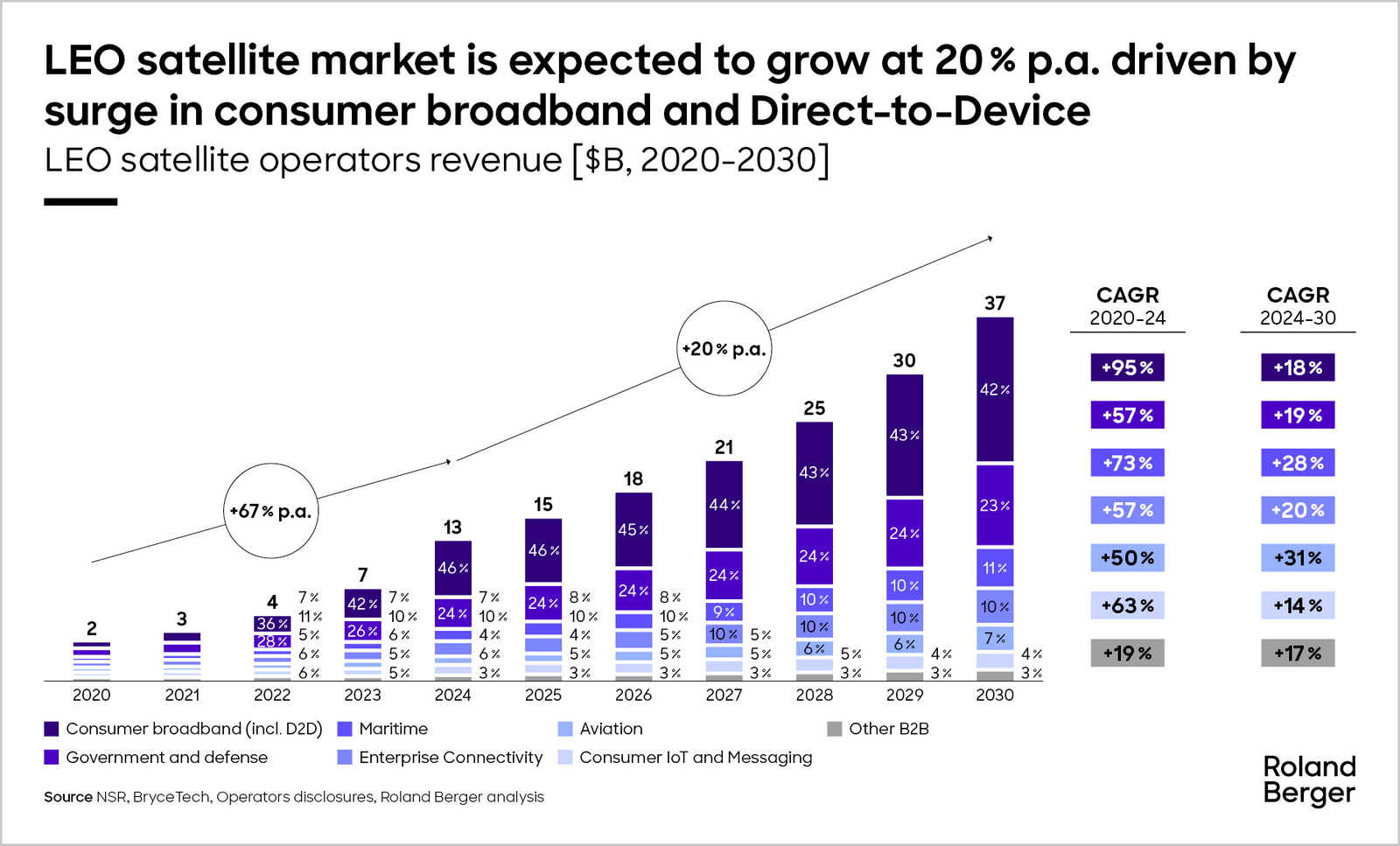
The constellation follows the same logic. Starlink generated roughly $8 billion in revenue in 2024, split approximately 60% consumer, 30% government, and 10% enterprise. This revenue funds both satellite production and next-generation development. Cash flow from current satellites supports Starship development, targeting launch costs below $250 per kilogram — another major step down from current levels. External customers buy capacity, but Starlink controls deployment priorities, orbital architecture, and technology evolution without dependence on third-party manufacturers or launch schedules.
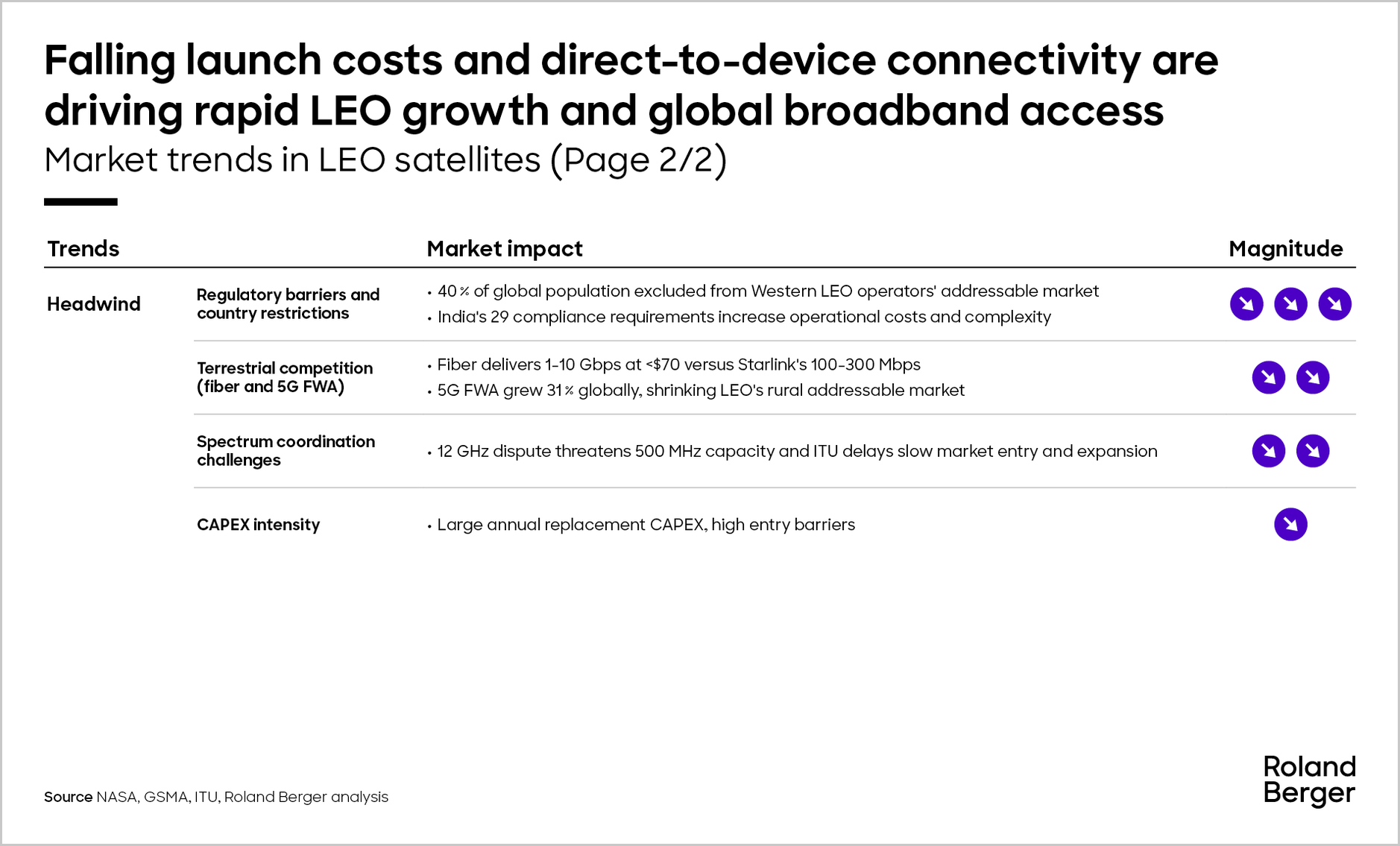
Traditional satellite operators lack this structural advantage. Companies such as Eutelsat, SES, and Viasat procure satellites from manufacturers like Thales Alenia Space or Airbus Defence & Space at costs of $60–150 million per MEO or GEO satellite. They buy launch services from ULA, Arianespace, or SpaceX at market rates, without internal volume discounts. This fragmented value chain introduces coordination costs, schedule risk, and structural economic disadvantages that operational efficiency alone cannot offset. On top of that they do not have the long term visibility that allows to plan with confidence in the short to medium term.
Without a clear consolidation of the value chain and long term commitment from European government, the European ecosystem will remain structurally disadvantaged.
Direct-to-cell: The technology that changes everything