The architecture behind the disruption : hybrid mobile convergence
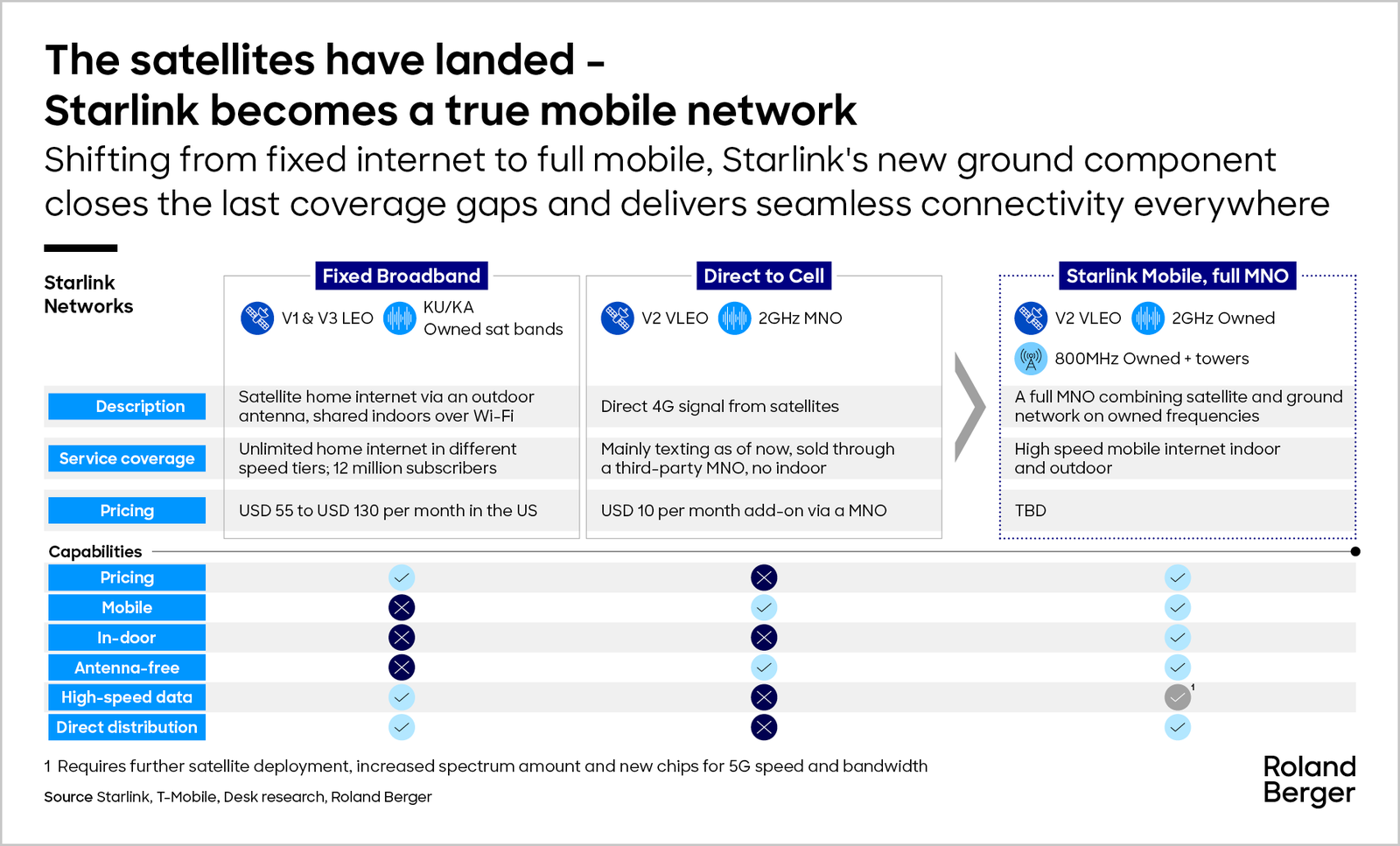
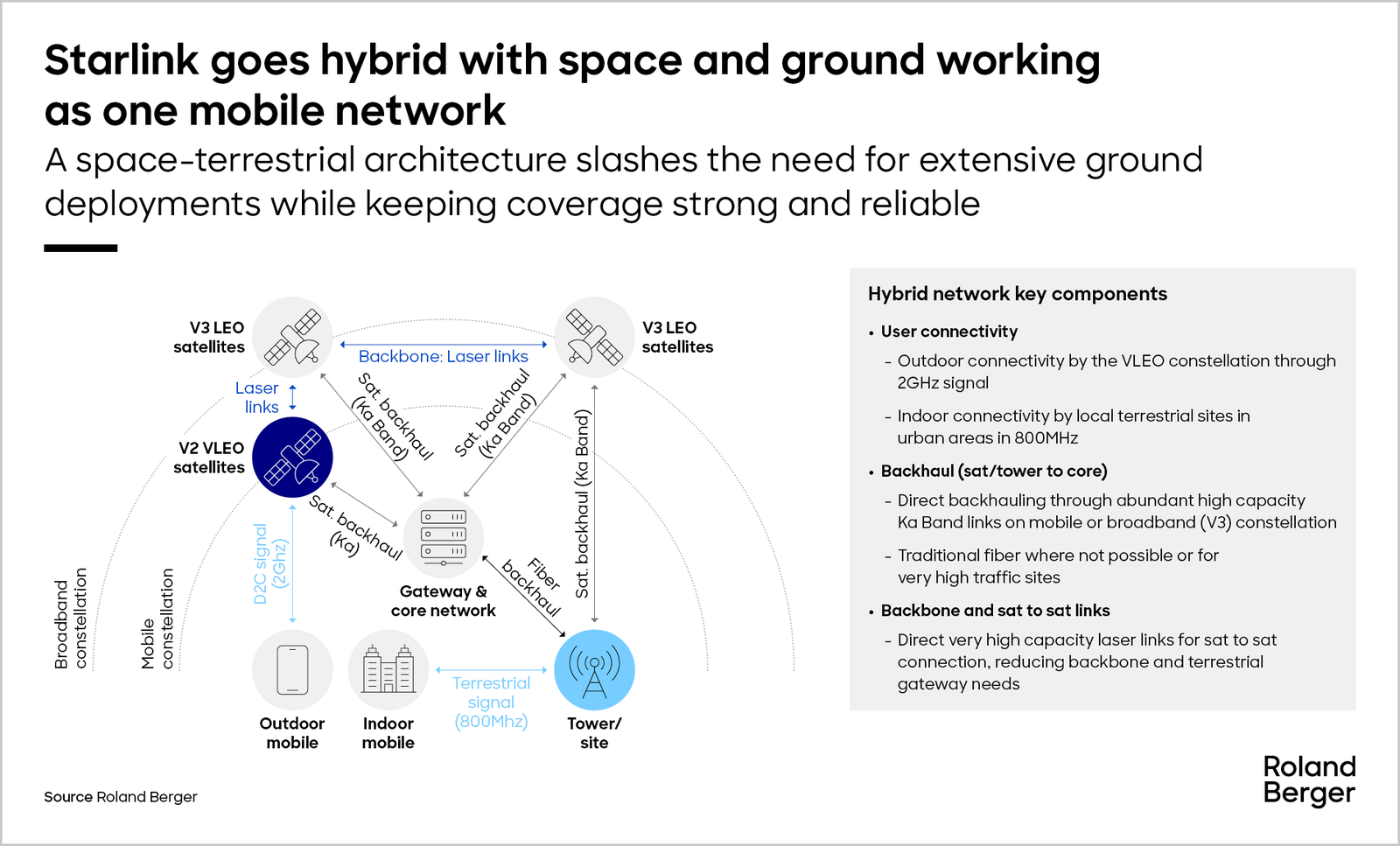
The disruption comes from combining at scale satellite and terrestrial infrastructures and frequencies into a single mobile network. Three complementary layers would provide connectivity from space, indoor coverage from terrestrial sites and high-capacity backhaul.
2 GHz on VLEO constellation, direct connectivity to smartphones. Historically used for both satellite and terrestrial mobile communications, the 2 GHz band offers a good balance between signal propagation and compatibility with mobile devices. Recent acquisitions of wider spectrum allocations around 2 GHz could enable satellite operators to move beyond basic messaging toward high-speed mobile data, although full compatibility will require upgrades to smartphone chips and protocols. This spectrum will be exploited by high capacity VLEO (very low earth orbit) constellations to facilitate direct to device communication
800 MHz, terrestrial coverage to reach indoors. Low-band frequencies offer stronger building penetration, addressing one of the main limitations of satellite connectivity. By deploying terrestrial sites selectively, satellite operators could extend their service indoors and into densely populated areas without replicating the entire infrastructure of traditional MNOs
Ka-band provides high-capacity backhaul from LEO broadband constellation, benefiting from much wider spectrum allocations than mobile-compatible frequencies. It enables high-throughput connections to ground gateways and could also support the backhaul of terrestrial mobile sites. Inter-satellite laser links could additionally provide a global backbone, routing traffic across the constellation without relying on radio spectrum. Both could leverage the extensive infrastructure of already deployed fixed broadband constellations, reducing the need to build a separate transport network for mobile services.