Leveraging space-derived data for the betterment of our planet.
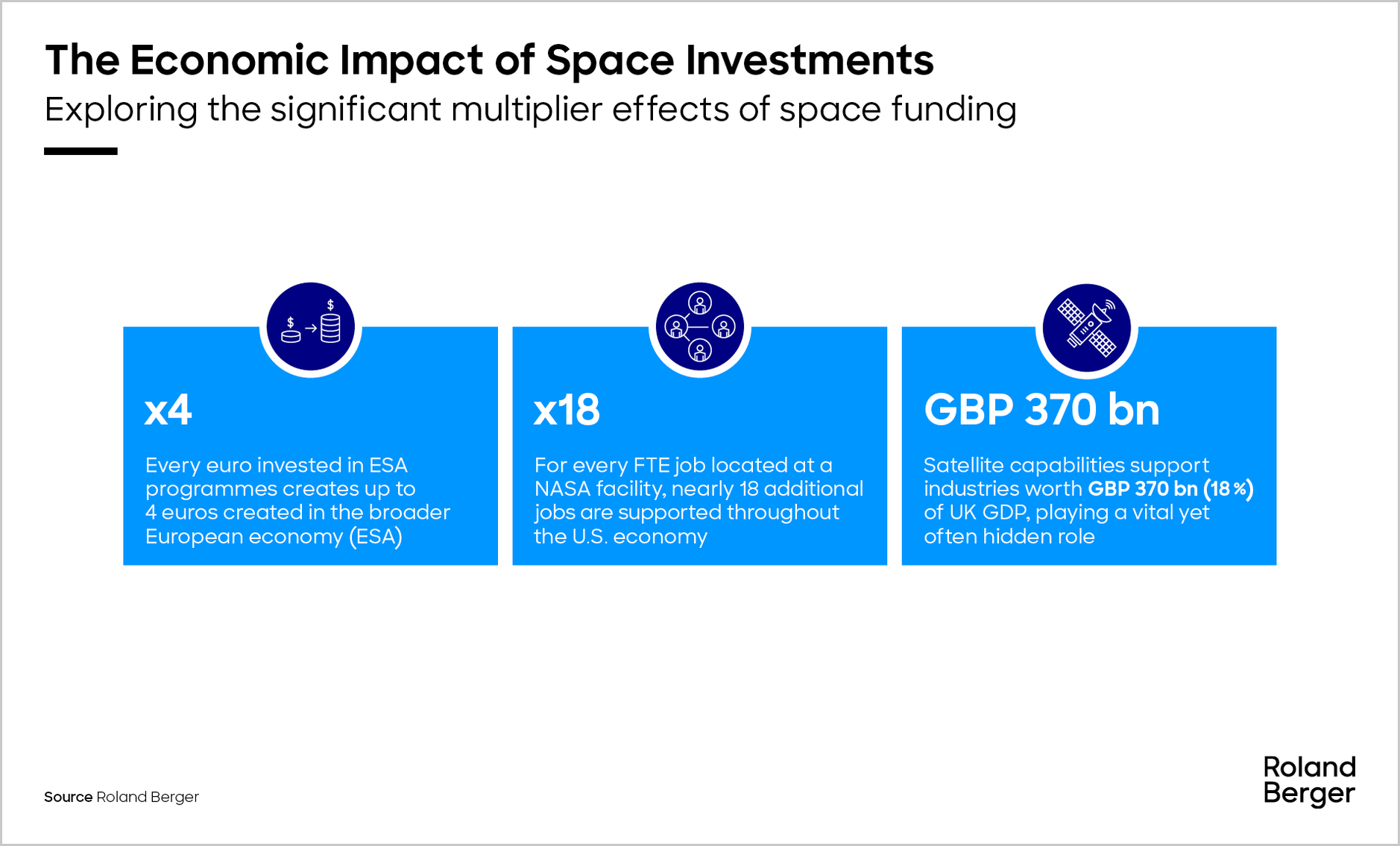
As Roland Berger’s article on space-enabled solutions elaborates, the space economy's value chain can be segmented into the upstream and downstream sectors. Upstream activities involve producing launchers and satellites, while the downstream sector creates 'space-enabled solutions' that enhance existing industries and open new markets ensuring infrastructure, societal independence, and resilience. This potential for growth and innovation makes the space sector exciting and full of opportunity.
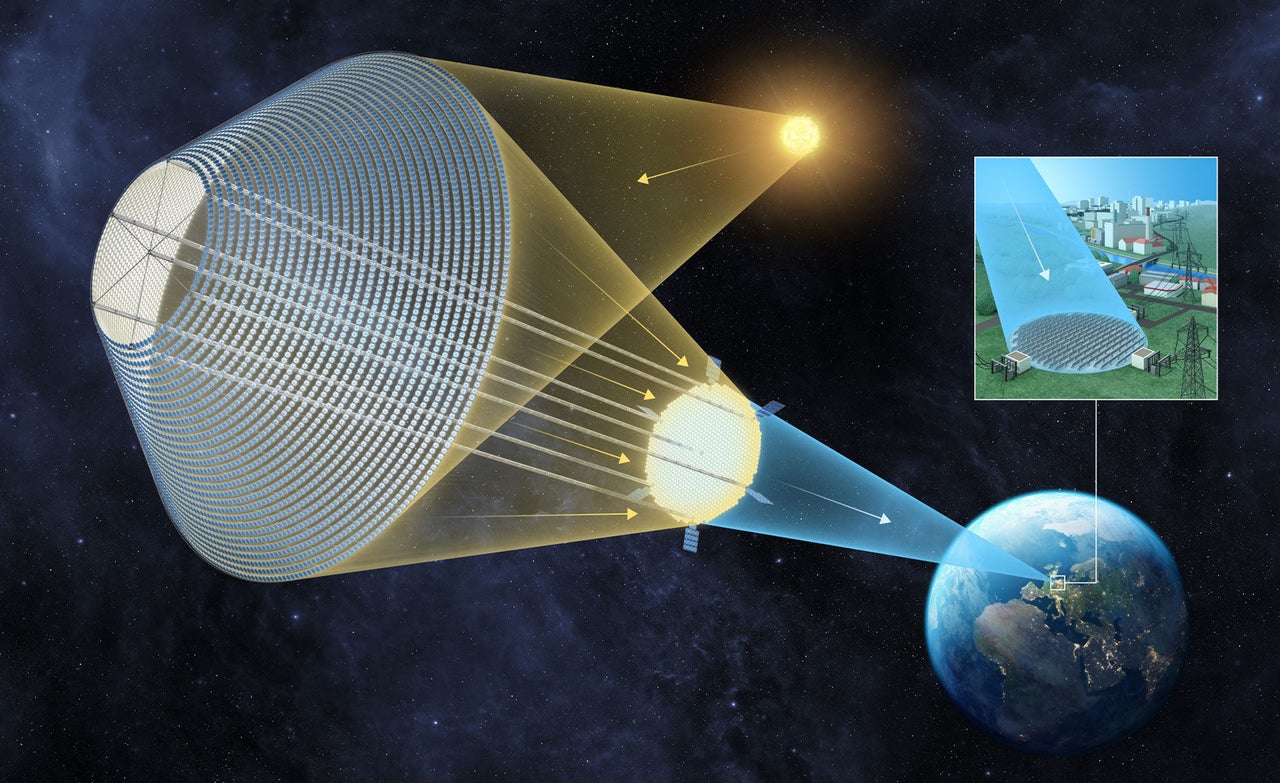
The space sector brings about various benefits for society and its two main streams. These benefits include spillovers from space technologies, enhanced global trade through navigation services, and improved access to healthcare through telemedicine. The current focus of space-enabled solutions revolves around Positioning, Navigation & Timing (PNT), Earth Observation (EO), Meteorology, and Satellite Communication. Although many other applications, such as space-based solar power, are not yet market-ready or have yet to be invented.
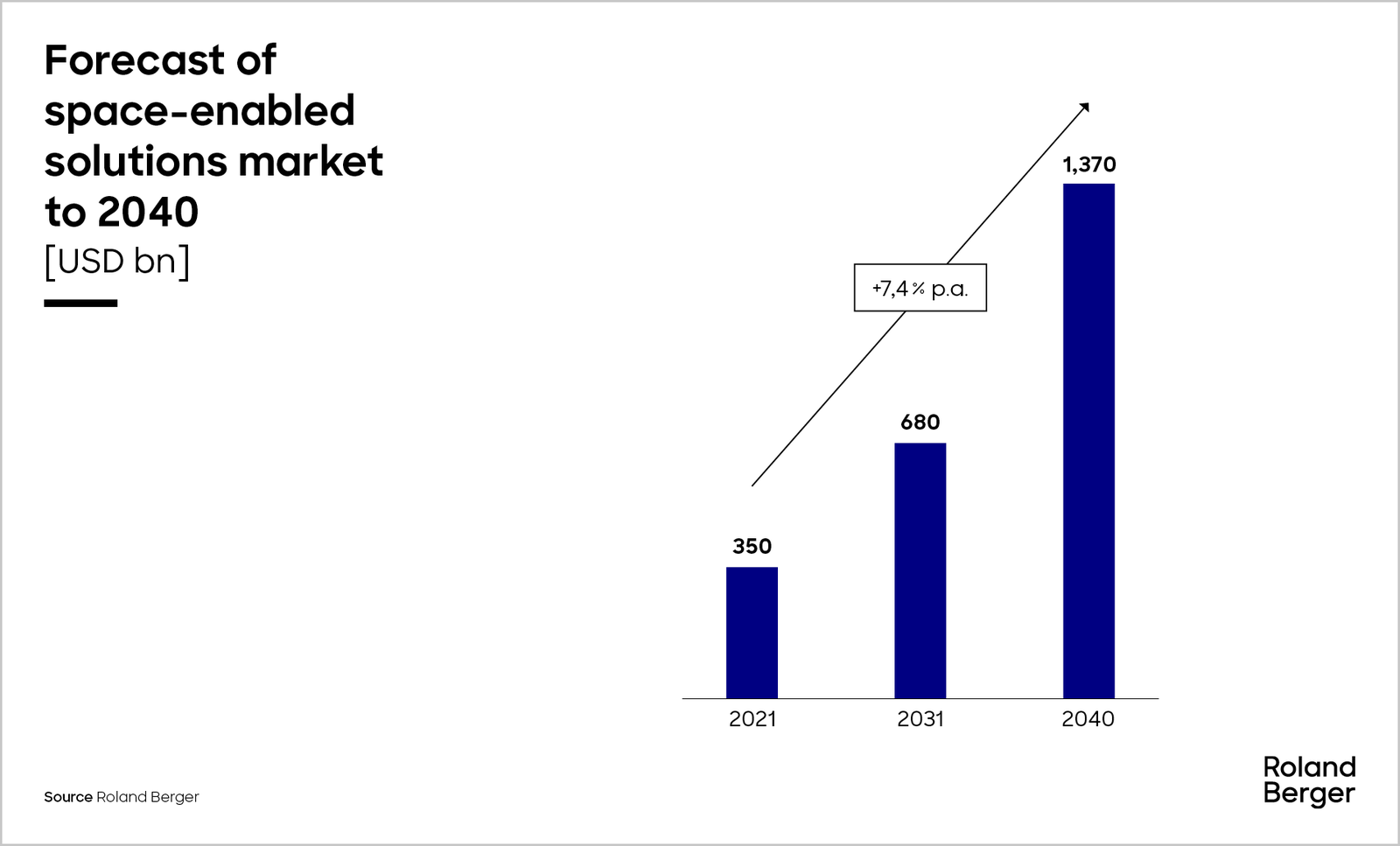
Space-enabled solutions: a USD 1 trillion+ potential in 2040
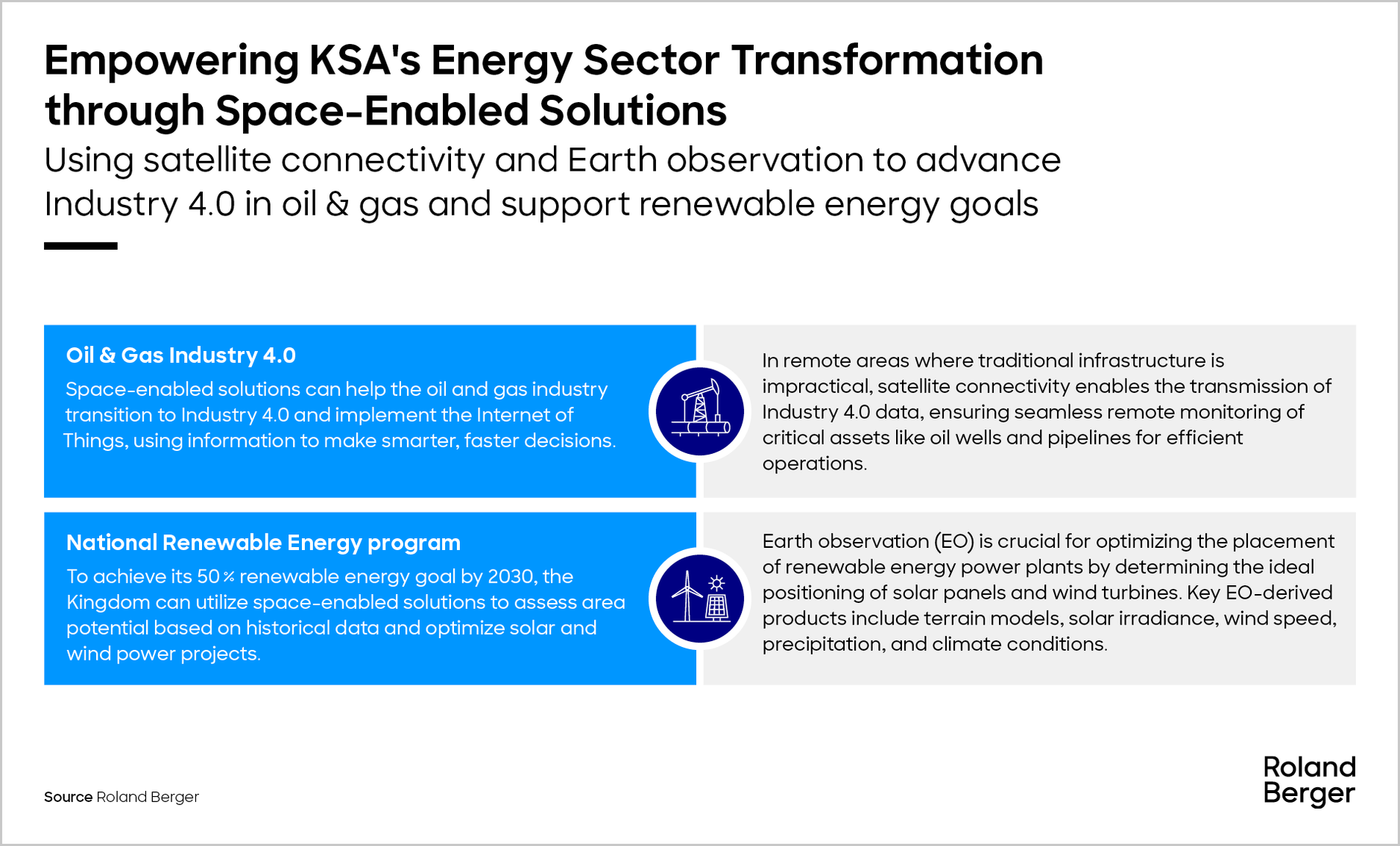
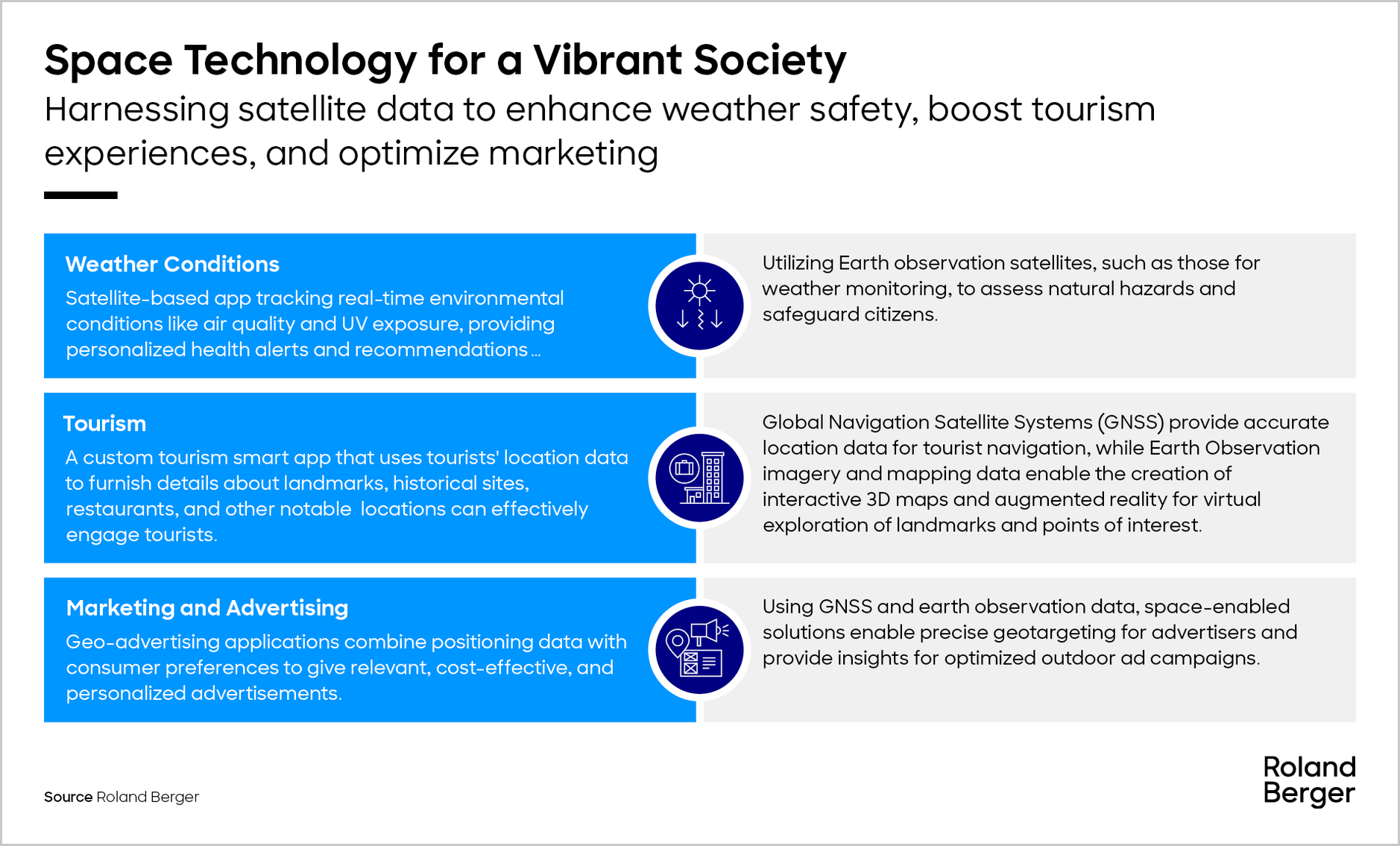
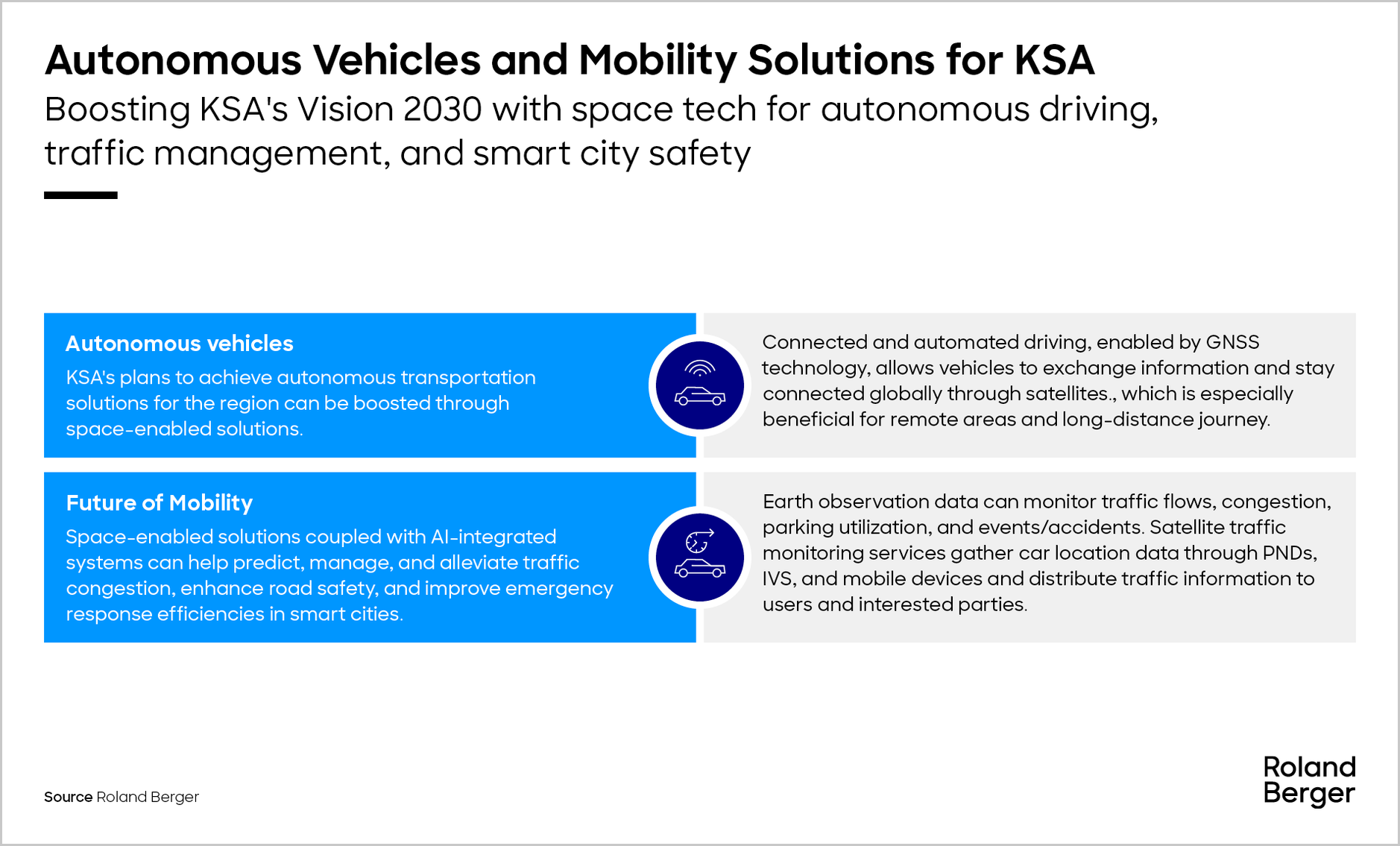
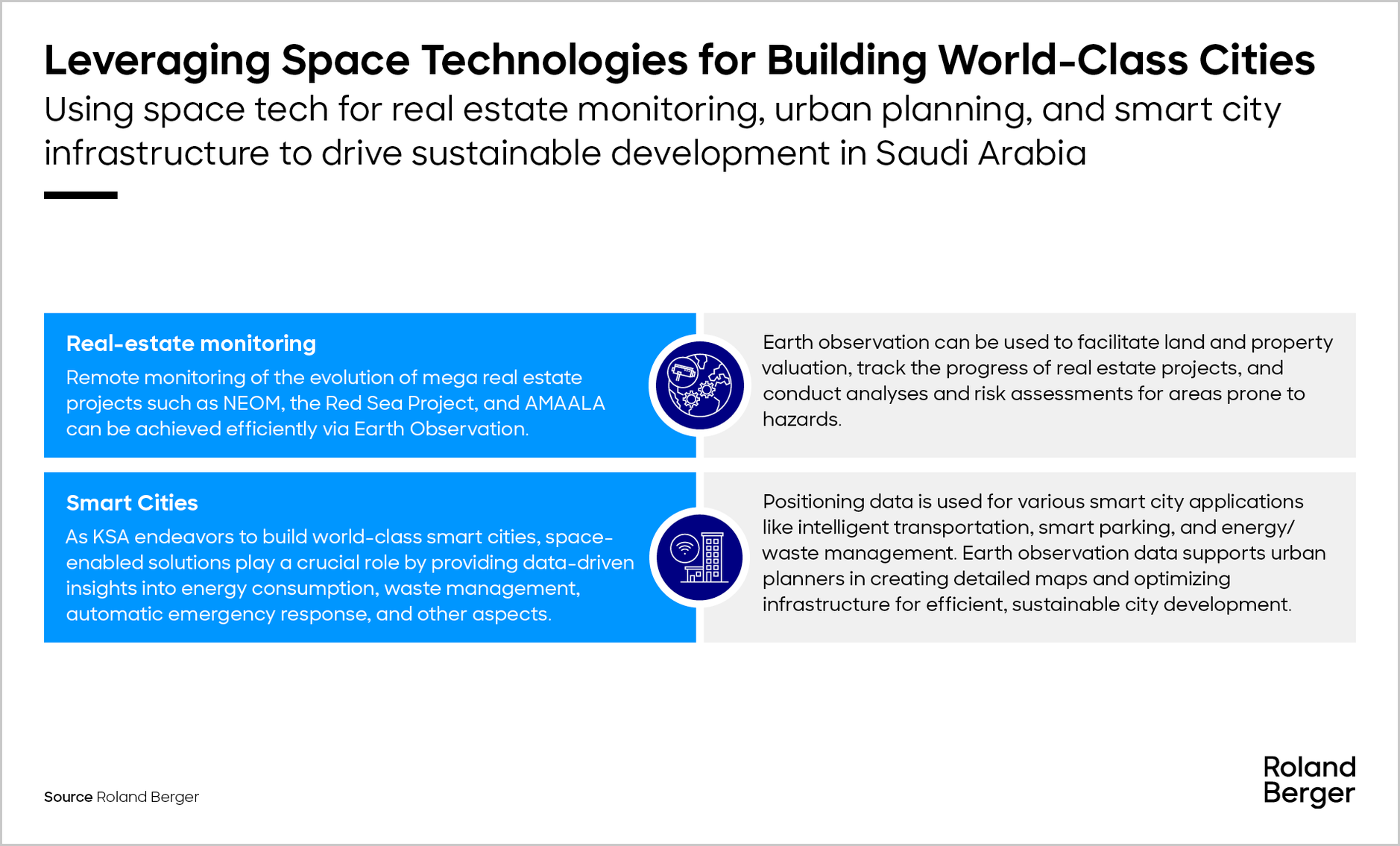
Space-enabled solutions provide significant economic advantages to various sectors and act as a potent booster for organizations that can leverage such technologies to gain a competitive edge. Roland Berger has developed a model that predicts the anticipated demand for space-enabled applications, including Earth Observation and PNT, in 17 distinct industrial sectors. The model also considers the overall future expansion of the SatCom market. This model offers valuable insights into the prospective market size of space-enabled solutions, which have applications across various sectors such as autonomous driving (automotive), real estate monitoring (urban development), tourism, and the enhancement of oil & gas and renewable energy plants.
According to our forecast, space-enabled solutions are projected to represent approximately USD 1.37 trillion by 2040. Four main factors will drive this growth:
- Reduced cost of deploying satellites, driven by advancements in reusable rocket technology and increased competition in the space launch industry
- Improved space accessibility as entrepreneurs, startups, and academia establish their satellite fleets
- Greater utilization of satellite signals for enhanced connectivity, data-driven decision-making, and innovative solutions, fueling the growth of new applications and business models
- Increased proliferation of smart and connected devices and greater demand for seamless global connectivity