We also observe a secondary trend of growing awareness around sustainability issues. For consumers, sustainability is becoming a key criterion in their purchase decisions. For regulators and investors, it has become a necessity: Investment funds that lack a sound sustainability plan or maybe even a net zero commitment risk being delisted.
Shaping supply chain configurations
to account for the most efficient yet most sustainable route is becoming a key determinant for successful customer delivery.
Third, current market volatility, exacerbated by the Covid-19 pandemic and now further strengthened by global conflicts such as the war in Ukraine, is placing significant constraints on organizations' costs and profitability. This market volatility has significantly shaken global supply chains, and supply situations are critical globally. Companies need to control costs closely in their functions and supply chains, minimizing assets so as to improve their agility in the face of any future economic downturns.
Yet our experience supporting organizations with
global operations
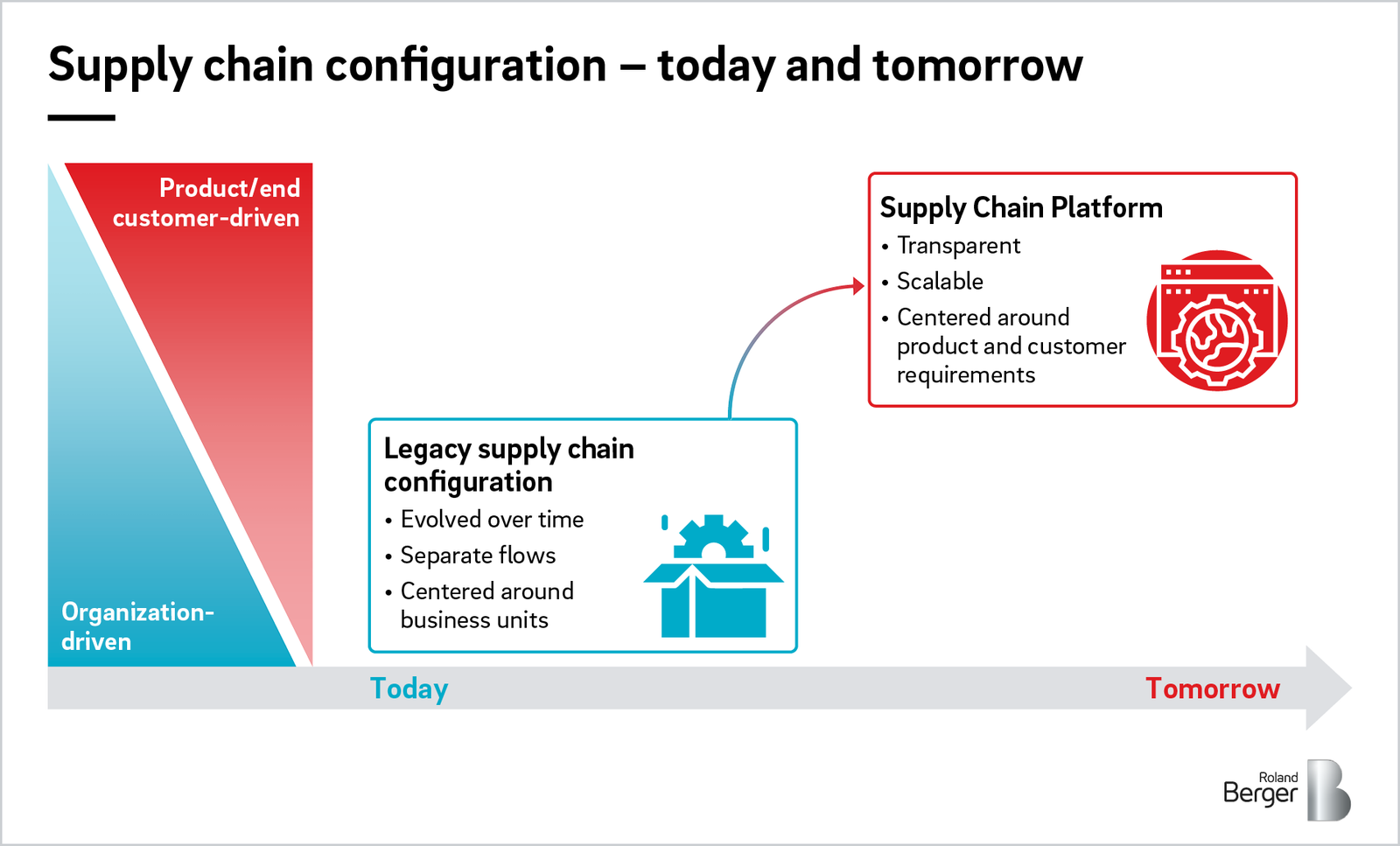
shows that most industrial players are still operating with legacy supply chain configurations. Often, these are highly fragmented, with widely varying types of flows from factory to customer that are both inefficient to manage and impossible to scale. These configurations fail to address the aforementioned drivers sufficiently and create a significant risk of the supply chain failing to meet customer requirements and the organization's own performance goals.
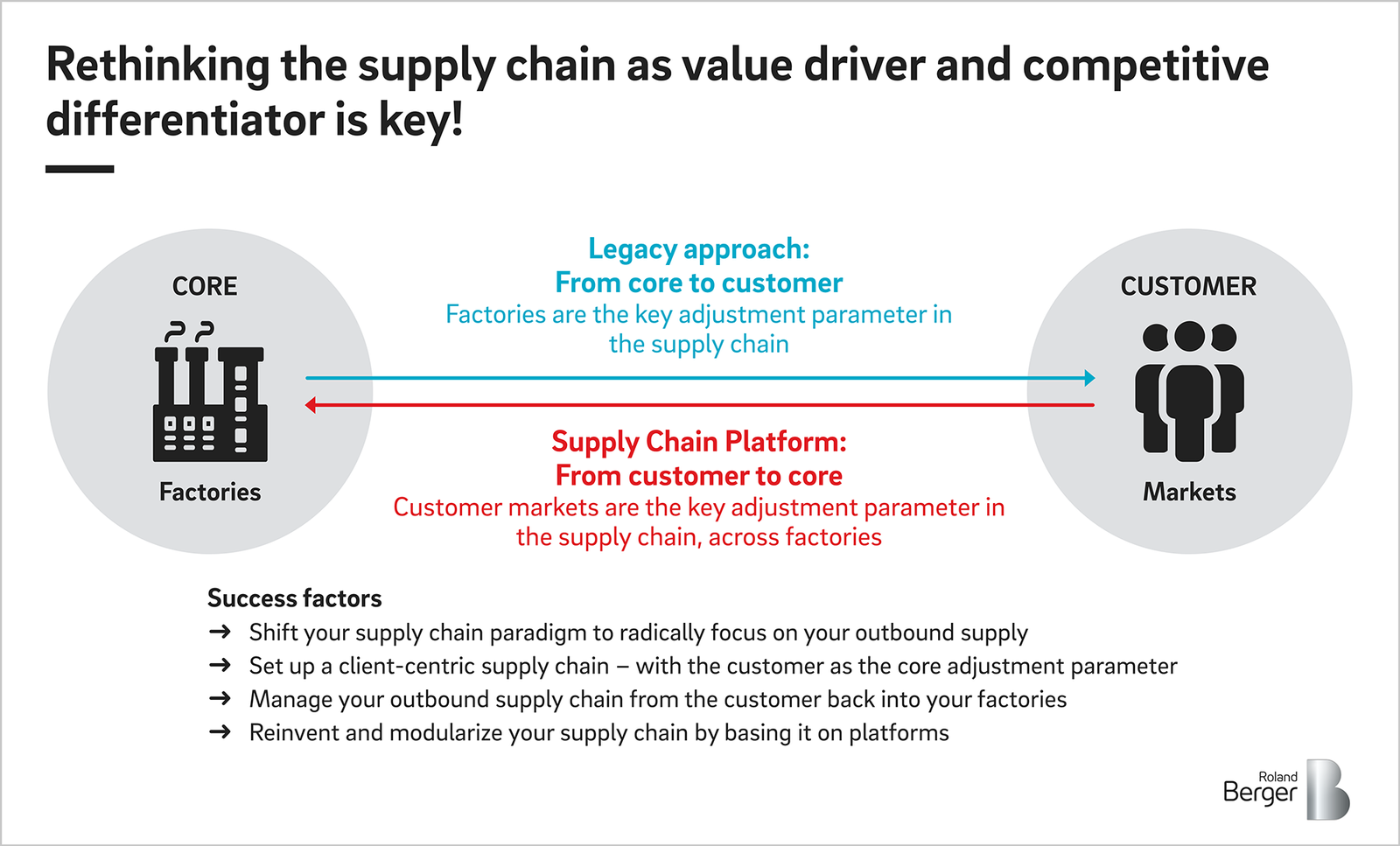
In the case of one diversified high-tech conglomerate, for example, we identified more than 3,100 different supply chain configurations – or individual logistics flows with their own steering mechanisms and even outsourcing partners – for a portfolio of 50 product groups. The global factors affecting markets mean that such configurations are no longer fit for purpose: To guarantee future success, supply chains need to become a value driver and competitive differentiator. That means making them easier to scale, ensuring that they serve additional markets or adjusting them to changing customer requirements in terms of lead time or pricing, for example – at minimum cost and involving the least possible invested capital and effort. We call this a Supply Chain Platform approach.