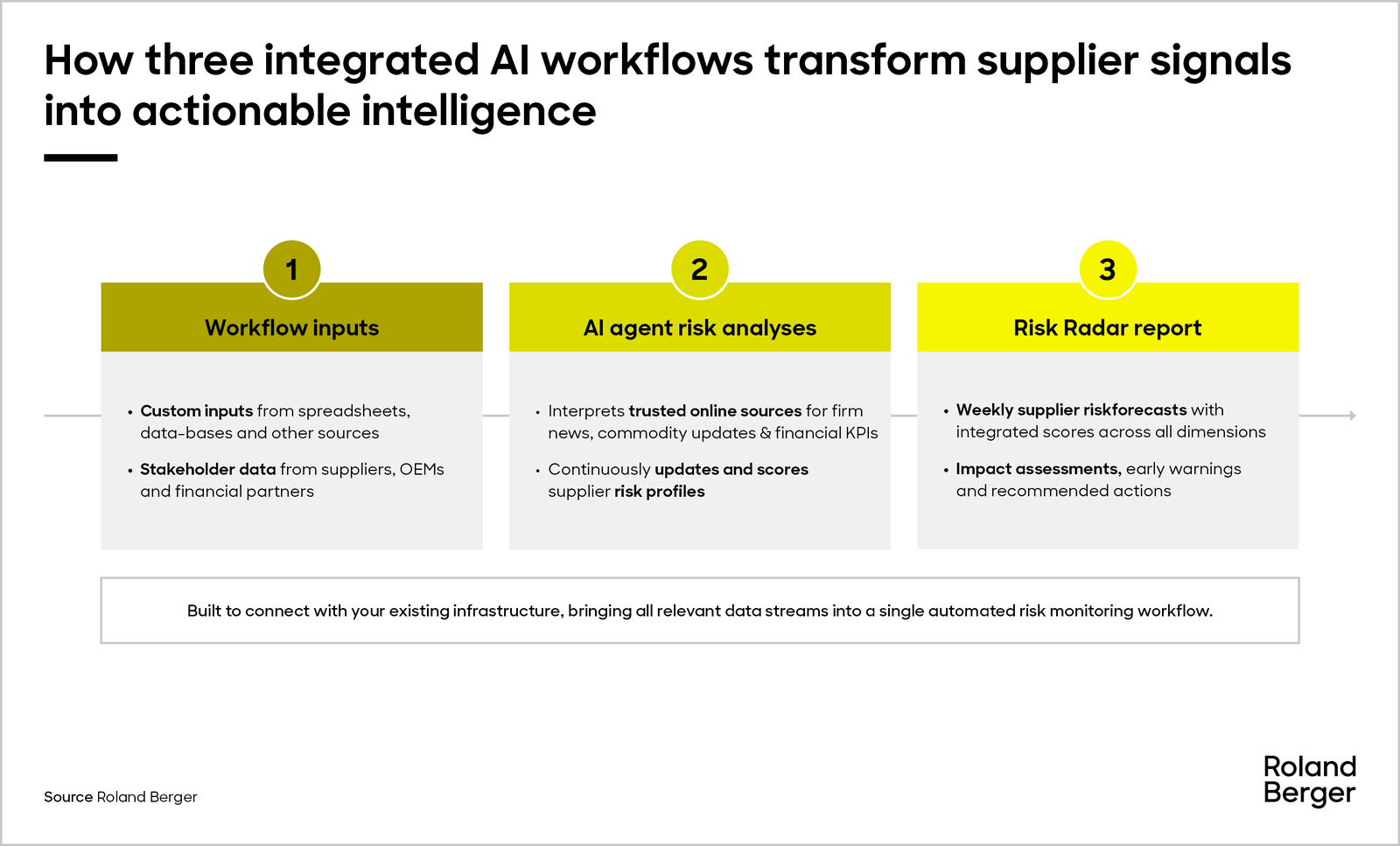
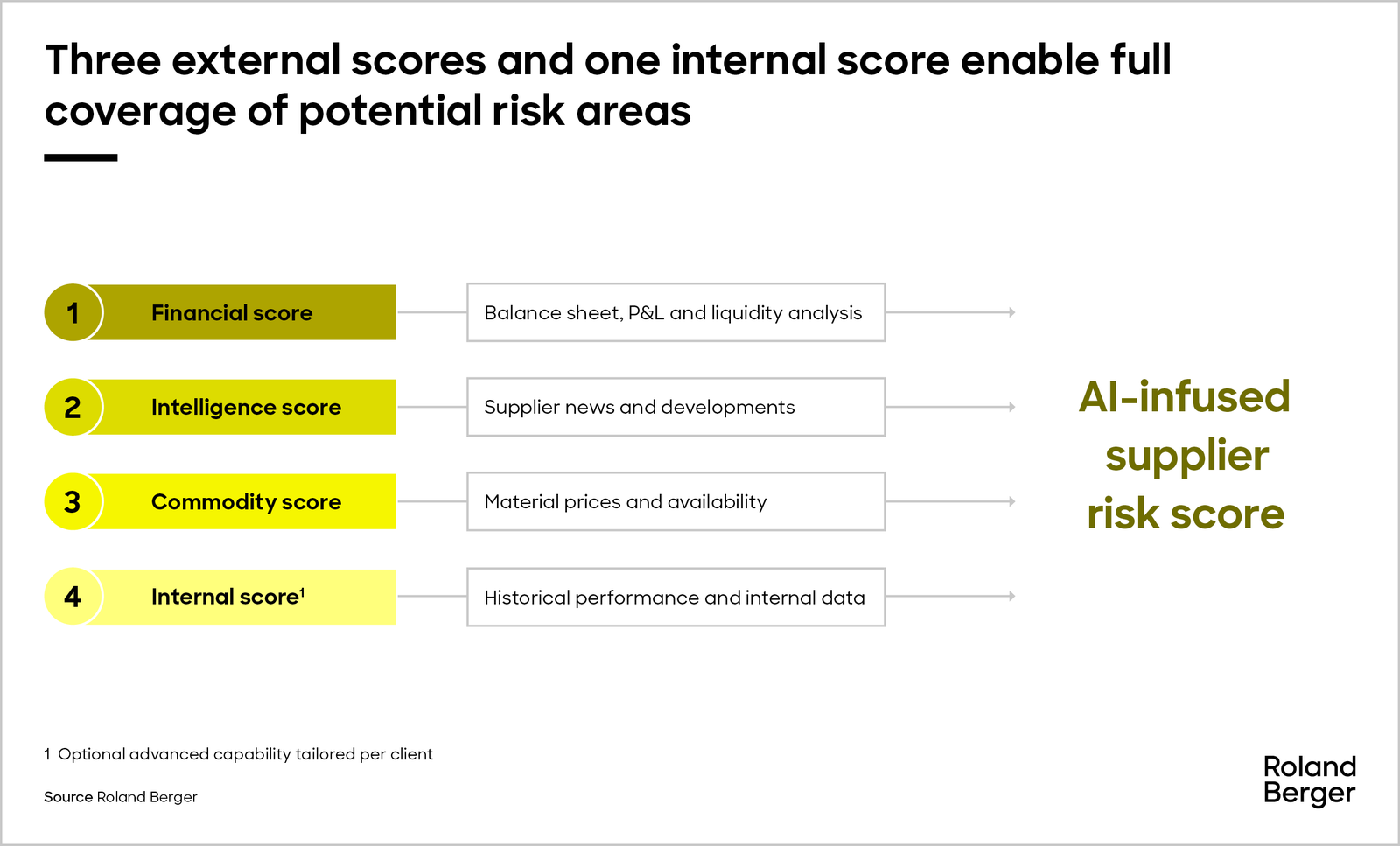
Intelligence without action is merely interesting. The Risk Radar is designed not just to identify risks but to accelerate the organizational response. Automated early warning signals feed directly into a fast-track response process for critical supplier cases, enabling OEMs, OES and financing partners to proactively engage on supplier risk developments before they escalate. This shifts the operating model from reacting to disruptions that have already occurred to intervening while corrective action is still possible.
The system’s roadmap extends well beyond its current capabilities. Advanced enhancements, tailored and developed based on specific client requirements, include the integration of client internal data such as historical supplier shortfalls to improve the accuracy of risk scoring, analysis of the complete supplier network to identify how risks from one supplier propagate across the broader supply chain and augmentation with social media sentiment and analyst reports to strengthen market-based risk signals. A longitudinal database will continuously store the crawled supplier news and intelligence signals, enabling the system to track how each supplier's qualitative risk profile shifts over time and to surface emerging trends from these state changes, moving the analysis from point-in-time snapshots to risk trajectories.
Crucially, the Risk Radar also leverages Roland Berger’s proprietary knowledge base, including vertically integrated industry data, domain expertise from past projects and due diligence reports. This grounds the AI-generated signals in the strategic realities of specific industries and markets, adding a layer of contextual intelligence that purely algorithmic systems cannot replicate.
A partnership model for implementation
Roland Berger provides in-house AI capabilities on solution design and proof-of-concept development, combined with tailored infrastructure and technology partnerships. The implementation approach is structured in three phases designed to deliver value at every stage.
The first phase focuses on project setup and solution design: jointly scoping goals, reviewing internal and external data sources and access conditions, confirming legal and compliance requirements and defining the workflow logic, risk categories and reporting parameters that will shape the system’s output. The second phase moves into proof-of-concept engineering. Roland Berger develops effective PoCs in sandbox environments using no/low-code platforms, rapidly demonstrating value. Test users from relevant client teams are onboarded, and structured feedback is collected to refine the system. The third phase prepares the production environment with required approvals, finalizes security protocols and scales the solution across the organization, with support for identifying and choosing the most suitable technology partners for the MVP.
This phased approach ensures the Risk Radar is not imposed as a generic product but calibrated to the specific contours of each client’s supplier landscape and risk management priorities. It reflects a deliberate philosophy: start focused, demonstrate value early and scale with confidence.
What sets Roland Berger apart in this space is the combination of deep supplier ecosystem knowledge across
automotive
and industrial value chains, hands-on restructuring and operational excellence experience that transforms risk management into competitive advantage and partnerships with leading AI technology providers that enable rapid deployment of production-ready solutions.