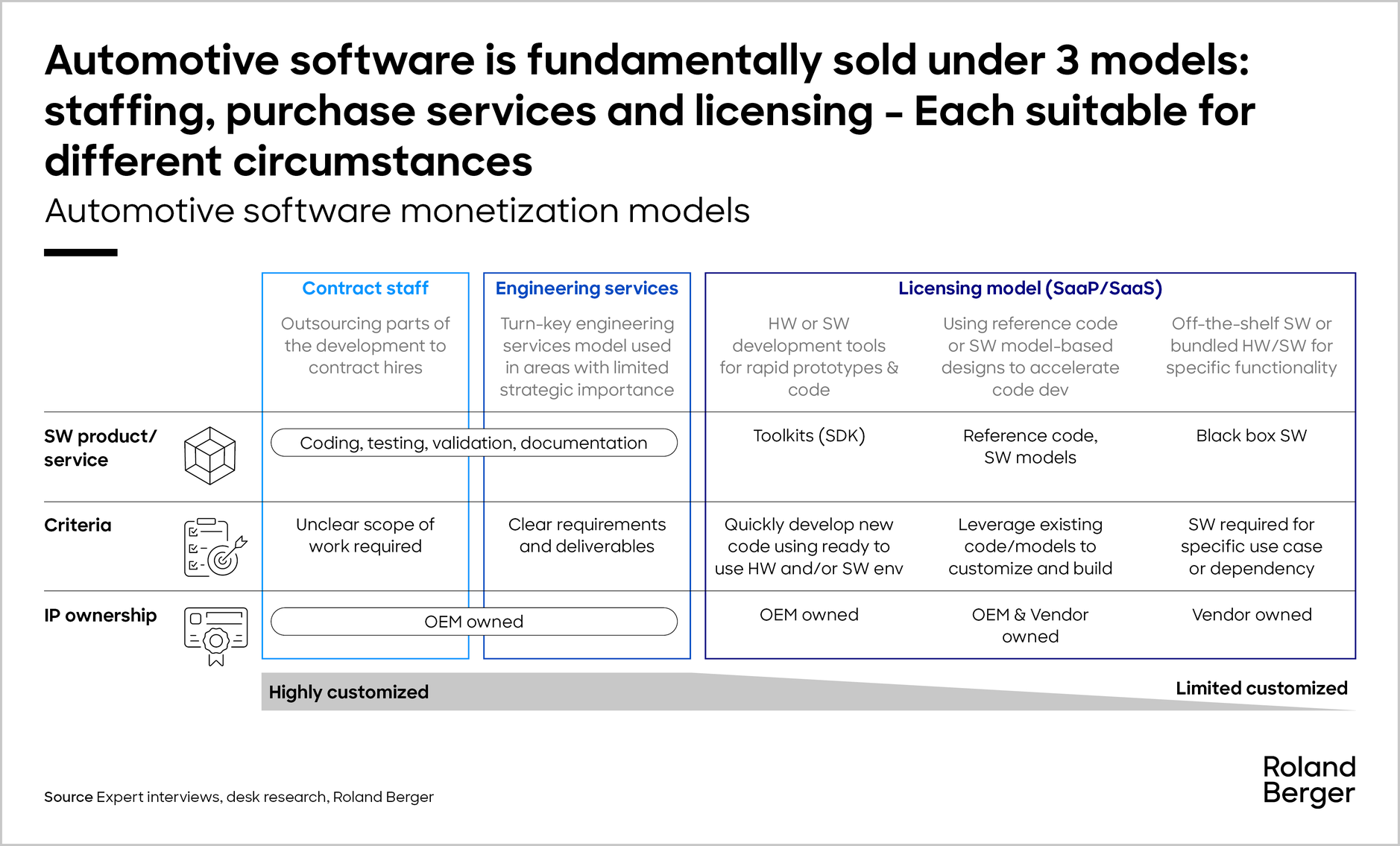
Under SaaP and SaaS licensing models, OEM cost estimation deteriorates sharply. Unlike billable-time engagements, IP licensing gives OEMs no clear view of what the product actually costs to build. Parametric estimation models are their only proxy. Pricing structures run from fixed licenses to value-based arrangements, with margins that outpace contact staffing and engineering services models.
Most Tier-1 suppliers have built their commercial infrastructure to sell time and deliverables. The licensing model requires the ability to price on value rather than cost, to negotiate on vendor-defined terms rather than OEM-defined terms, and to structure agreements around lifecycle value rather than program delivery.
What Tier‑1s must do – A sequenced shift from engineering to product‑led software monetization
Responding to unbundling means changing the product portfolio, pricing logic, and organizational structure at the same time.
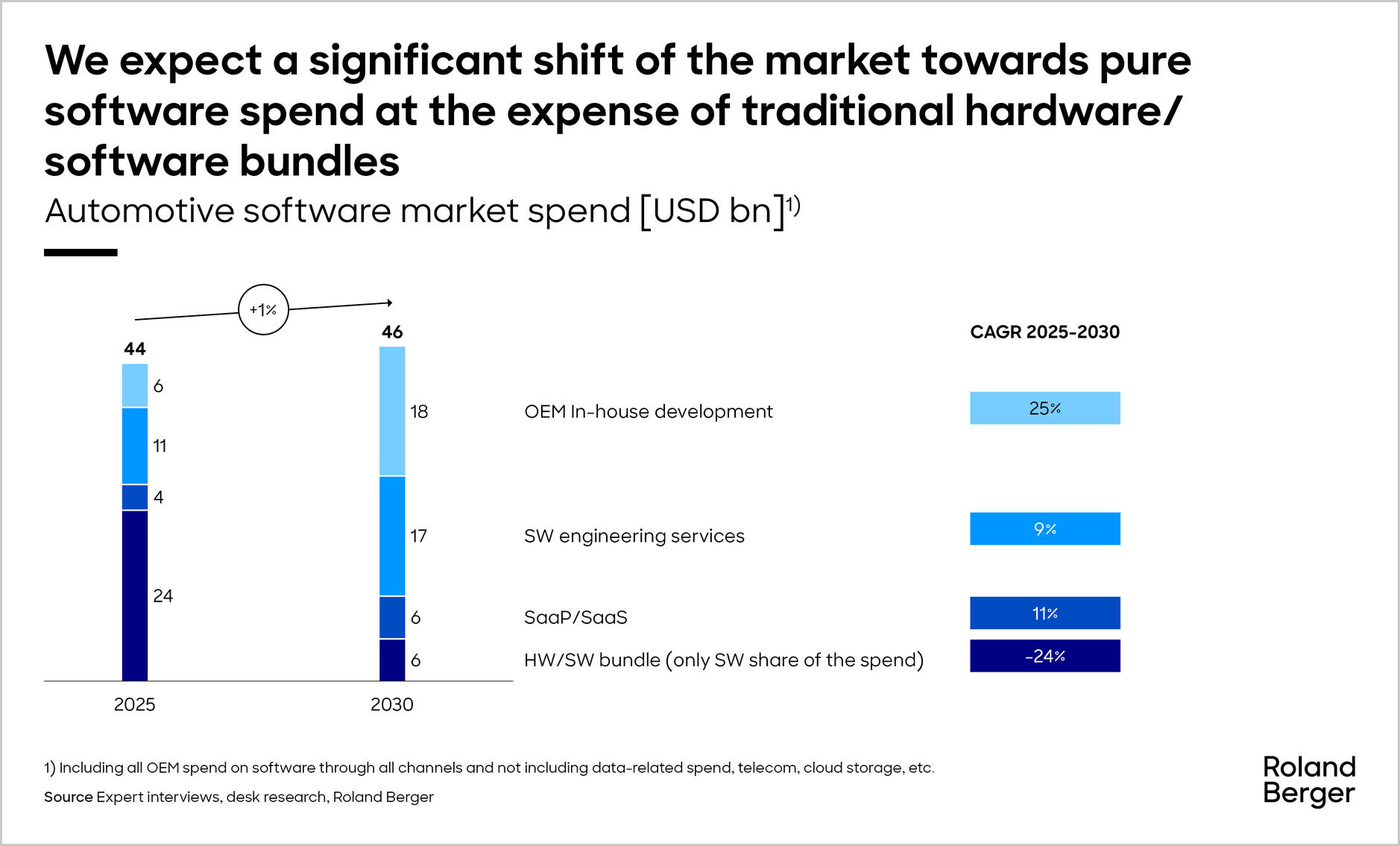
The starting point is decomposing existing hardware/software bundles into distinct, separately addressable software capabilities. An infotainment portfolio, for example, contains platform software, a media framework, sound packages, voice and navigation integration, OEM-specific applications, and integration services — each with a different competitive landscape and a different buyer within the OEM organization. Selling these as a single bundle obscures their individual commercial value. Suppliers must disaggregate internally before they can price them individually in the market.
The second requirement is a change in pricing logic. Unit-based pricing (e.g. a fee per vehicle, per ECU, or per feature) is the most direct transition from hardware commercial norms. It is not the only option. Subscription models, usage-based fees, developer seat licensing for middleware, and lifecycle monetization structures that combine initial license fees with ongoing maintenance revenues are all established models in software markets outside automotive. Applying them in automotive requires pricing from the value delivered to the OEM rather than from a cost base plus margin. That means understanding what the software enables for the OEM and what it costs them to go without it.
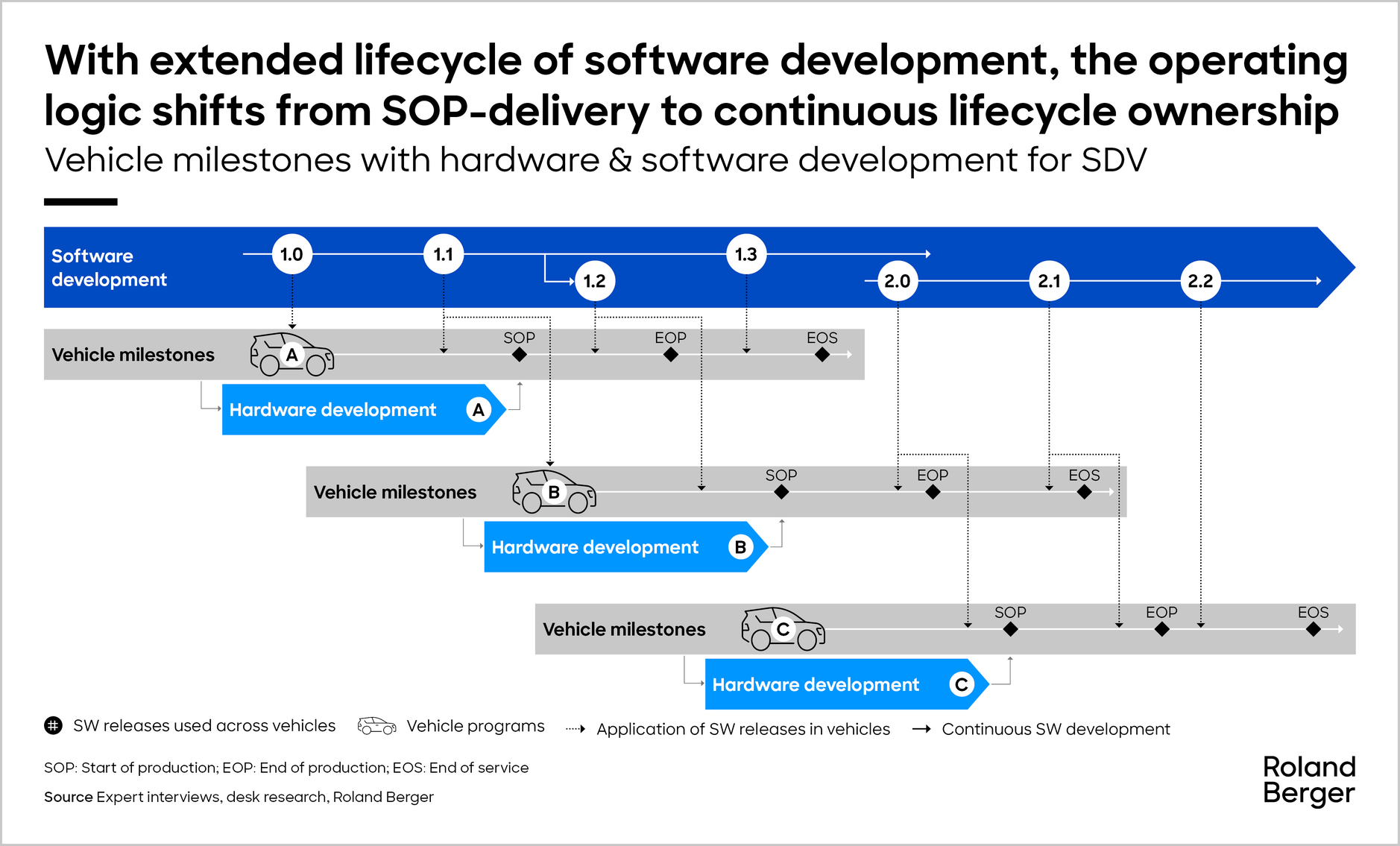
The third requirement is organizational. An engineering delivery model structured around program milestones and hardware integration is poorly suited to continuous software lifecycle ownership. Product management must exist as a function with authority over roadmap and release decisions. DevOps and continuous deployment infrastructure must replace program-linked delivery logic. Lifecycle governance must be a standing organizational function. The supplier's internal structure must also align with how OEM software organizations work, with the cadence, granularity, and commercial sophistication they have come to expect from software-native counterparts.
The cost of waiting: a compounding disadvantage
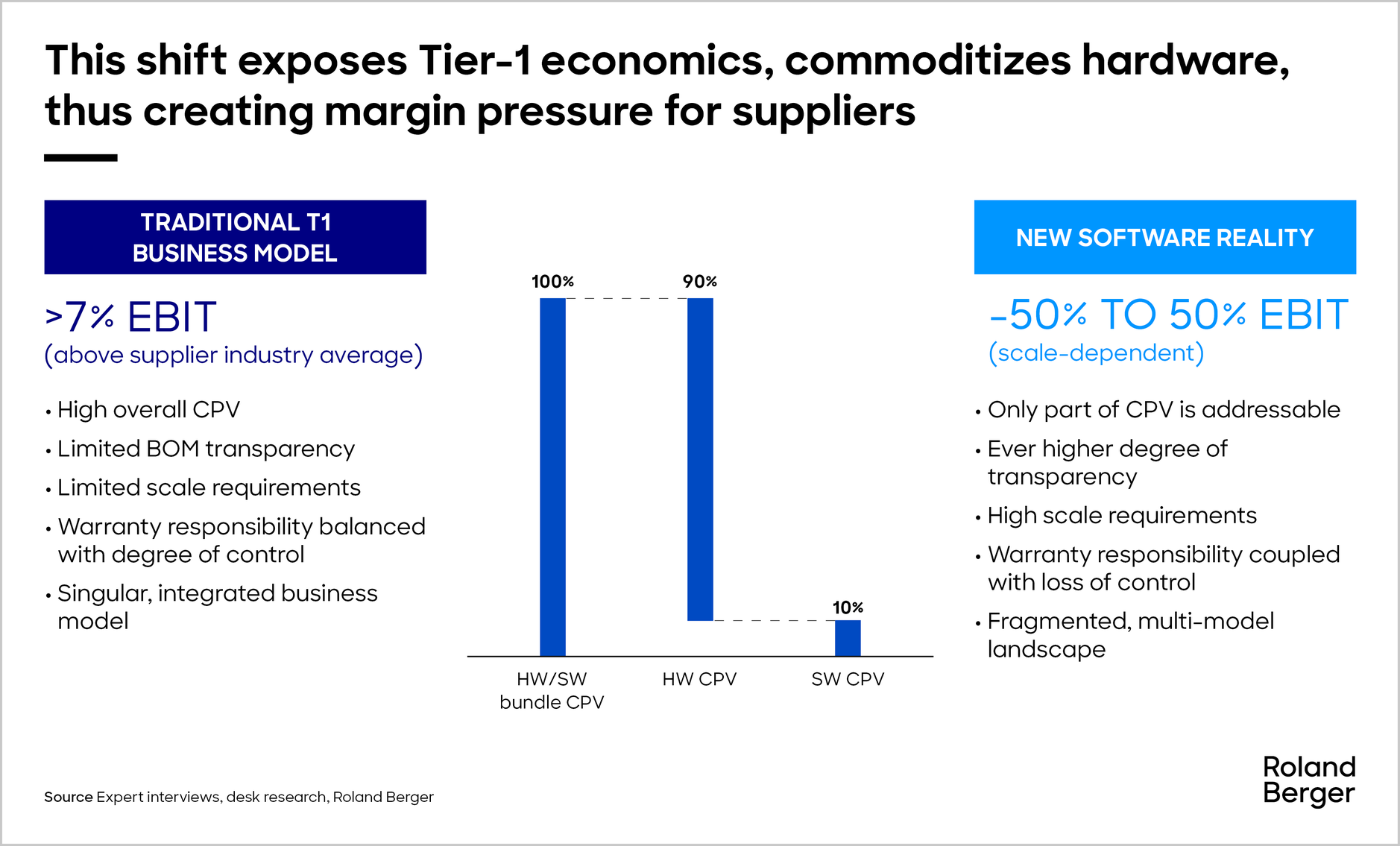
OEM software purchasing organizations continue to grow and, over time, develop deeper purchasing and integration expertise. Every independently sourced component gives the OEM purchasing team cost visibility it did not previously have. Direct Tier-2 negotiations build internal pricing intelligence. Each successfully disaggregated procurement produces a template that can be applied to the next domain. The OEM's sophistication is compounding year over year.
A Tier-1 that delays building a software product position does not hold its position during that period. It loses relative ground, because each successive negotiation finds the OEM counterpart better informed and more willing to accept the integration complexity of sourcing independently. Suppliers that move now will accumulate commercial track records, product reference bases, and internal capabilities. Late entrants will struggle to replicate these. Latecomers will negotiate from a weakened position. OEM buyers will already know how to price the bundle apart — and software specialists will already hold ground in the relevant domains.