Recent advances in connectivity, architecture, and real-time data processing have built the foundation for a robust service platform. Roland Berger, in collaboration with
Connected Vehicle Systems Alliance (COVESA) and
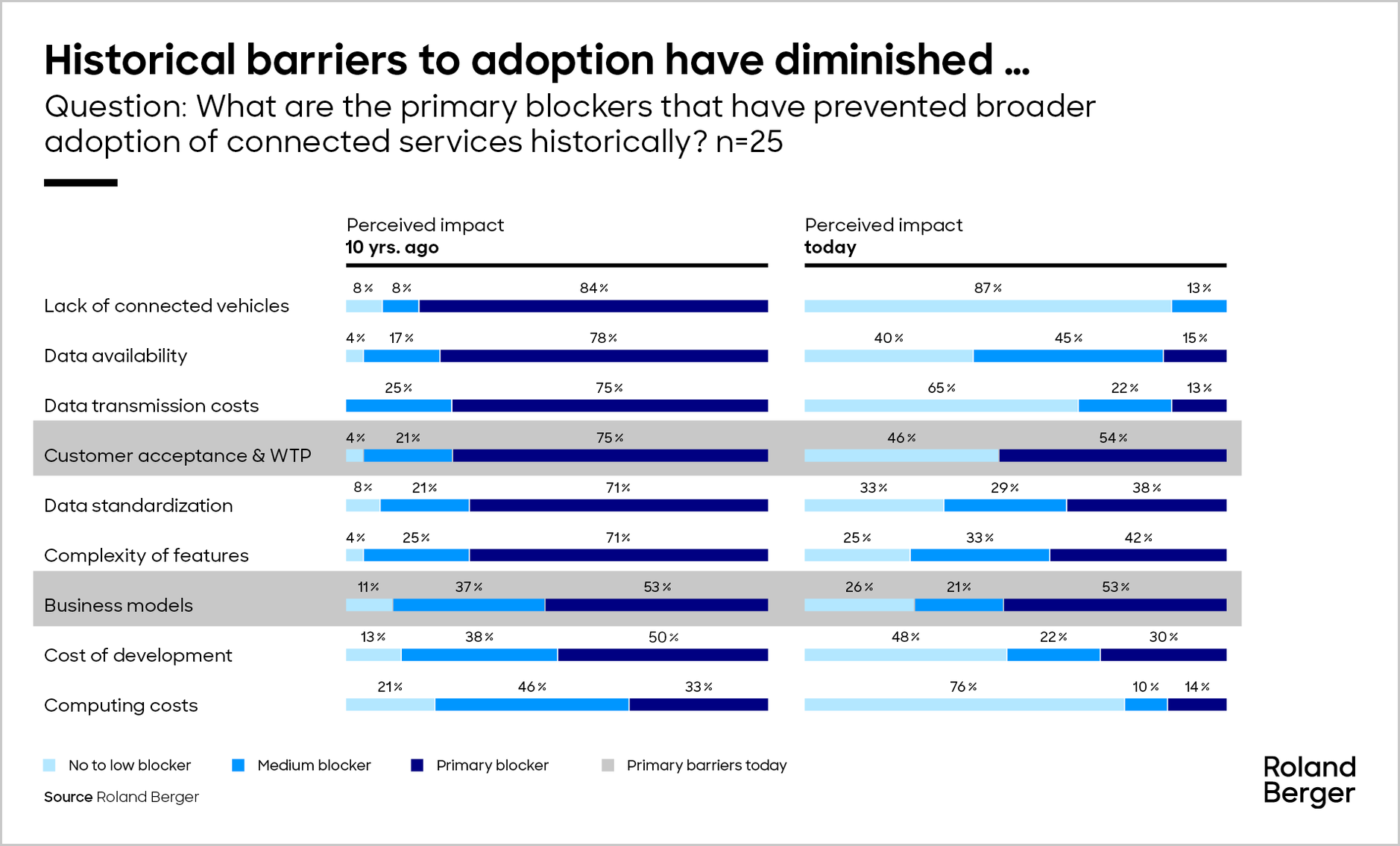
Geotab, recently surveyed 27 industry experts - including OEMs, suppliers, advisors, and dealers - finding that many of the historical blockers are no longer in play. The groundwork is finally ready.
Why connected services failed the first time
In any industrial transformation, five pillars must develop in tandem: technology, delivery capacity, customer interest and willingness to pay, and a working business model. In 2015, none of these were fully mature.
Connectivity was hampered by limited bandwidth and a sparse base of connected vehicles. Meanwhile, consumer interest was low, and offerings were poorly conceived; subscription fees for additional services like heated seats failed to resonate. Most significantly, business models were either missing or unviable.
Why the outlook is different in 2025
Most of these issues have now been resolved.
Connectivity
is standard, infrastructure has matured, and data processing enables meaningful services. Computing and data transmission costs have also dropped sharply.
OEMs have redefined connected services from afterthoughts to core digital products. Meanwhile, open-source tools, edge computing, and scalable software architectures are driving down costs and unlocking new potential. Consumers increasingly expect connected services, especially those integrating third-party apps or offering remote vehicle access.