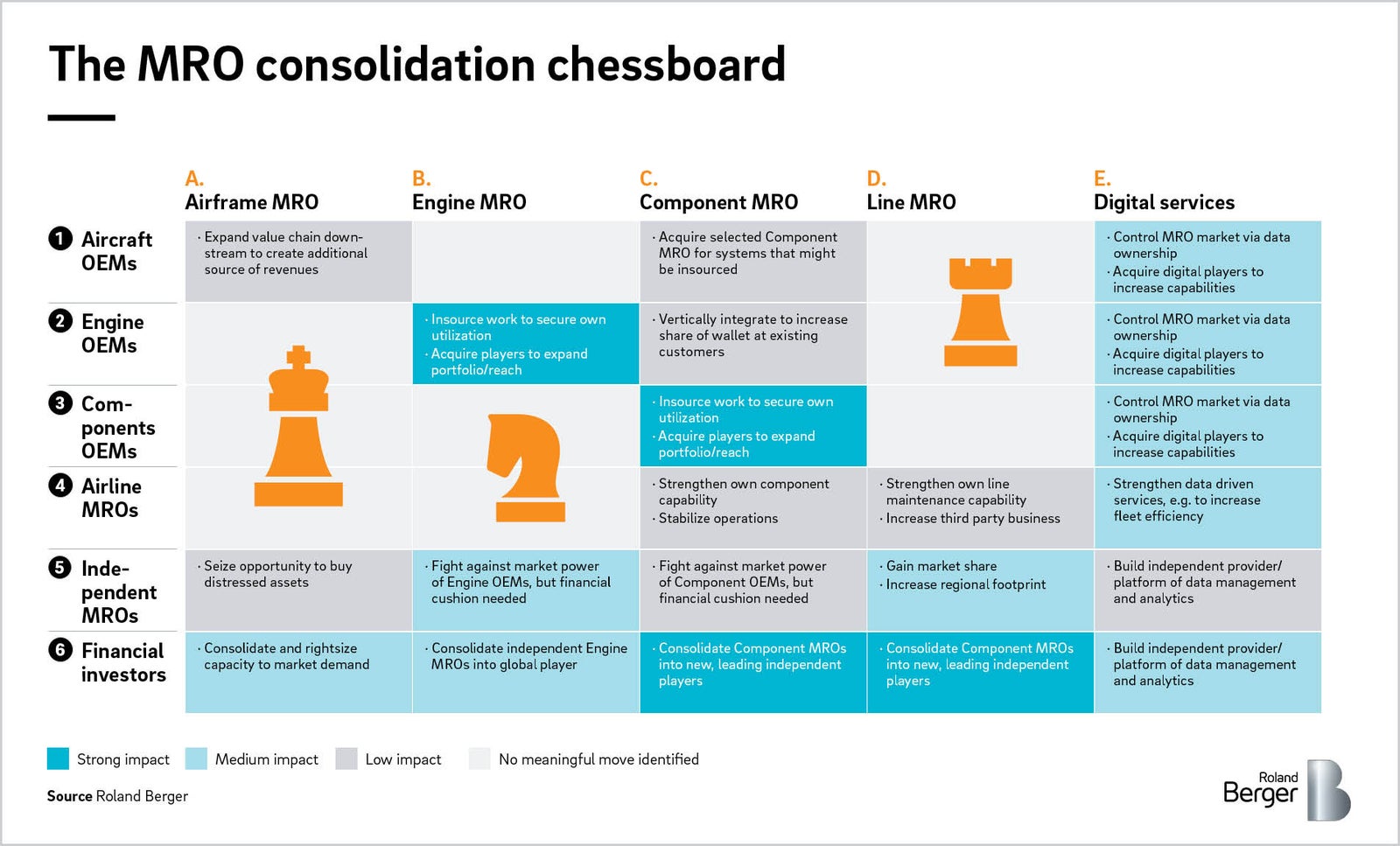
Based on this structured analysis, we believe that:
Aircraft OEMs will play only a minor role in the MRO consolidation game. Their key move may be to strengthen their power position by stronger control of the aftermarket via digital services and related data ownerships. This will ensure that new MRO services are in line with their development vision and are being executed in a controlled environment. In terms of M&A activity, we expect them to remain focused on specific segments, such as parts or specific systems, which they intend to add to their capabilities
Engine and Component OEMs are expected to play a key role within their current business perimeter. On top of insourcing work to keep their own MRO shops utilized, they can play the traditional consolidation game of acquiring MRO players for pure market share or technology expansion reasons, and can increase their control via IP or data ownership means.
Airline MROs will have a hard time playing an active role in the game. They will be hit by airline consolidation and surviving airlines will try to optimize their MRO cost at the ‘new normal’. Divestment of inhouse MRO services may be a potential means to realize those cost savings. Only the survivors of that game will get the chance to take over third-party work from other airlines.
Independent MROs could benefit from the above-mentioned cost reduction pressure if they have the financial means to expand and take over third-party work for airlines that outsourced their MRO services. On the other hand, competitive pressure will hit them as well, so they need to carefully plan those moves
Financial investors seem to be the most versatile player in the game. Having financial means helps, of course, to play the game the right way and opportunities will arise, for example to consolidate in the engine, component or line maintenance segment. Entering the digital side of the business playing the "neutral owner of data" card could be a powerful move and a gamechanger in this segment.
Conclusion – From COVID to consolidation
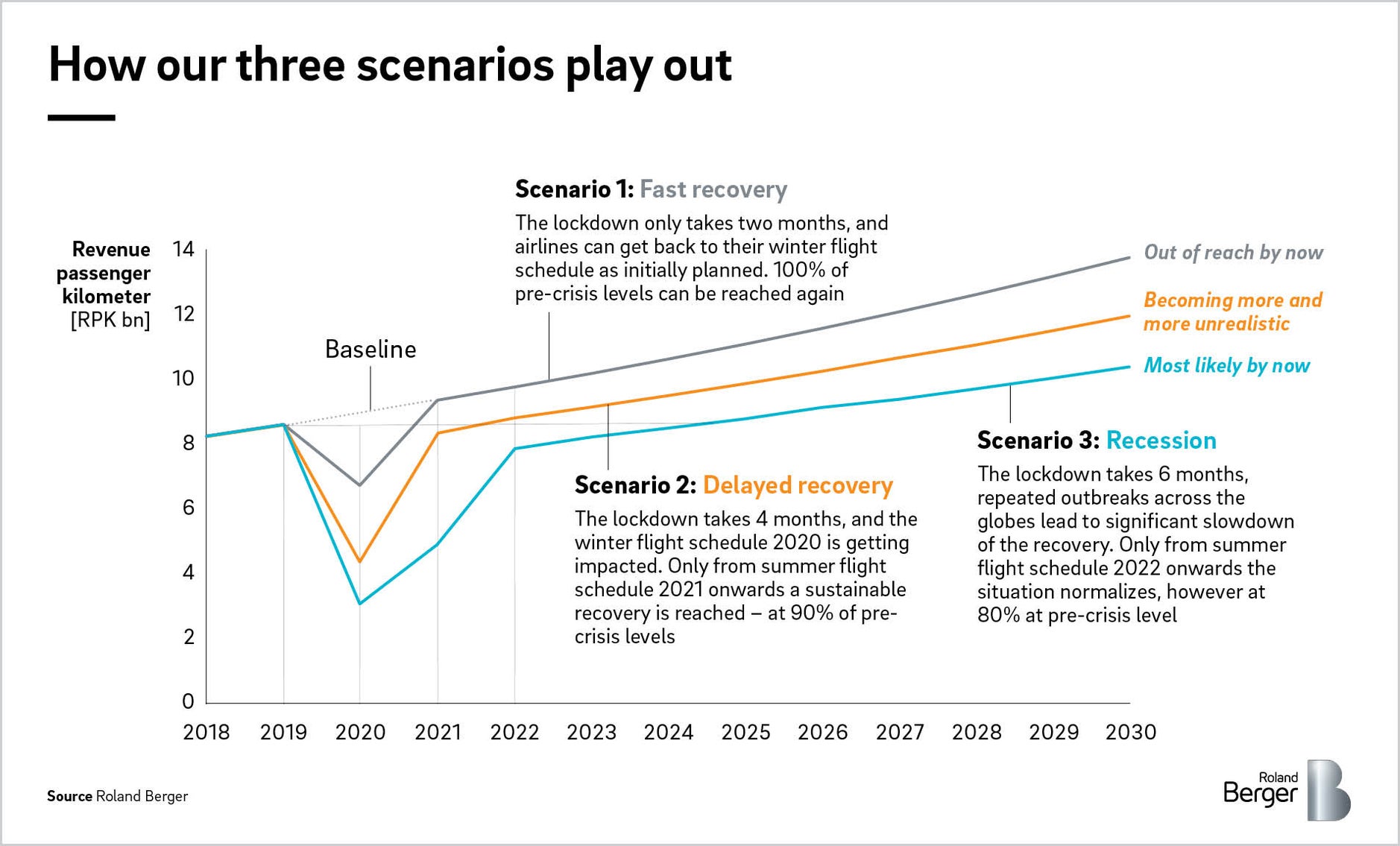
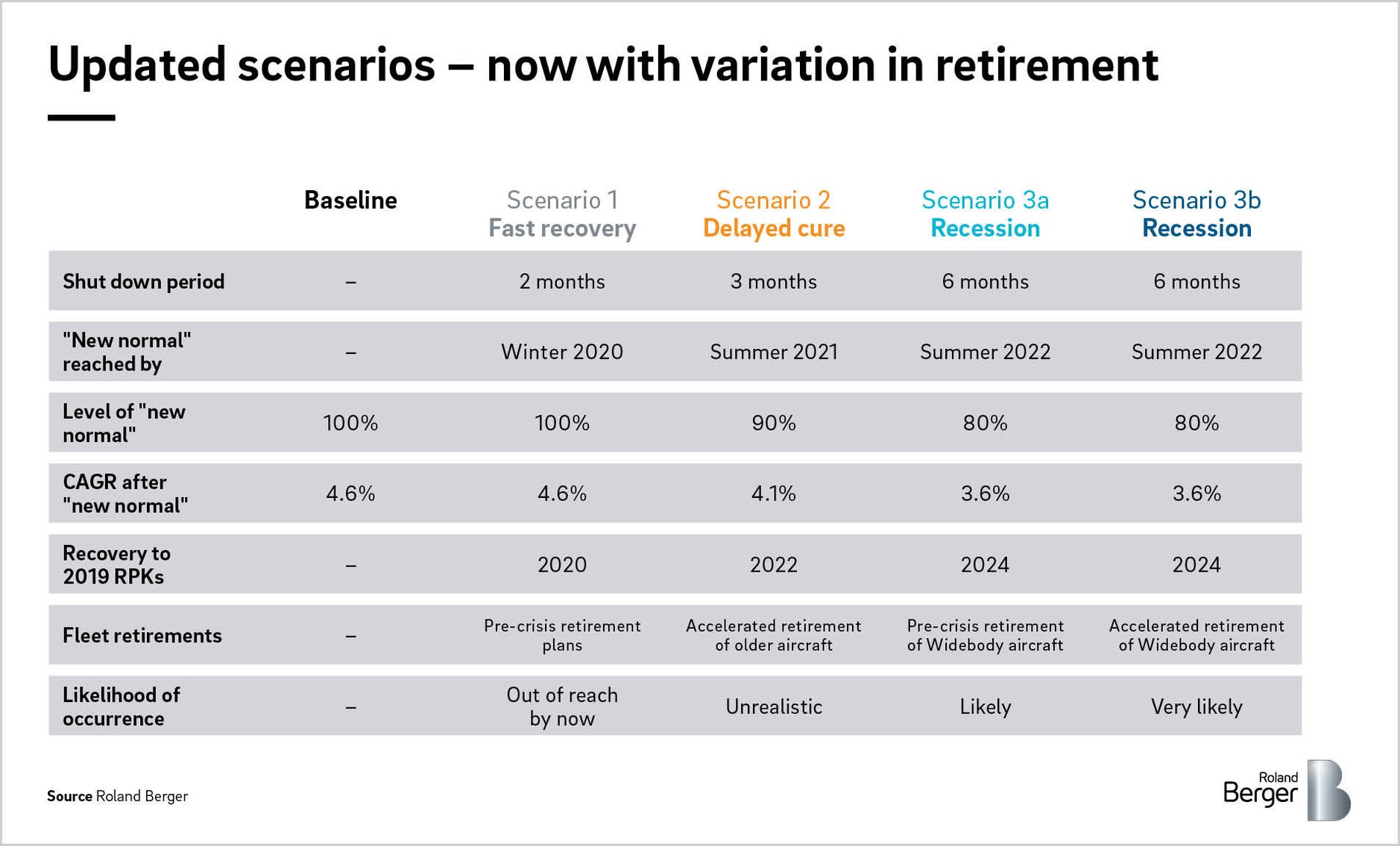
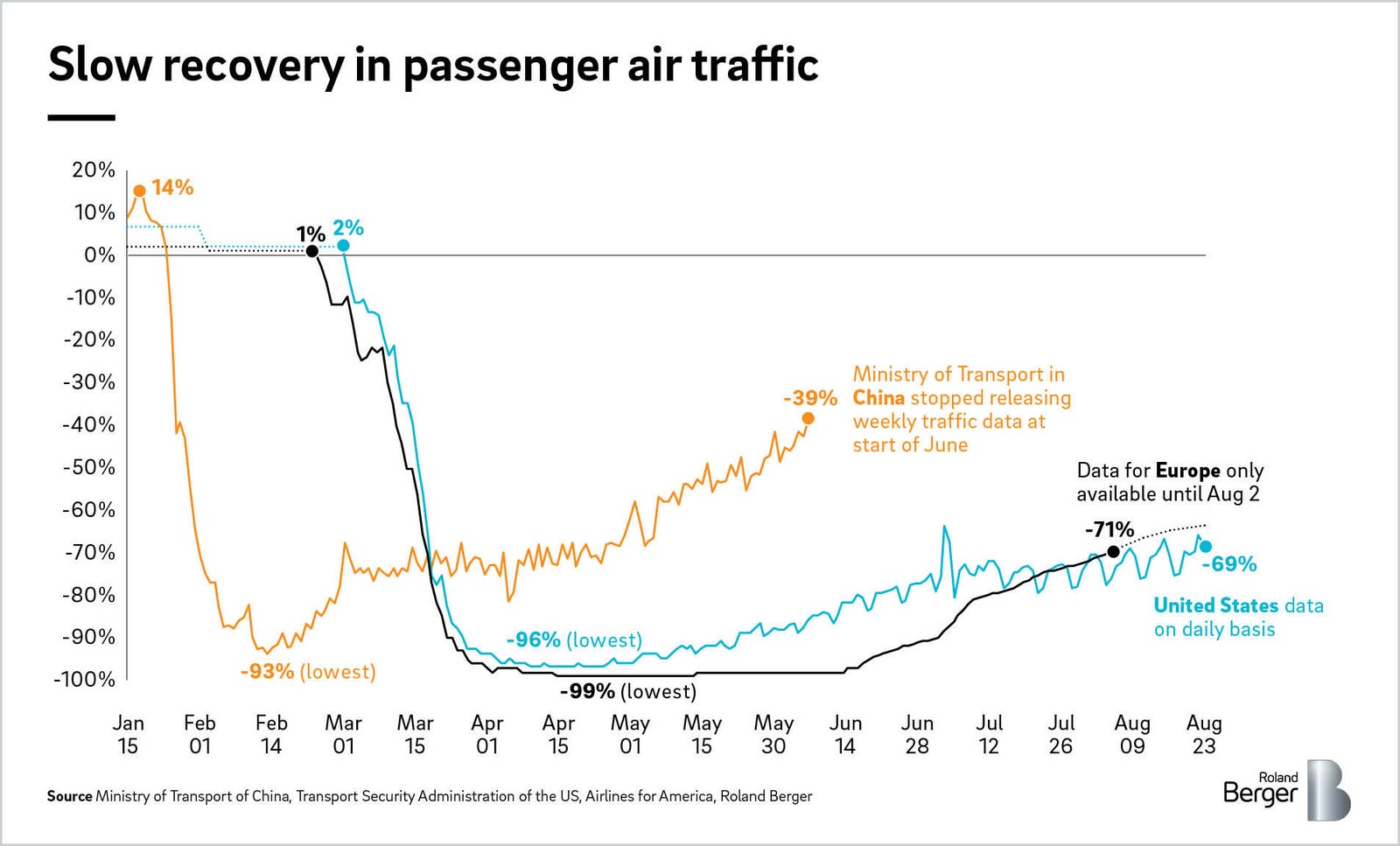
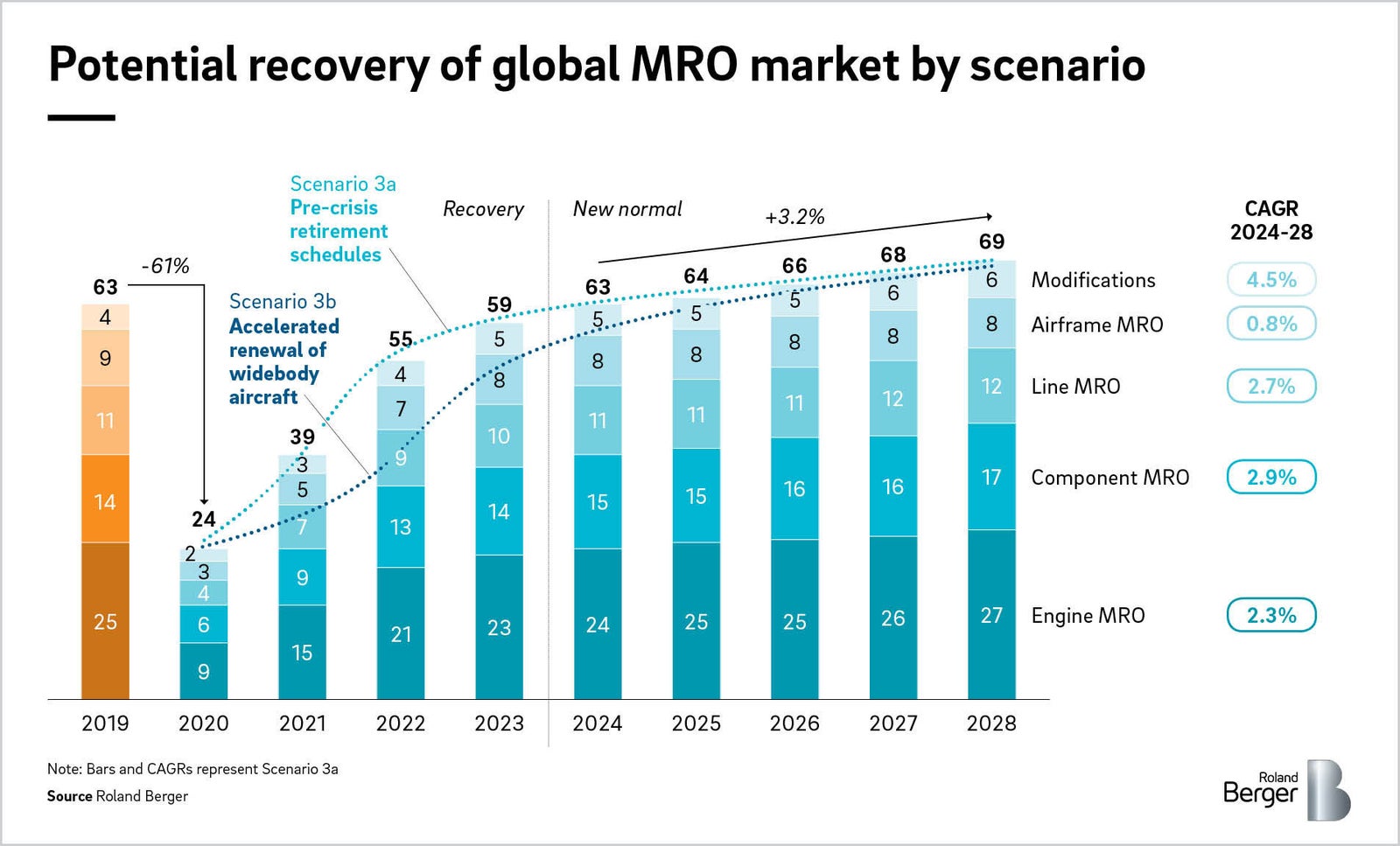
The coronavirus crisis has plunged the aerospace industry into the biggest downturn in its history, and MRO is expected to be among the most hit segments. There are clear indications that the industry will stabilize on a lower level and with a reduced number of players compared to pre-crisis projections. Yet a positive momentum can be gained from the crisis, a momentum towards a more sustainable, more innovative and more ecologically oriented development. The consolidation moves and structural changes outlined in this paper will contribute to the renewed innovation power of the industry. The coming years will not be easy and there will be losers in this transformation. But companies that take action by becoming a driver of the "MRO consolidation game" will find ways to manage the challenges ahead and enter the era of the 'new normal' as winners.