This comprehensive report delves into the significant economic losses stemming from inadequate waste management practices, spotlighting the transformative potential of the
circular
economy. By examining the "material value" lost— the untapped economic worth of recyclables like paper,
plastics
, and glass relegated to landfills or dumps—we underscore the urgent need for global collaboration in refining waste management strategies.
Focusing on global initiatives to address waste management inefficiencies, we introduce a framework to assess the progress of various countries in adopting effective waste management practices. Emphasizing the necessity of a unified global effort to combat the climate crisis, our analysis reveals how cooperation can lead to overcoming this existential threat.
Tailored Solutions
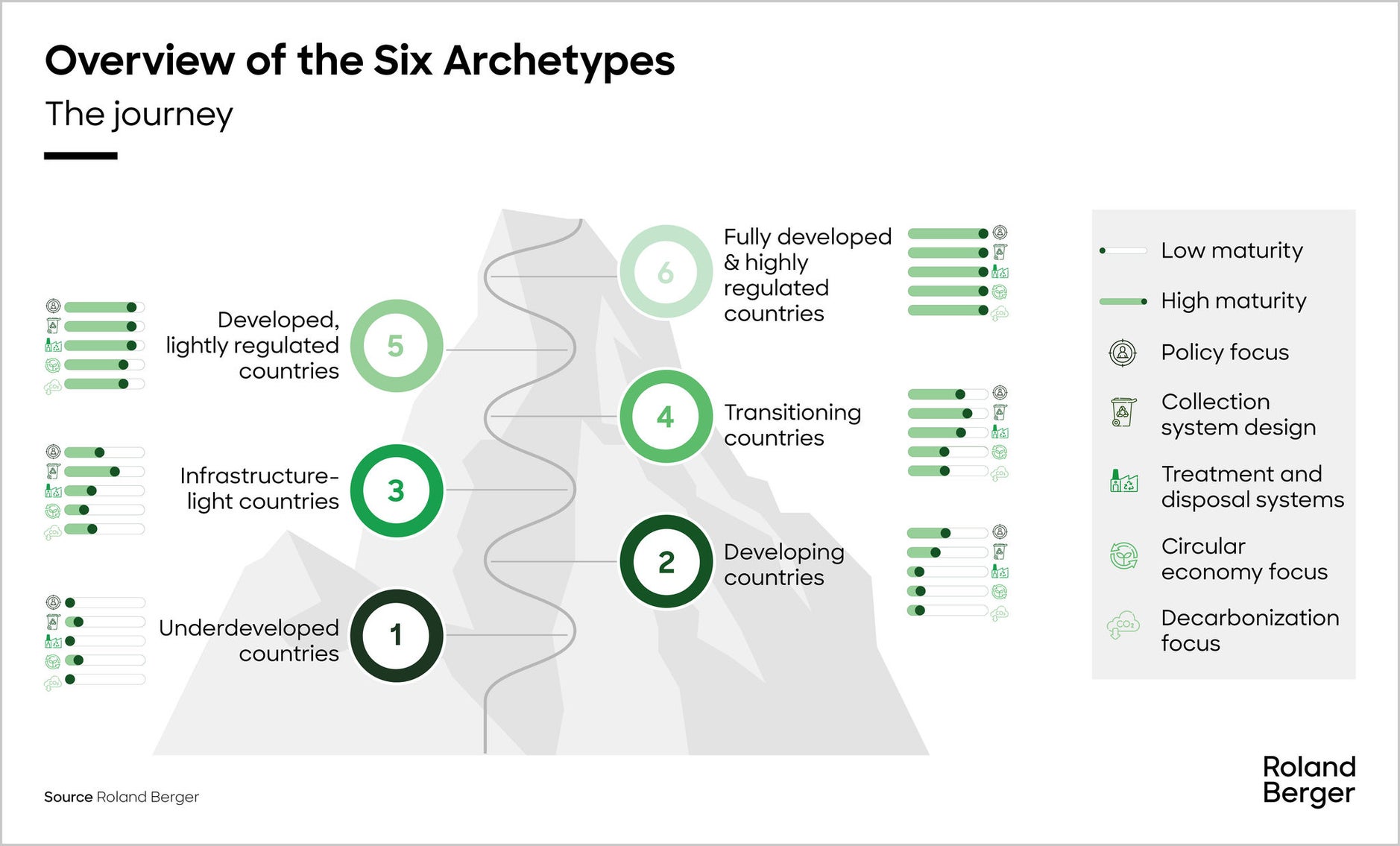
We stated above that all countries must contribute to progress towards
sustainable
global outcomes: We must work collaboratively as one world. However, waste management solutions today differ from region to region, as do countries' ambition levels. To help understand the rather complex picture, Roland Berger has created a framework consisting of six distinct "archetypes" or types of countries regarding their maturity in waste management and action required. Although archetypes usually evolve along a particular path over time, their progression is not always a linear journey through each archetype: When countries change from one archetype to another, it will depend on their level of ambition, the enablers in place, and numerous other factors. Some countries may also sit between two archetypes. However, the framework provides guidance about proportional responses and accountability, enabling us to begin collectively addressing the climate emergency.