Preparing for a sustainable future
So what does the sustainable consumer of 2030 look like? Our findings show a digital-savvy individual that views sustainability as a lifestyle and is intensely aware of their individual responsibility; holds companies accountable and rejects greenwashing and waste creation; subscribes to the buy-less mentality and is selectively willing to pay a premium for environmentally-friendly products that align with their personal values.
To appeal to the future consumer and especially keep up with shifting and stricter regulations, consumer goods players must integrate sustainability as a pillar in their overall company strategy. When doing so, they should consider our key findings:
Neglecting sustainability aspects will pose significant business risks for all industries in the near future. However, companies can attain a robust competitive edge by actively adopting sustainability strategies in a systematic manner. This entails taking into account all environmental, social, and governance (ESG) dimensions, implementing actions throughout the entire value chain, and avoiding the practice of greenwashing at any expense. Additionally, it is vital for companies to adapt their strategies according to the specific requirements of each country, as these can vary significantly.
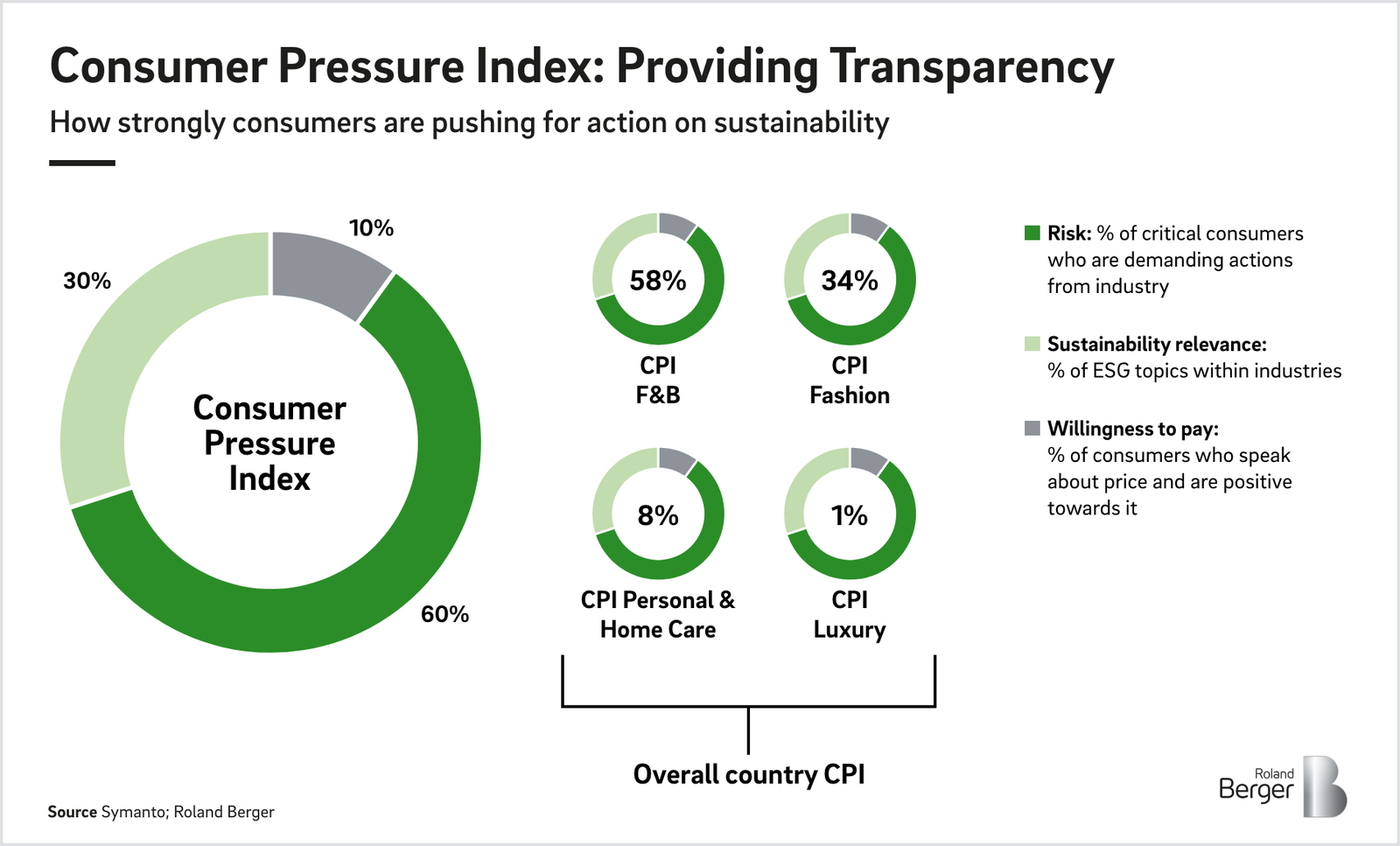
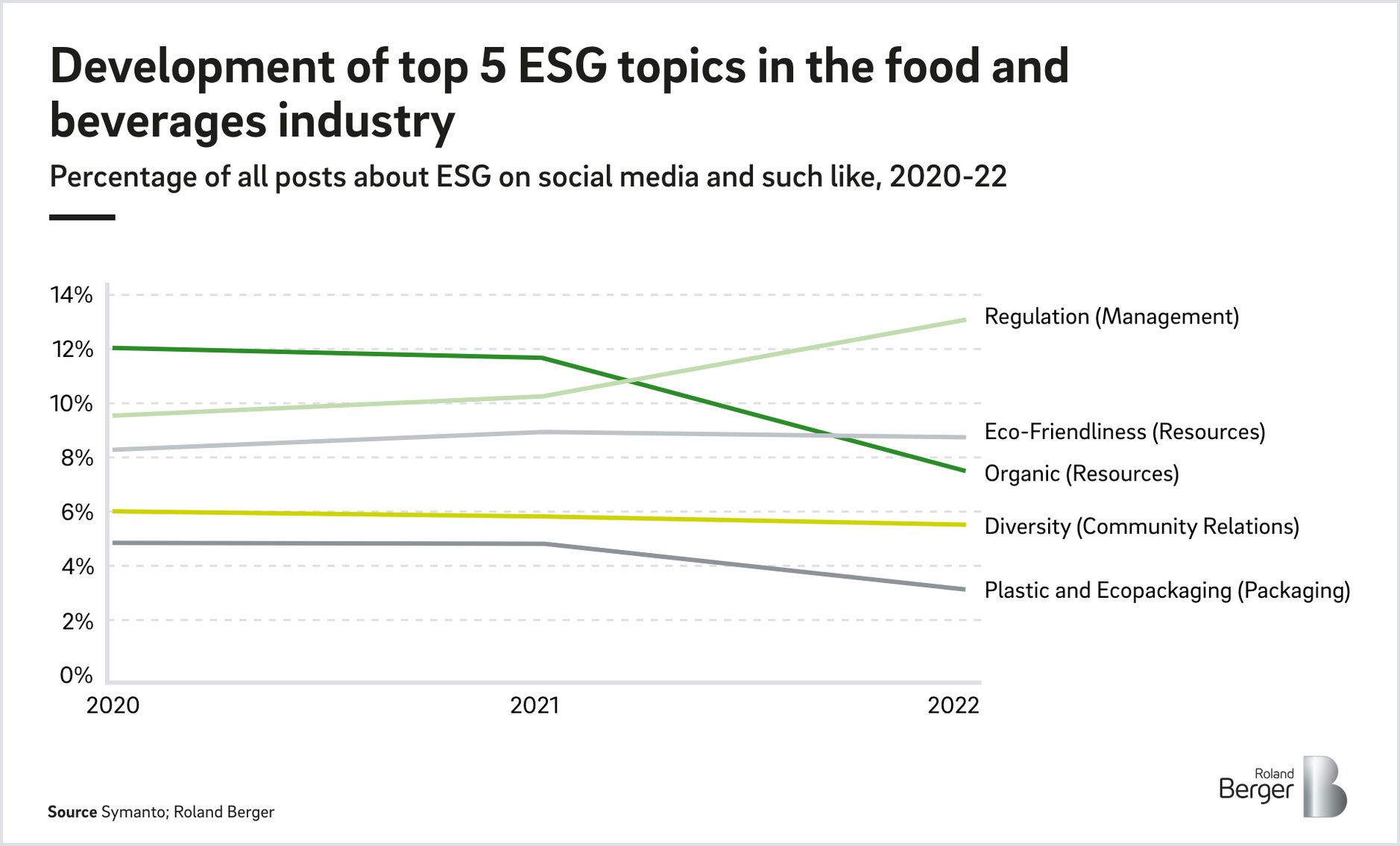
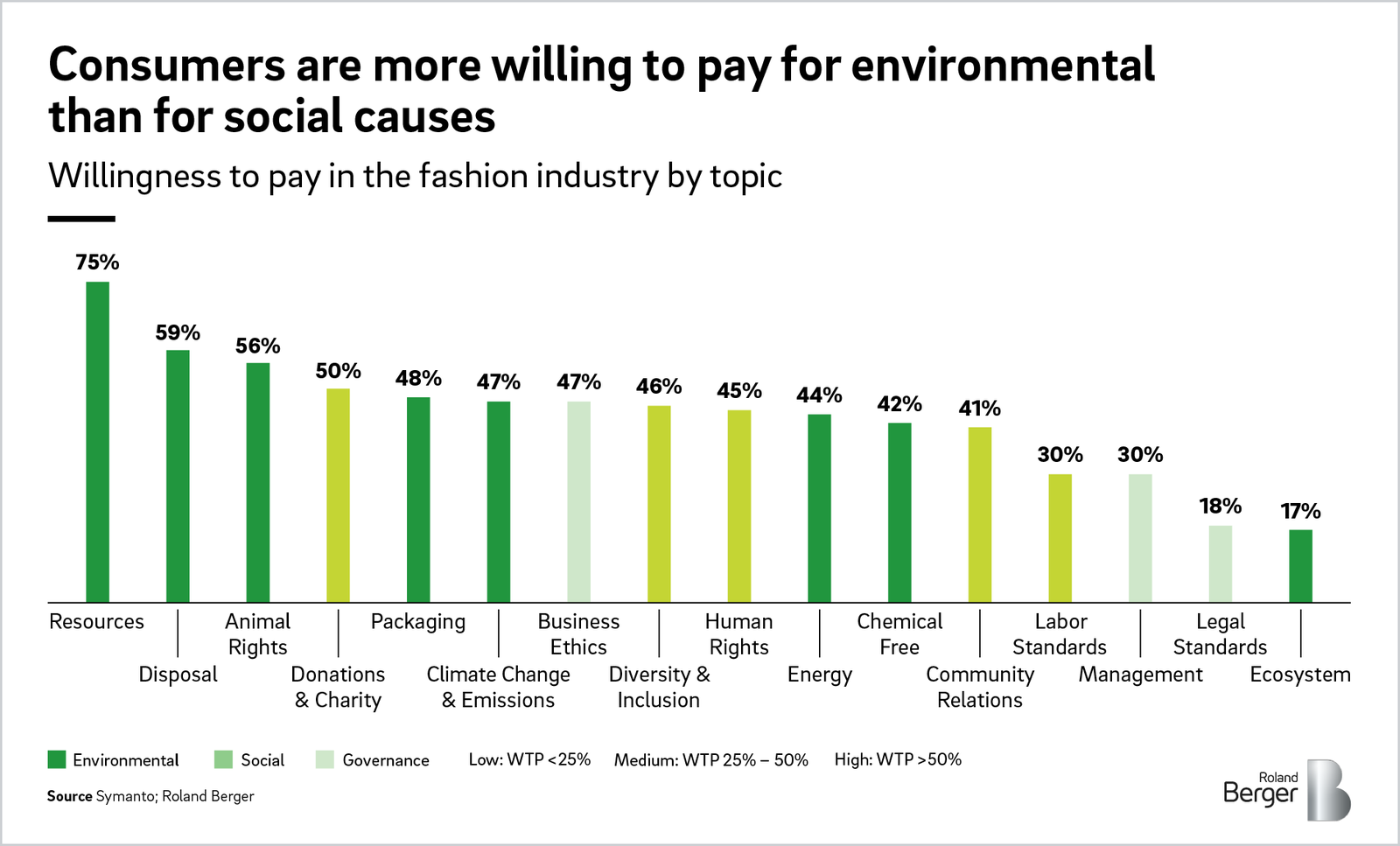
The food industry should prioritize environmental matters, as this aspect is more important to consumers than social or governance topics. Authorities are about to increase the pressure through ESG-related laws and regulations. Thus, it is important for the fashion industry to implement consumer demands in terms of ESG criteria into the corporate strategy. Businesses that don’t react are running the risk of falling by the wayside. Personal and home care industry will best meet consumer demands if they focus on sustainable resource utilization and green disposal concepts. Recycling, second-hand articles and the transformation of the current system into functioning circularity will be at the forefront for manufacturers of luxury articles in the coming years.
Due to growing consumer and regulatory pressure, sustainability is evolving from a nice-to-have to a requirement. That means not only the implementation of sustainability criterias into existing businesses. The actual process of change will force the rise and growth of new business concepts in order to comply with the demands of consumers and regulations. Re-use, pre-owned and second-hand will grow huge in the future and make the conventional first-hand market shrink.
Across all industries, consumers exhibit a growing inclination to invest in sustainable products and services. Nevertheless, it is crucial for these offerings to maintain affordability while also ensuring transparency in explaining any price premiums associated with them.
Numerous sustainability investments may not yield immediate returns. To evaluate their effectiveness, companies must consider additional viewpoints, including their appeal to employees and ESG-focused investors. Furthermore, investing in sustainability can assist in connecting with younger demographics and effectively reaching their target audience with the company's products.
Companies can only meet this challenge with a holistic approach. Based on a well thought-out strategy, sustainability initiatives and lighthouse projects are an effective tool on the way to fully implement ESG criteria.