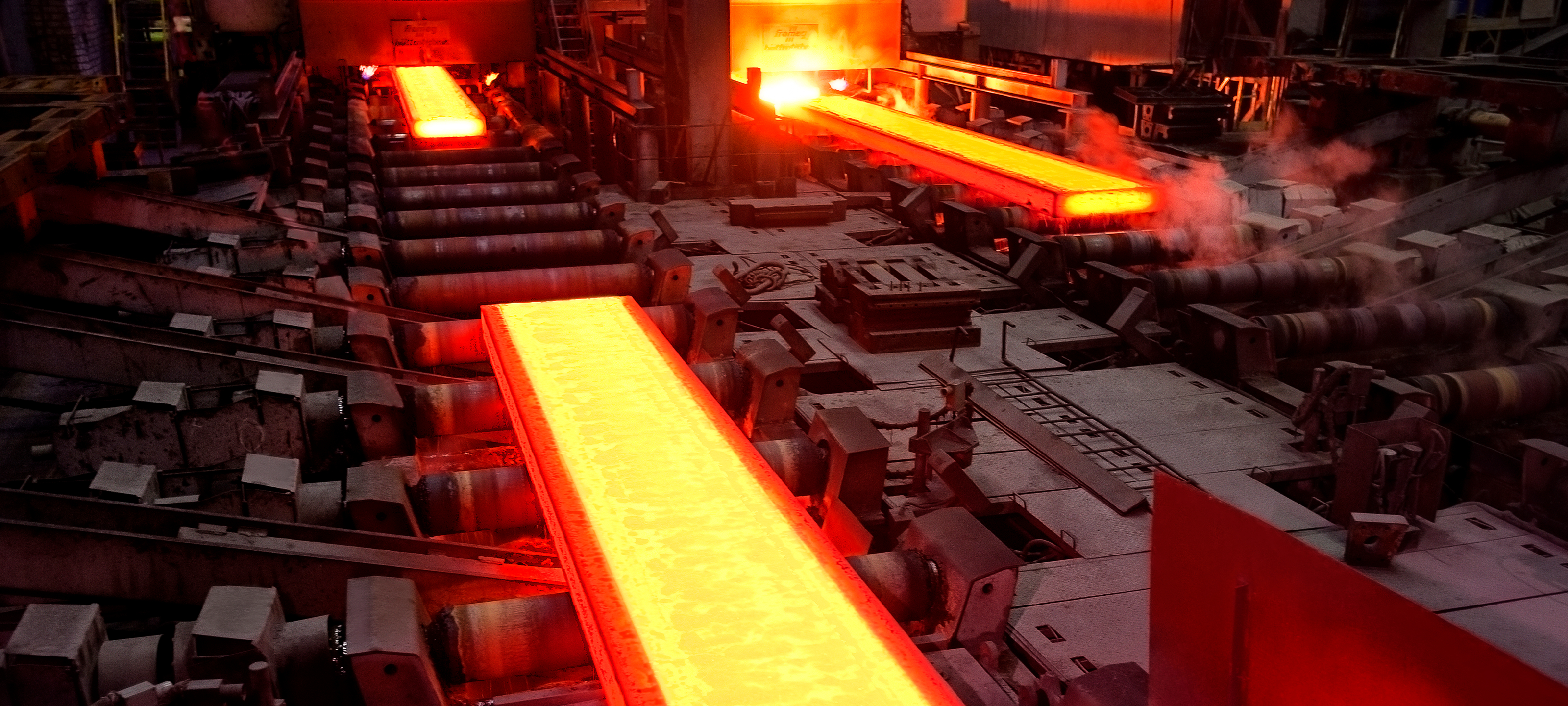

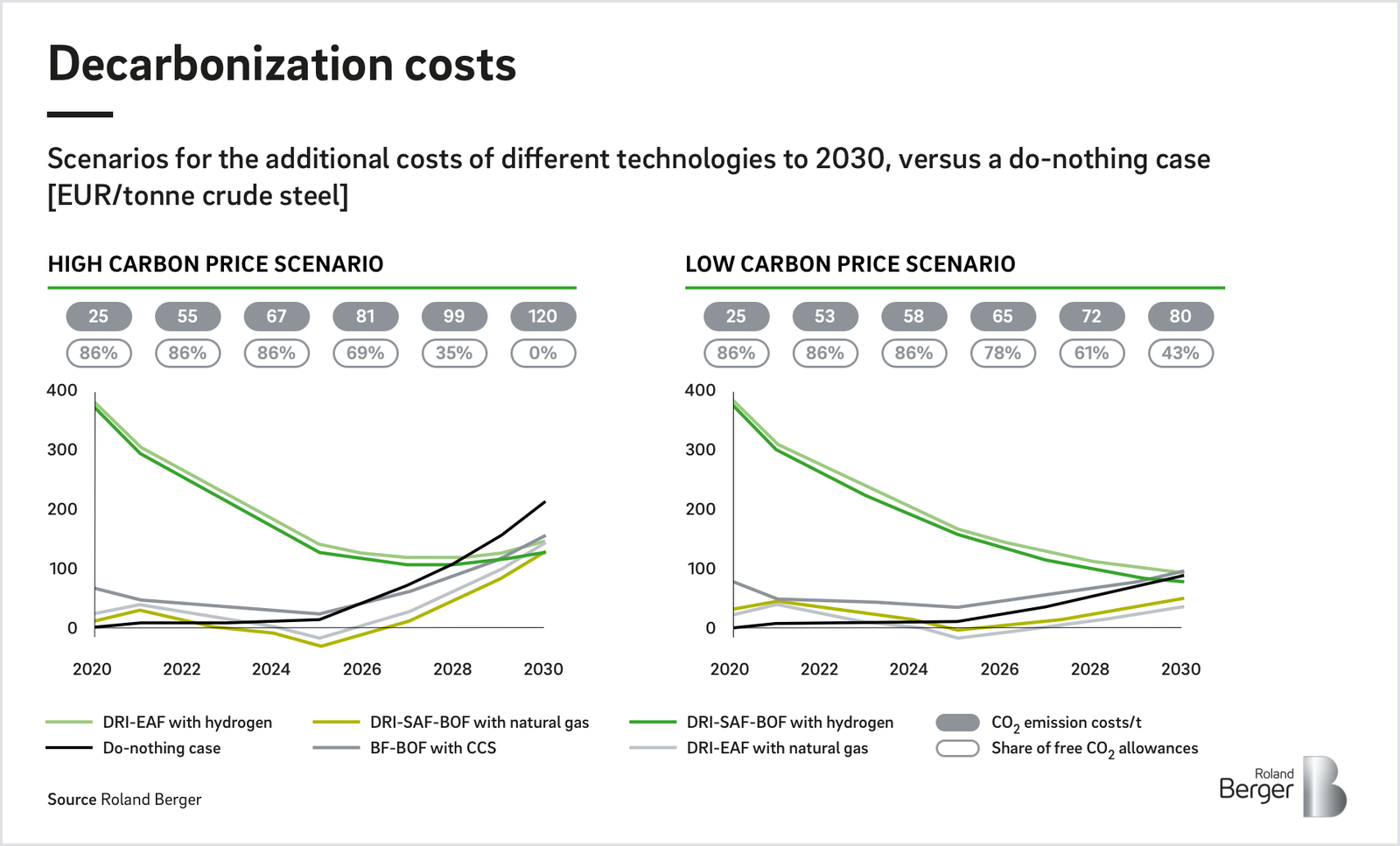
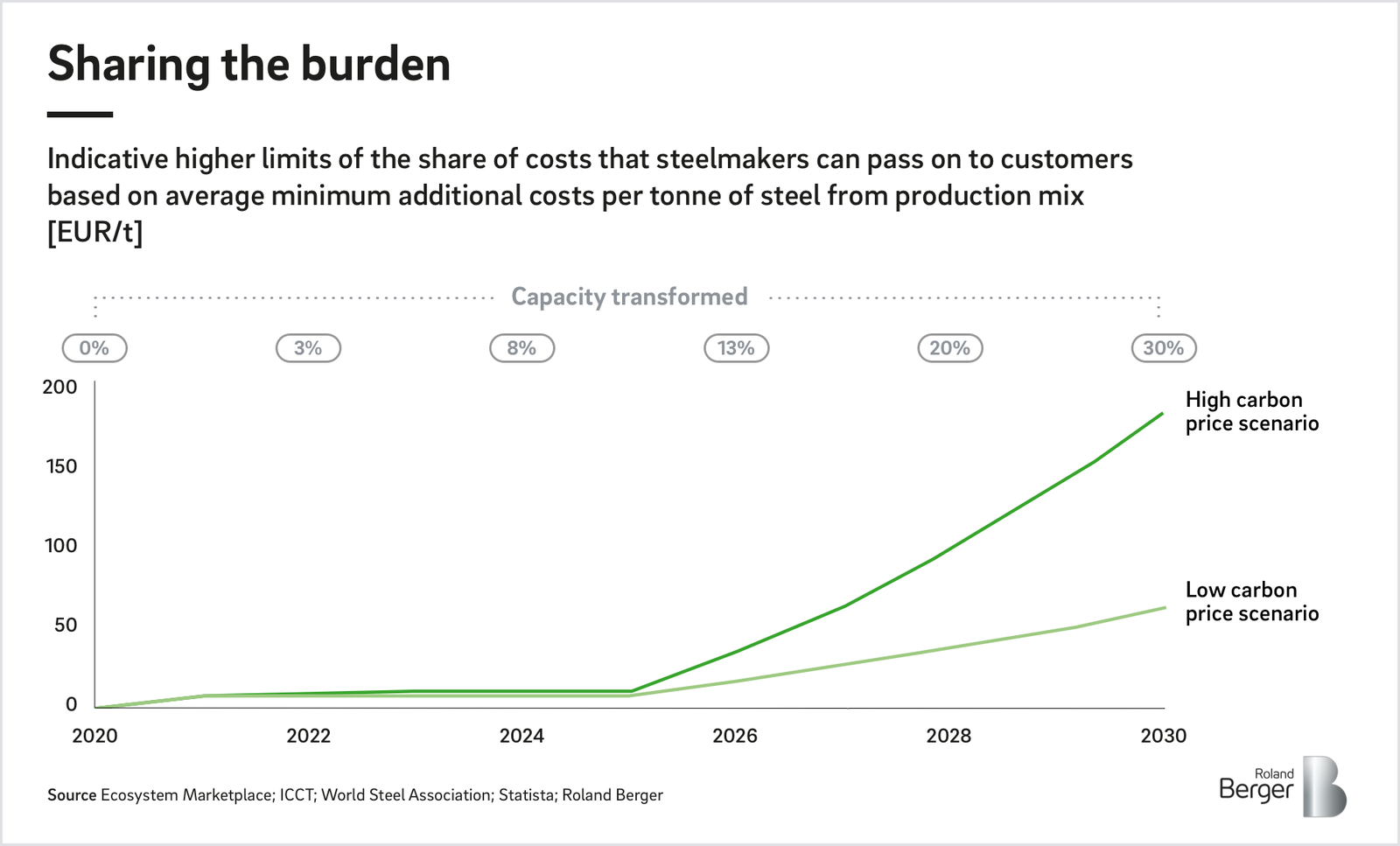
Our modern world runs on steel. But it is a major source of CO2 emissions, second only to the power industry. Currently, the European steel industry – where production is still largely done using coal to reduce iron ore, the so-called “primary route” – accounts for 5.7% of the total EU greenhouse gas (GHG) emissions. To meet emissions targets set by the 2015 Paris Agreement, the steel industry will have to be climate neutral by 2050, and reduce emissions by roughly 30% by 2030 to meet EU interim targets. Achieving these targets will take more than just material or process efficiency. As it stands now, steelmakers have three options: do nothing; invest in carbon capture and storage solutions, or transition to cleaner production processes such as hydrogen direct reduction of iron (DRI). Roland Berger developed a model to assess costs of all three and came to the conclusion that steelmakers should opt for the DRI route in order to meet interim targets. As to who will pay for the green transformation, the report indicates that taxpayers and end customers/consumers will have to bear the brunt of it. Additionally, it will require public capital expenditure (CAPEX) funding in the double-digit billion range.

Europe's steel industry at a crossroads
The steel industry must change its production technology to meet the new environmental standards.