This is where harmonization and standardization come into play: Avoiding confusion about crucial differences between the two and understanding how they can (and must) usefully complement each other is the first crucial step. With everyone on the same page, a “house of standardization” can then be put in place as a conceptual framework for both aspects.
Fine in theory, but challenging in practice?
Building this house involves a number of fundamental decisions – such as getting the right talent in the right roles – that must be carefully considered before going ahead with the actual work of harmonization and standardization. But even then, implementation harbors many and varied challenges: Initial ambitions to keep everything clean and consistent can quickly get bogged down when countless change requests flood in during enterprise-wide rollout. That is why the publication details specific categories and criteria as a governance model: This is vital to determine what systems must not deviate from harmonized approaches at any cost, for example, and which processes have how much leeway to accommodate sensible modifications.
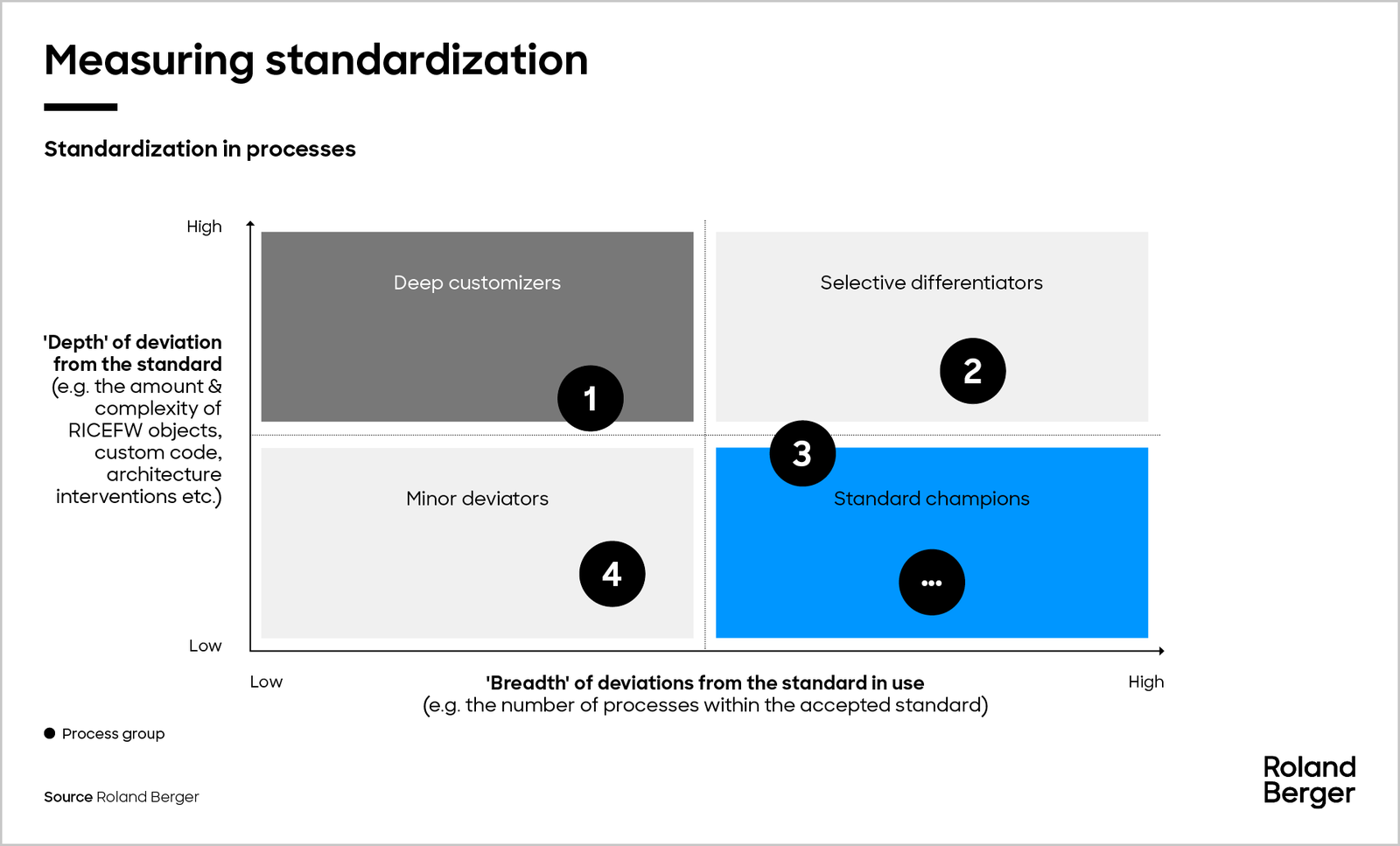
Standardization, too, encounters challenges in that it must be measurable, which in turn presupposes relevant and carefully chosen key performance indicators (KPIs). Above all, it is important to know how widely deviations from defined standards are applied (‘breadth’) and by how much processes deviate from those standards (‘depth’).