Europe is now part of the US pricing equation
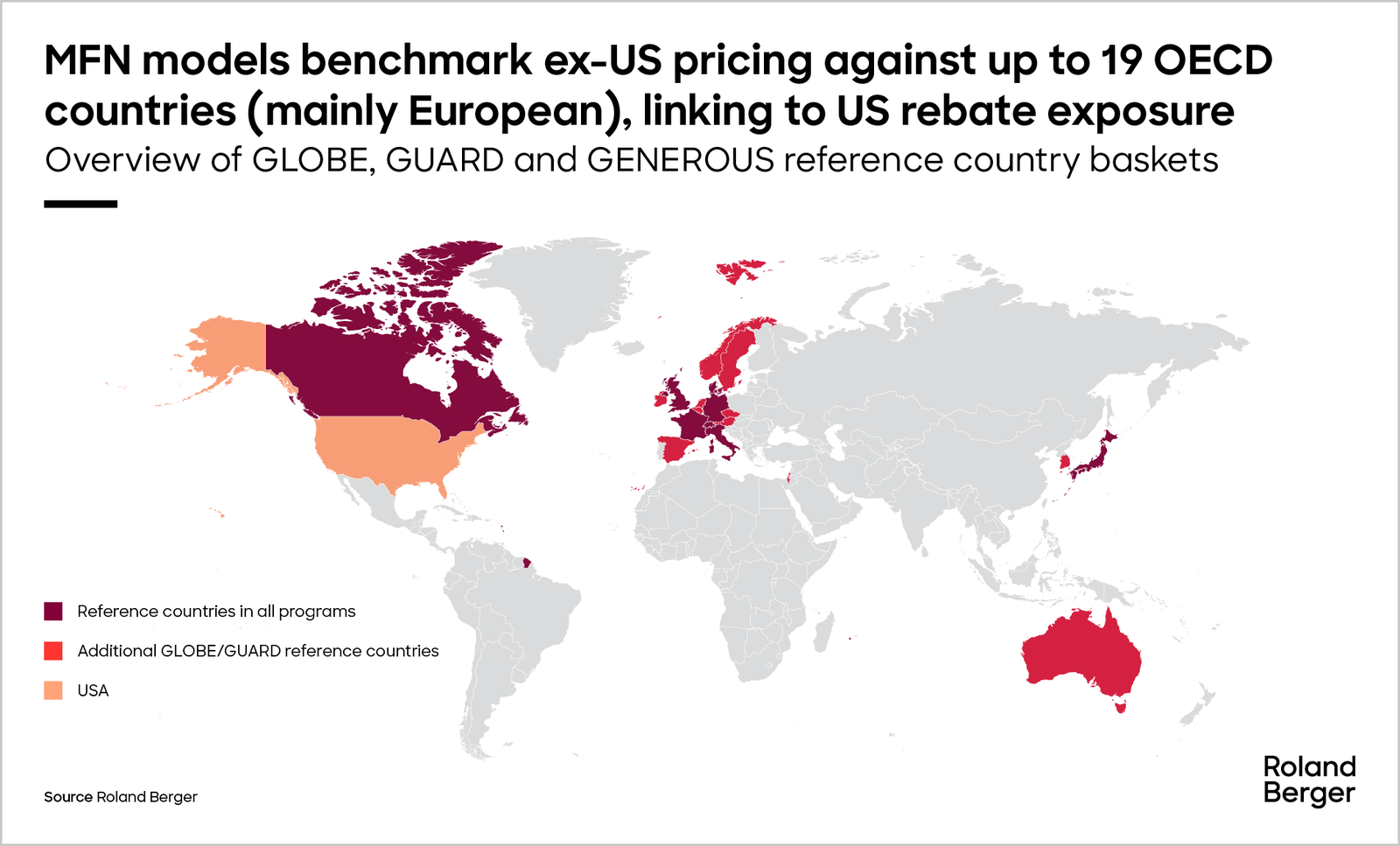
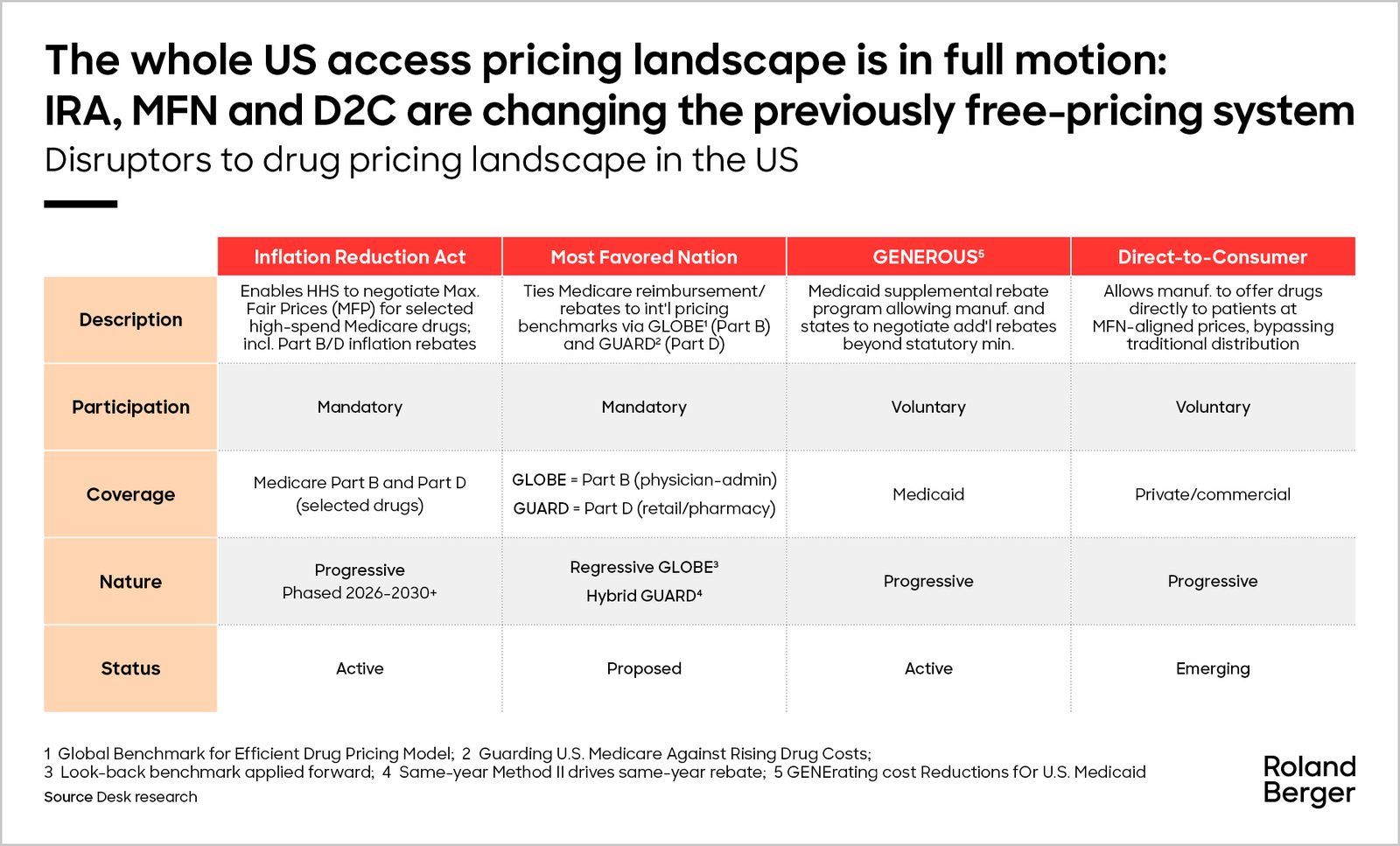
While all three models draw their benchmarks from baskets dominated by Europe, the underlying mechanism differs in an important way. Under GLOBE and GUARD's default calculation, CMS selects the lowest adjusted country-level price as the benchmark. A single low-priced European market can therefore shape what a manufacturer owes in the United States, and once set, this benchmark is locked for the full five-year model period. GENEROUS, by contrast, uses the second-lowest country-specific net price, so one outlier in the reference basket can be absorbed. For manufacturers, the practical implication is the same: European pricing decisions can now directly determine US rebate exposure.
Some governments have begun responding to this dynamic. The United Kingdom finalized a bilateral pharmaceutical deal with the United States in April 2026, securing zero tariffs on British medicines in exchange for raising National Health Service net prices for new drugs by 25% and adjusting National Institute for Health and Care Excellence (NICE) cost-effectiveness thresholds. Other European governments, including Spain, are actively debating countermeasures, with officials calling for EU-level instruments to protect pharmaceutical investment and competitiveness.
The effects are not theoretical. In the initial ten months following the May 2025 MFN executive order, new drug launches in Europe fell by approximately 35%. The logic is straightforward: manufacturers are pausing or deprioritizing European markets to avoid setting low visible prices that could anchor their US benchmark for years.
The pattern is visible in individual company decisions. Insmed postponed the launch in Europe and Japan of its anti-inflammatory drug Brinsupri, citing the need for clarity on MFN policies before committing to European pricing. Amgen withdrew its PCSK9 inhibitor lipid-lowering drug Repatha from Denmark, pointing to a changed commercial environment. In France, applications for the early access pathway dropped from 25 to ten in a single year, with manufacturers reportedly raising MFN-related concerns in virtually every pricing conversation since autumn 2025.