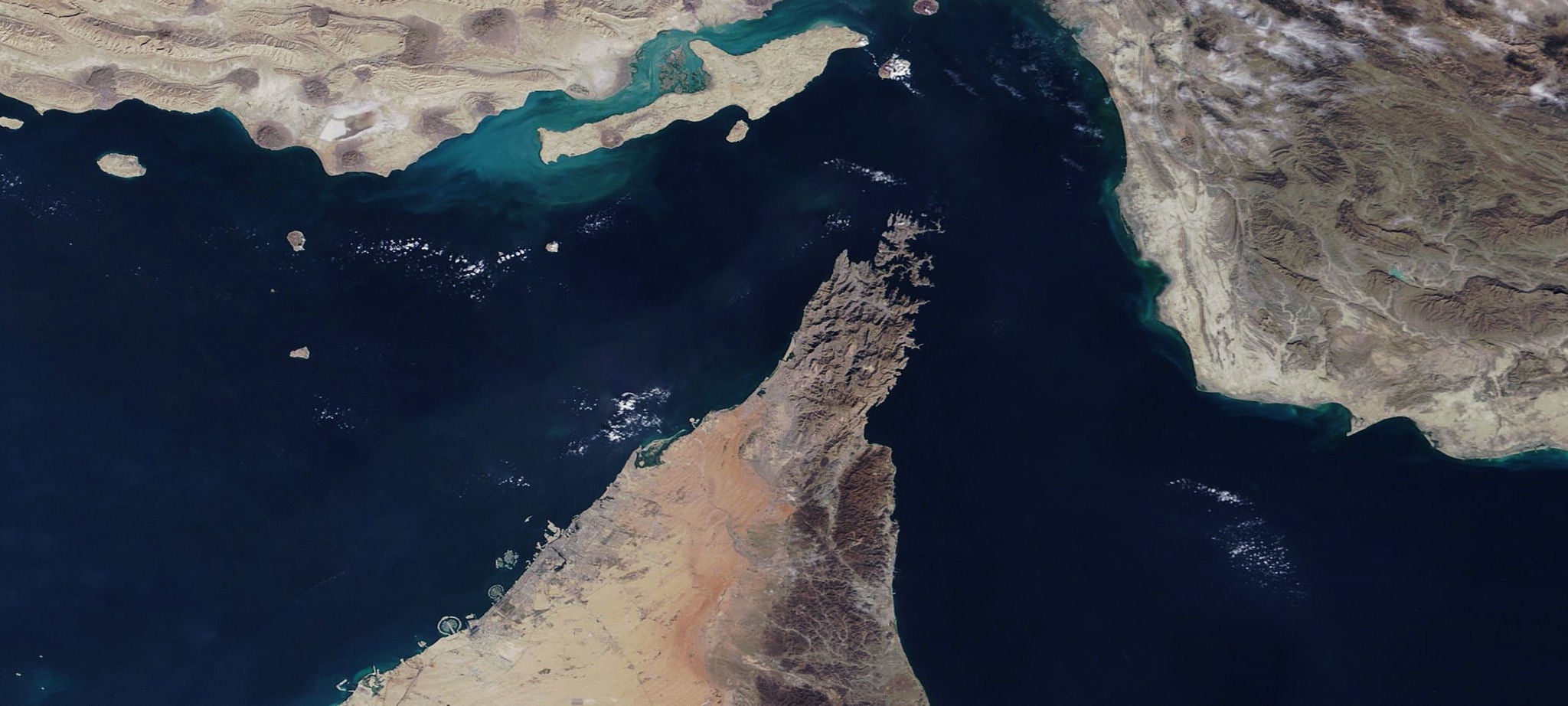

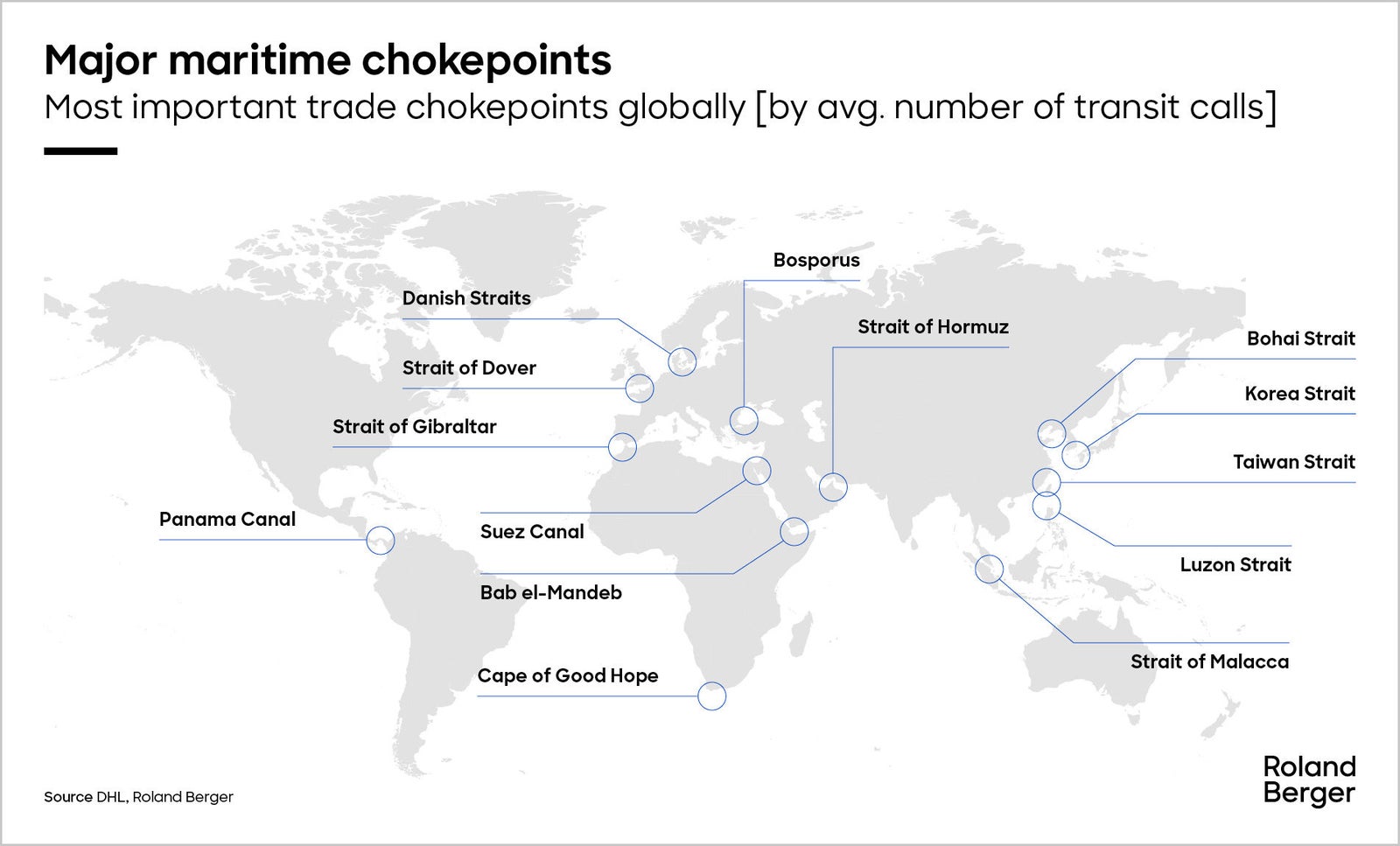
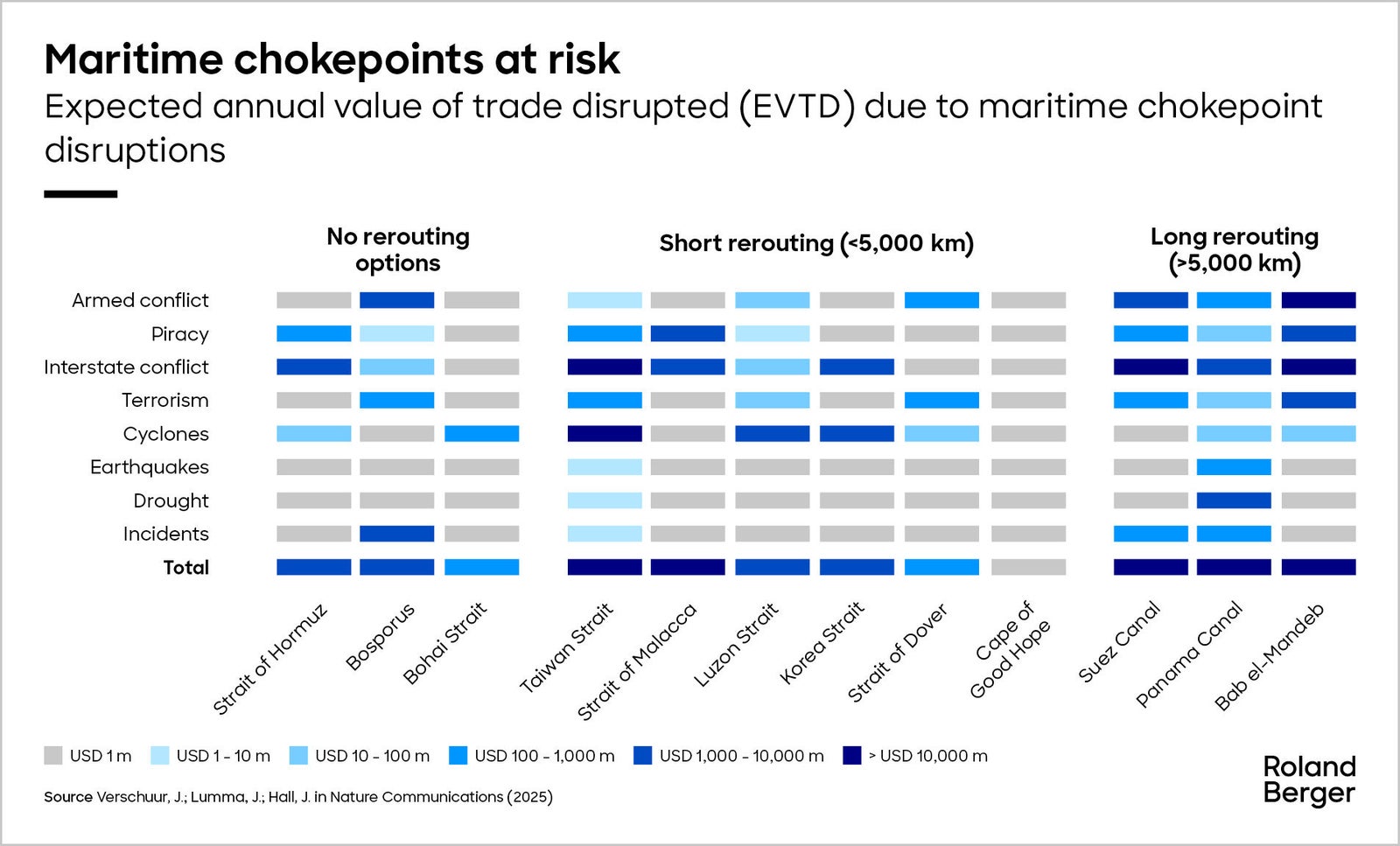
Maritime chokepoints — narrow straits and canals through which a disproportionate share of global seaborne trade is concentrated — are no longer a background variable in supply chain strategy. The 2026 closure of the Strait of Hormuz demonstrated how a single corridor disruption can cascade from an energy shock into petrochemical feedstock shortages and manufacturing stoppages across multiple continents. A 2025 Nature Communications study estimates USD 191.5 billion of global trade is statistically at risk of disruption each year, with three chokepoints accounting for 77% of actual economic losses. Disruption stems from three vectors: accidents, climate events, and geopolitical pressure. Organizations that have not quantified their chokepoint exposure at a granular level are operating with a structural blind spot in an environment where that risk is increasing.
Study
Maritime chokepoints: the new fault lines of global trade
As geopolitical pressure and climate risk raise the likelihood of chokepoint disruptions, old rules of supply chain resilience no longer hold.
Published October 2026. Available in