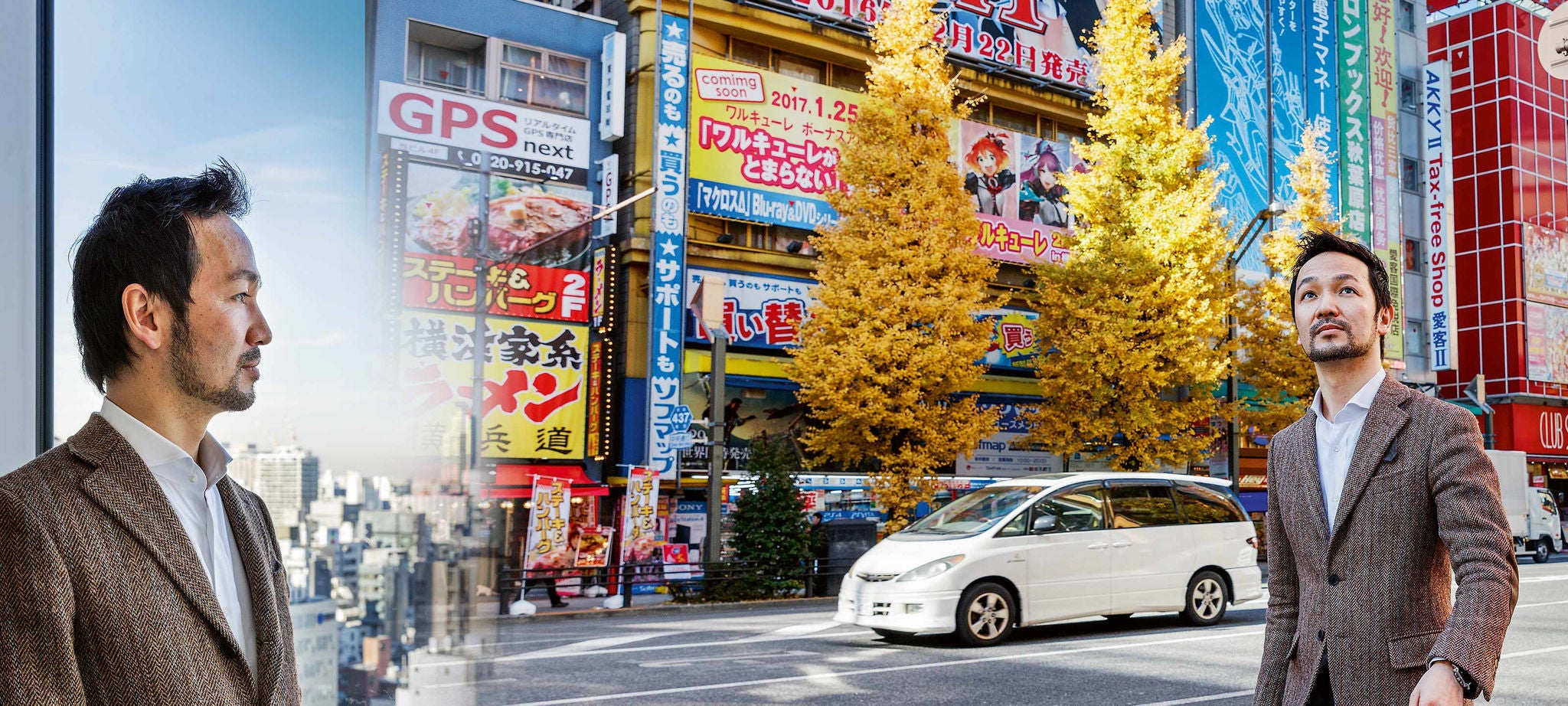
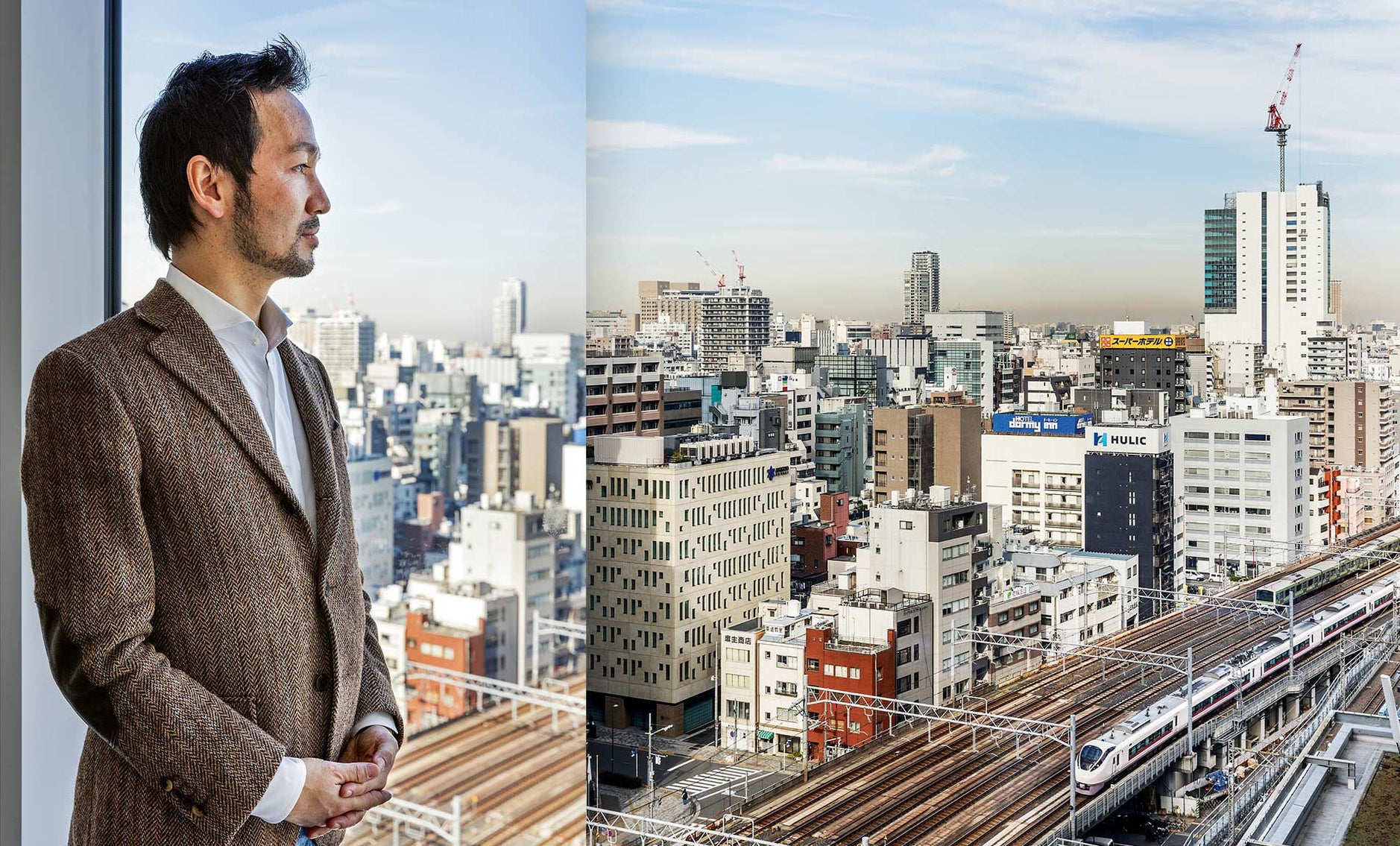
In 2015, Hayashi moved his firm onto the "incubator floor" of the Fujisoft Building, where the Groove X team shares space with other startups. With its hissing espresso machines, a motorbike parked between the long wooden benches and its youthful energy, this space gives a little nod to the culture of Silicon Valley.
The press has been racking its brains ever since to work out where the Groove X robot’s charm will lie. But the details are under wraps. What has leaked out is the fact that Hayashi’s creation will not speak. As Antoine de Saint-Exupéry, the author of "The Little Prince", once wrote: "Words are the source of misunderstandings." And as Hayashi admits, he was also inspired by the aesthetics of the great Japanese tea master, Sen no Rikyu. His tea houses have very narrow windows, their interiors are minimalist to the extreme, but they give free rein to the imagination. Less is more.
The subconscious side of communication
Hayashi had his eureka moment when he visited a retirement home in Tokyo with SoftBank’s Pepper robot in 2014. He asked an elderly lady what else she would like to see in the robot. "It would be nice if it had warmer hands," she replied. "That was a shock for me," remembers Hayashi. Like all his colleagues, he had been fixated on the nuts and bolts: the language, artificial intelligence (AI) and the like. "But then I realized that we were too focused on the conscious side of communication."
Groove X’s robots are likely to propel the robotics industry in a new direction, with emotional robots, or, as Hayashi prefers to describe them, "subconscious robots." The aim is to build robots that can communicate with us on a very elementary, unspoken level. Instead of trying to imitate people, which is still too much of a challenge for AI, Hayashi’s robots are to be more like a kind of artificial pet.
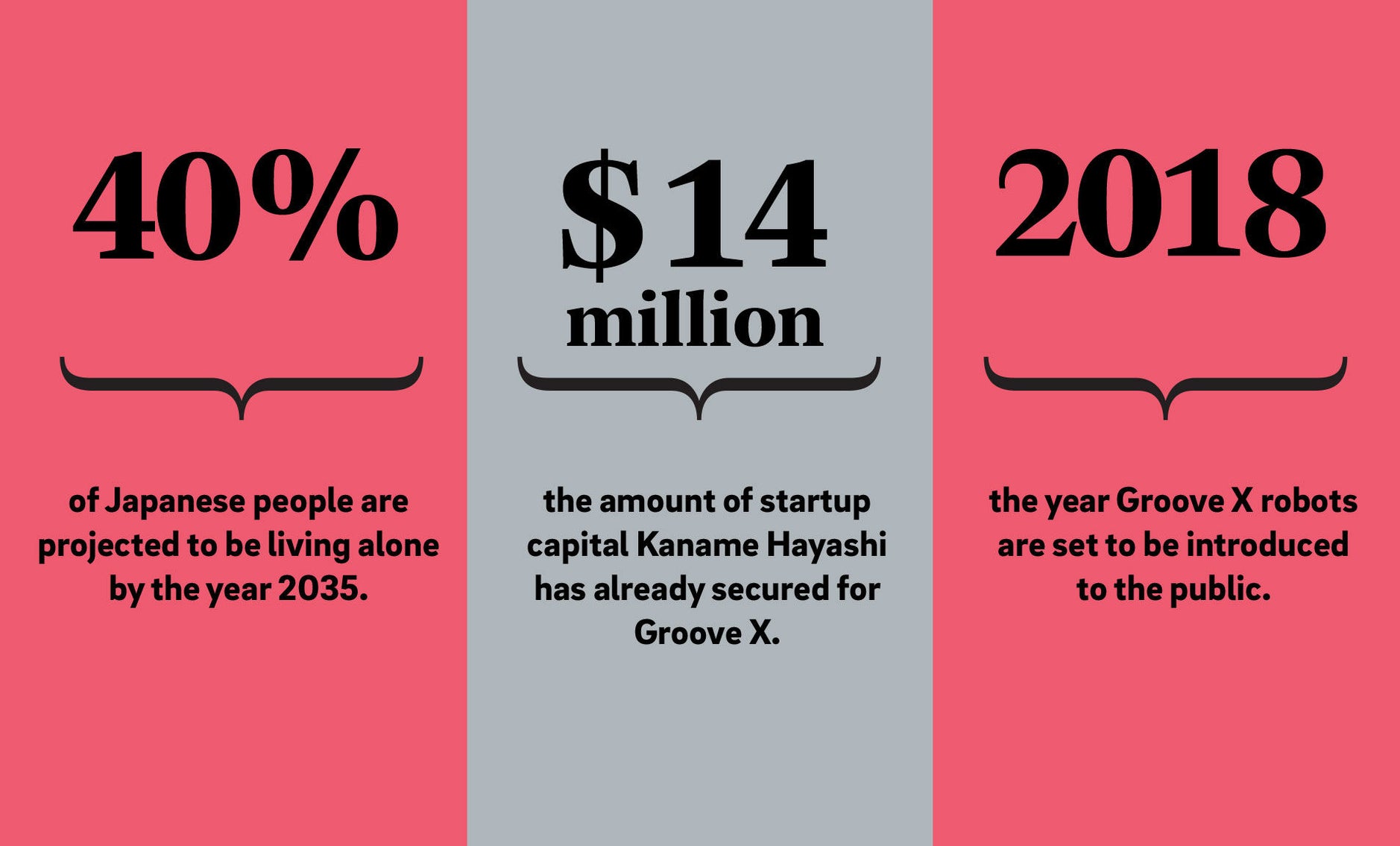
Robots have appealed to people’s emotions before. Sony’s Aibo, one of the first of this kind, could wag its tail and blink some lights when petted by a human, which made the little robot dog popular in homes for the elderly in Japan starting in 1999. Toyota is selling a little baby robot, called Kirobi Mini, which is marketed as being "always on hand for heart-touching communications." But so far interactions between these robots and humans have been limited. Hayashi promises his creation will be become a real "companion robot" for lonely people.
OK. But isn’t it tremendously sad to send a lifeless robot into a retirement home? Isn’t the best company for a lonely person fundamentally another person? "If they have enough human company, they may not need my robots," counters Hayashi drily. But, the reality in most major cities looks rather different. "Our robots are not intended to replace human warmth," says Hayashi. "We don’t want to replace anything at all."