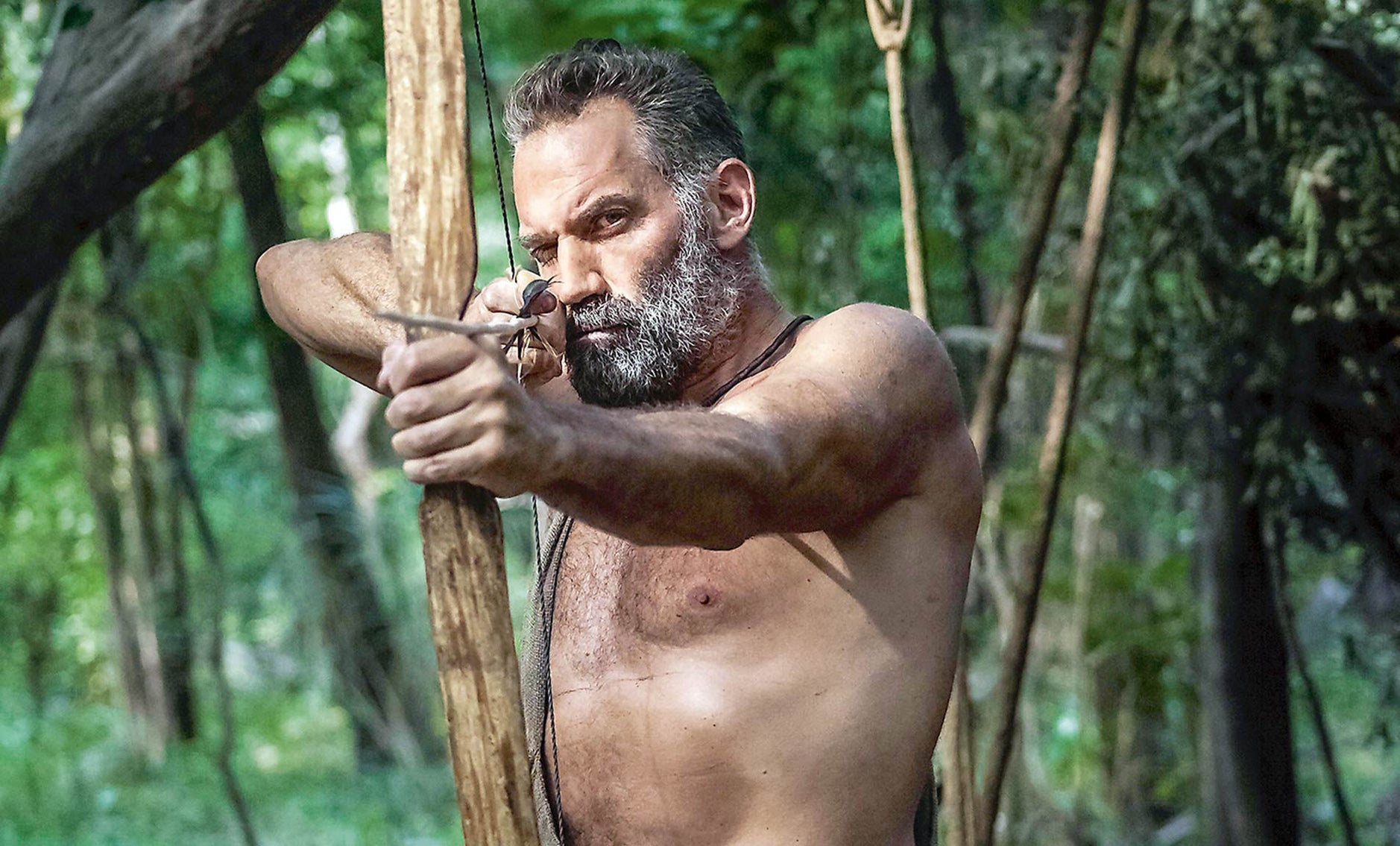
Snyder's answer was a careful balance of patient explanation and pain-fueled irritation: "'Well, Steve, I'm gonna take this knife and I'm gonna shove it in this foot, and I'm gonna burn this thorn out with all this infection, and then I'm gonna take that hot, boiling water right there, and I'm gonna clean it, close it up, and I'm done.' And he's like, 'Hold that thought, mate.' And so he called time out and got a doctor in to take care of it."
In some places, though, there won't be anyone there to help. William Trubridge has not only forced his body beyond its own limits, but has put it in places that no other human body has ever faced – diving without oxygen through the Blue Hole, off Dahab, Egypt – a 98-foot tunnel 180 feet underwater that leads into the Red Sea. The soft-spoken 36-year-old is possibly the world's most renowned diver. Born in the UK, raised in New Zealand and trained in his teenage years by the legendary Umberto Pelizzari in Italy, he has broken virtually all the freediving world records that there are.
Swimming straight down beyond the reach of sunlight involves a Zen-like depth of concentration. Freediving is almost unique among sports in that, physiologically, it demands an extreme mental detachment because the brain uses 20% of the body's precious oxygen even at rest – and an active brain even more. That's why learning to deal with anxiety, particularly ahead of a world record attempt, is vital.
He describes the stress he puts himself through in training and performance: "Even if I've done that dive before," he says, "the concept of 'in five or 10 minutes you're going to stop breathing and swim for four minutes down and up, and if anything goes wrong, if you overstretch yourself just a little bit, you may black out below the surface,'" is still a challenge.
Freediving is an intense form of physical exercise and Trubridge has to try to shut down blood flow to the extremities of his body so that his muscles work anaerobically (meaning they use as little oxygen as possible). That leaves most of the oxygen concentrated in his heart, lungs and brain.
Putting mind over matter
Trubridge effectively wants to shut down conscious thought while diving. "The best way to do that is not to fight the thoughts or push them out of your mind, but rather to let them slide through and focus on the empty spaces between thoughts."
To enhance this concentration, Trubridge closes his eyes during his dives so that he can feel more acutely what's going on inside his body and his mind: "Possibly more than most sports, freediving is dependent on being calm and composed and able to control your thoughts and your stress, and staying detached from what's going on around you."