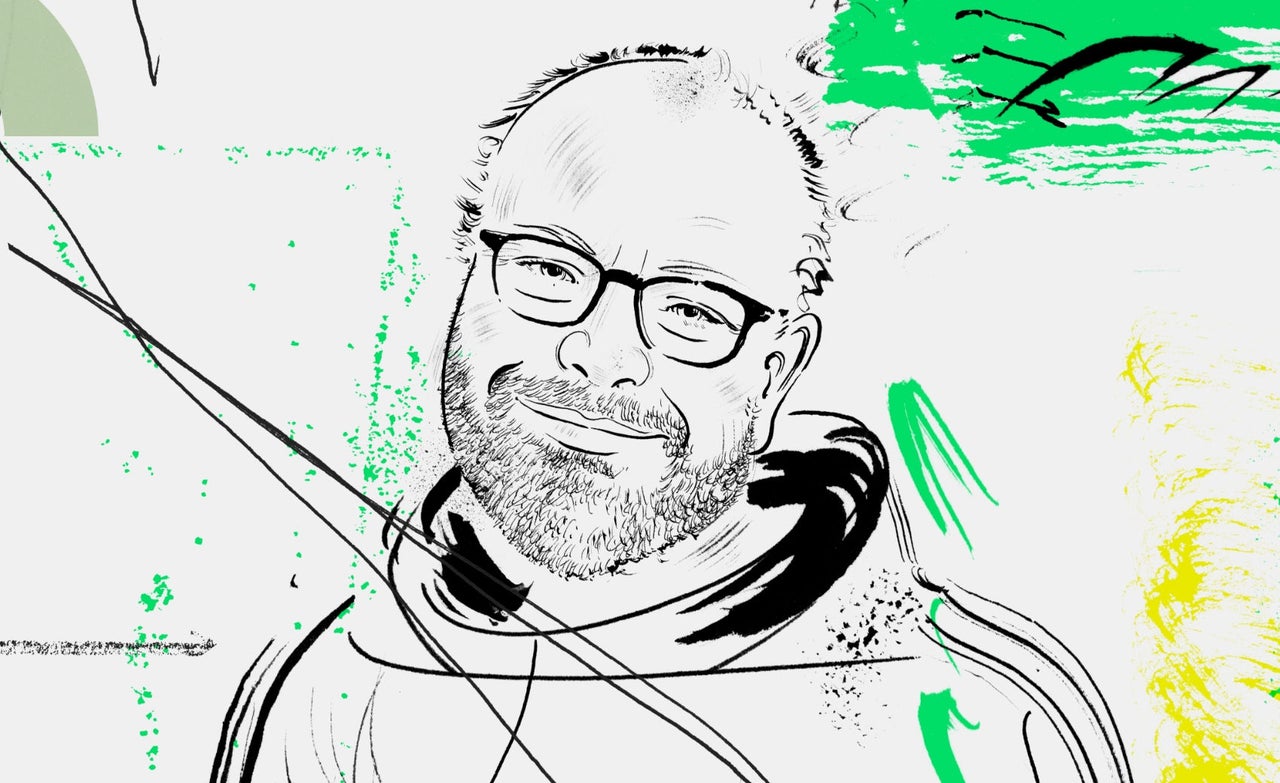
So, how else can we be certain that the boss is not a deepfake, or a robot? Clearly, they need to pass a human being test. Gianpiero Petriglieri's latest work, set out in a 15-minute YouTube talk, discusses "leadership as a kind of love." That's right: love. Petriglieri makes a beautifully simple point. He says that, if you want your people to move (to change, to act differently), then they have to be moved – emotionally. Robots and deepfakes can't do this. Leaders will have to show some humanity if they want a human response. "I am trying to reconcile people with their experience," he explains. "So much of our writing – academic or practitioner – really divorces leadership from people's daily experience. It dehumanizes it, either making it too virtuous, too pure, or too mechanical. So the leader either becomes this kind of saint, an anointed person, purposeful and values-based, or this kind of Machiavellian mechanic."
How do his students and executive clients react when he talks about leadership as a kind of love? "People respond in a very interesting way," he says. "Most people tell me – 'oh my God, that is so interesting and so refreshing, and I completely endorse that, but I bet you have lots of people who find it strange.' So they always project the foreignness of this idea onto someone else. 'I would like it, but I can't …' But to say that leadership is a kind of love does not mean that leadership is good. There is a range. The worst kind of love is narcissistic. 'I don't actually love you, I love myself in your presence.' Love can be a kind of language that is used to justify your views. Abusive leadership can be like this. The most common experience is of mediocre love: 'I love you, but I'm afraid of that, and so I will try to control you.' The leadership is diminished by the impossibility of letting go of control. The best kind of love is the most difficult: How do I really see you? How do I set you free? I think leadership has that range. It can be abusive – or at least constraining. At its best it can be liberating. And when I qualify it in that way, many people go 'oh, yes.'"