How could we change this paradigm of thinking where people are viewed not just as cogs in wheels?
We need to worry about human sustainability, about people's well-being, and human health. If you look at the indicators, they talk about education, but they [also] talk about health and well-being as another indicator of how well a society functions. It's interesting that in the US now, the difference in lifespan between the healthiest and the least healthy counties is 20 years! That difference in lifespan across the world is 40 years, between the countries with the best and least long lifespan. So we have enormous issues of health inequality, in which many people have been consigned to a very short life. We need to take human health and human life way more seriously, and not just worry about GDP and profits.
Most of what we have done is not good for the companies either. There are surveys that demonstrate that stress leads to turnover and turnover is expensive. When people work and they're not healthy, they're less productive. Long work hours are inversely related to productivity. Lay-offs actually do not improve stock price or productivity or profitability. We've created a really a lose-lose situation in which companies are having trouble retaining their employees and getting them to be productive, employees are getting stressed out and sick, and nobody's benefiting.
Would it be a good idea for companies to adopt a metric like the human sustainability index? How should they measure it?
It's hard. There's a bunch of things they could measure. One, self-reported health, which prospectively predicts mortality and morbidity. You can just add to your survey, one, what's the current position of your health, two, companies can look at the prescription drug use of employees. If you looked at what percentage of the company's workforce was on ADHD drugs to try to keep themselves awake or sleeping pills or antidepressants or other forms of psychotropics, that would tell you a lot because in healthy workplaces, people do not need to take all these medicines to survive.
When there is environmental damage, governments can hold companies accountable. Should governments look into this, measure it or enforce it?
Yes. Years ago in the US and elsewhere, governments got involved in the Occupational Safety and Health Administration to reduce workplace accidents. In many cases, because of governmental attention and workers' compensation claims, the rate of physical injury has gone way down. But there is this psychological injury because of workplace stress. The UK reports each year, the number of lost workdays due to absence and what percentage of those absences are due to stress, and the percentage is quite high. The US and UK governments report what this is costing the economy and the Australian and Canadian governments have done similar reports. But what the governments have not yet been quite willing to do, is to say, "This is costing the larger society a lot of money. Because when I make somebody sick in the UK, of course, the UK is paying because of the National Health Service." At some point, the government needs to say, “I will not let companies externalize their cost onto the larger society.” There is enormous awareness about the severity and the cost of the problem. Thus far, no one has been willing to take the bull by the horns. As healthcare costs continue to rise inexorably, and as countries believe they can't afford them, they're going to have to do something about the workplace, because it is one enormous source of the problem.
For most workers walking away from toxic workplaces is not an option because of economic reasons. So they're stuck in this Hunger Games-like scenario where just to survive, they need to work more and harder, faster, better. If their workplaces don't change, how can employees find their sanity?
Morten Hansen has published a book called "Great at Work" in which he studied 5,000 people, and found that the high performers, in fact, work fewer hours. So this idea that you're going to win at the Hunger Games, I love the term, by working more hours isn't going to work. You need to work smarter, not longer. When you're exhausted, you're not going to be very efficient [or] creative. I just had lunch with a woman [who is] a 34-year-old Harvard MBA, and was working ironically, for a healthcare company, and she's quit.
Her supervisor who's a little bit older than her has had two strokes.
The toll is enormous, and particularly for women, who often believe they have more discretion about this. The United States has the smallest proportion of college-educated, working-age women in the labor force of any of the major industrialized countries and that's in part because we make the workplace so difficult. She's got a husband who works, so she's quit. Think about the investment that's been made in her and her career and now she feels she can't work. The loss to society is enormous!
If the workplace is already killing you, you need to get out! In every industry, there are better and worse employers and when people stop putting up with how they are being treated at work, maybe the employers will change what they're doing.
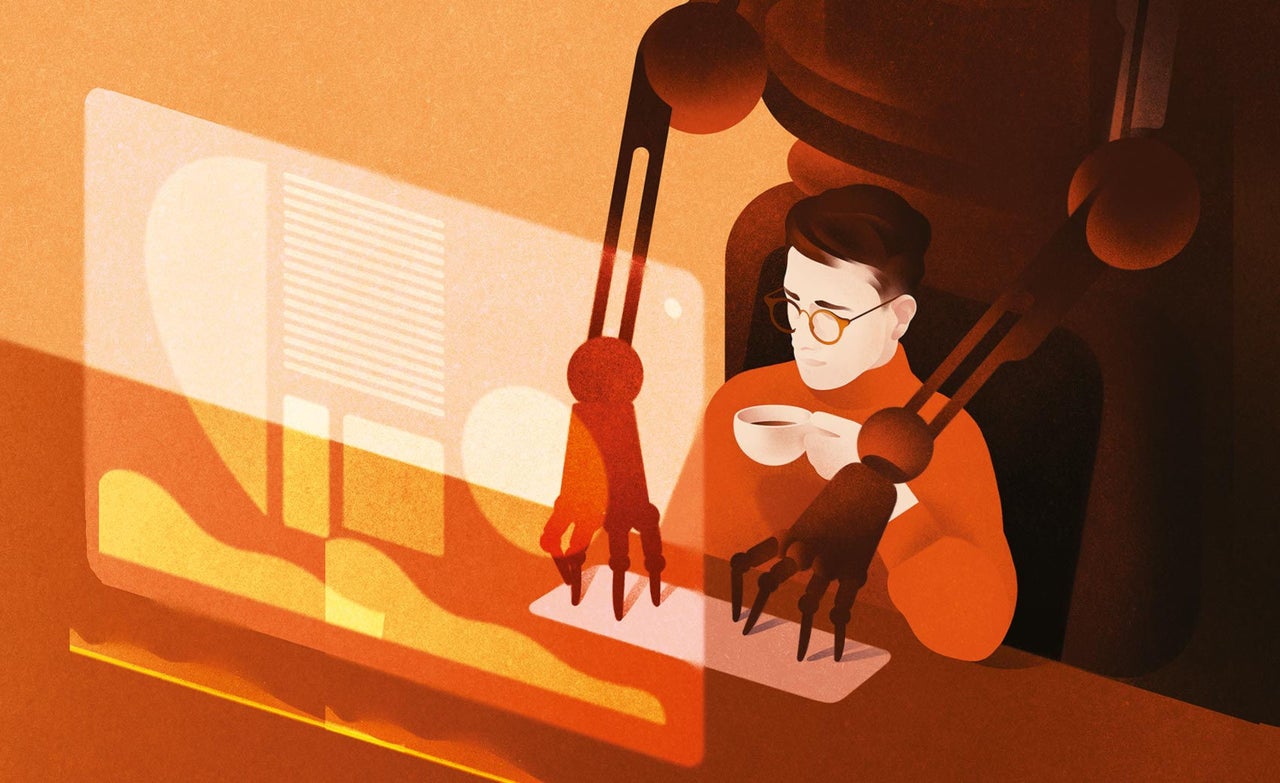
The gig economy has worsened the situation for workers: the apparent flexibility has its downsides. The future looks even more complicated with the rise of human-machine and human-algorithm collaborations. How will we reconcile the more emotional human aspects with the more binary technological and digital aspects in the future?
I have no idea what the future is going to be. The rise of Uber in New York City has depressed the value of taxi medallions, and the income of taxi drivers. There are regular reports on suicides by taxi drivers. Society faces a fundamental question: What priority do we put on human life and well-being? At the moment, I think we don't give it nearly enough priority. The number one thing that needs to change is when you look at people, you need to see them as people [and not as] factors of production or as resources. You need to understand that when they come to work for your organization, they have placed their well-being in your hands. The leaders of these organizations need to take that responsibility much more seriously than they currently do.
Today work has become a disproportionate part of life, eating into our priorities. Is there a need to reframe our understanding of what work ought to be?
Possibly. A 100 or 200 years ago, people actually worked much longer hours because they had to work harder just to scrape out a living. The irony is that the industrial age was supposed to free people. In some sense, for a while I guess it did, but there's been a shift in the balance of power. In the 1930s, 1940s or 1950s there were reasonably strong labor unions in the US, and certainly in Western Europe. Unions are declining all over the world. So nothing is balancing the power of capital. There is no countervailing force to say we ought to care about people. It is all about money. Unless that changes, I'm not very optimistic.