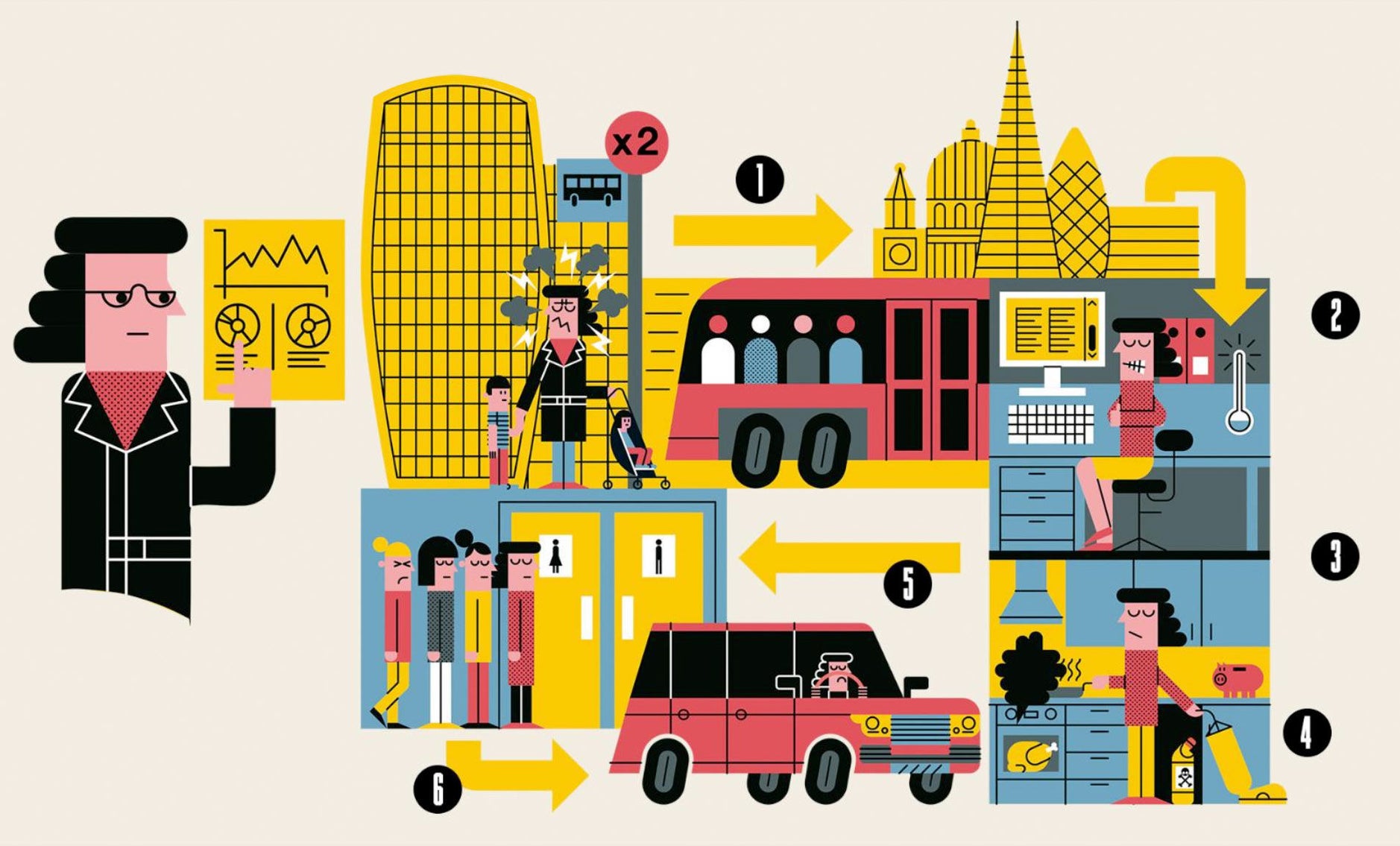
We like to think of data as being objective, but the answers we get are often shaped by the questions we ask. When those questions are biased, the data is too: That's how Bill and Melinda Gates decided to express and assess data bias in their 2019 annual letter. How much income did women in developing countries earn last year? How much property do they own? We do not know the answers to these questions because no one has thought to gather this data. Instead, the data gathered about women in developing countries is focused mainly on their reproductive health, reflecting the way society sees their primary role: as a wife or a mother.
We live in an increasingly data-driven world. It influences personal, business and policy-making decisions. But what if the data we have is failing to provide an accurate picture of the lives of half the population? In many countries we have come a long way since the first women's movements drew attention to the inequalities in society. Can it really be the case that we are still blind to so much unmet need?
In her book Invisible Women, published in 2019, British writer and feminist Caroline Criado Perez takes us on a journey through the modern world, highlighting where data gaps and bias exist in both developing and developed countries and revealing how these lead to detrimental outcomes for women. As Perez proves, bias is there even in places where people think it not possible. It may not be malicious or even deliberate, but often what we take for normal or standard in fact fails to recognize the needs of women, because often when we say human, we mean man.